





 Portuguese
  English
  Spanish
  5 min of reading
  0 comments


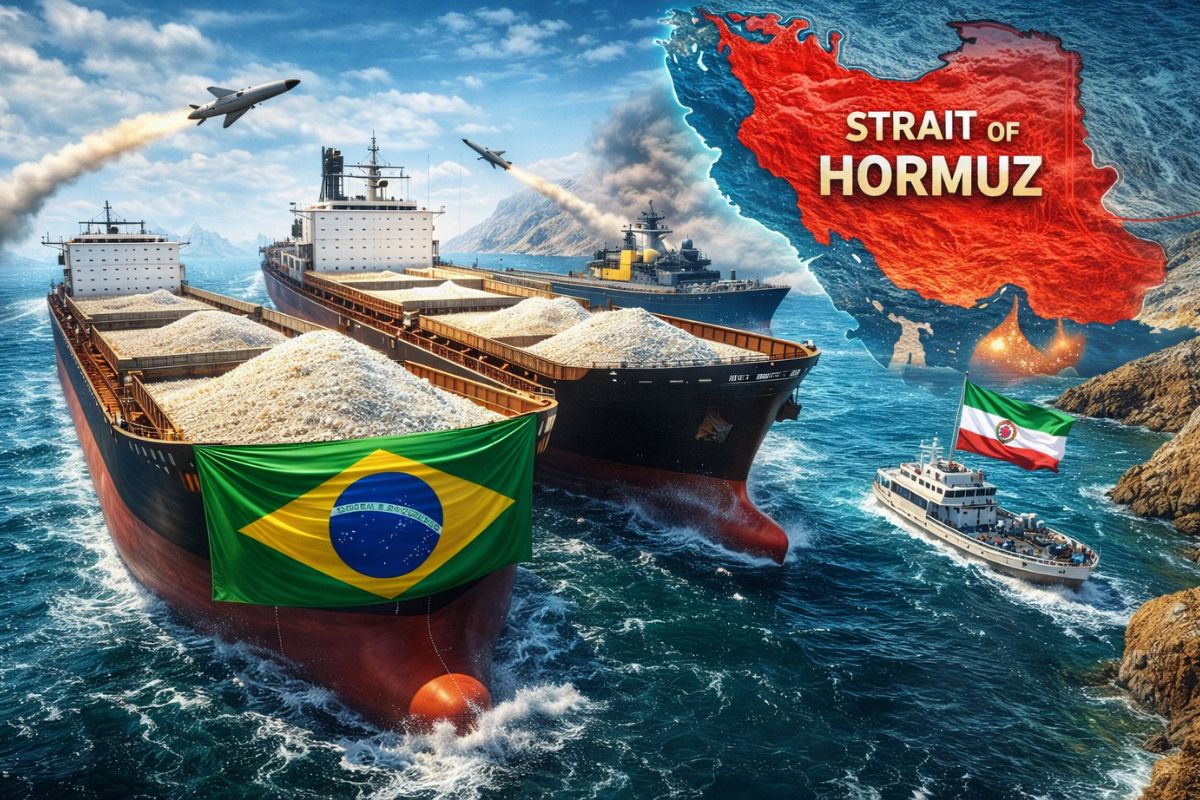
The fertilizers that Brazil is waiting for are among the 46 ships loaded with the input that were held up in the Strait of Hormuz controlled by Iran, and some ships went dark by turning off their GPS to avoid attacks, making it difficult to know how many loads destined for Brazil are still in the region.
At least two ships loaded with fertilizers destined for Brazil are held up in the Strait of Hormuz amid the conflict between the United States and Iran. The information comes from a survey conducted by Alphamar Maritime Agency at the request of Valor/Globo Rural, which also identified two other ships with Brazil as the declared destination, although without details about the cargo. Brazilian importers are awaiting a decision on the opening of the strait, and so far there is no forecast for when the fertilizers will arrive.
The situation is more complex than the initial numbers suggest. According to Alphamar, 224 bulk carriers were in the Strait of Hormuz while information circulated about a truce; of these, 63 were in motion and 46 were carrying fertilizers destined for various countries. Some vessels linked to countries involved in the conflict went dark, turning off their GPS to avoid attacks, which makes it even more difficult to identify how many ships with fertilizers for Brazil are actually held up in the region.
What is happening in the Strait of Hormuz and why the fertilizers are stuck
The Strait of Hormuz is the most strategic maritime passage in the world for the trade of oil and fertilizers. Geographically controlled by Iran, it is used by ships transporting essential inputs for global agriculture.
-
Brazilian agribusiness found in China more than just a giant buyer: it was US$ 55.3 billion in 2025.
-
Brazilian nanotechnology surprises by transforming soybean seeds into intelligent structures that accelerate germination and may change the future of agricultural productivity in the country.

-
Brazil reaches historic record of judicial recoveries in 2025, with 2,466 companies in crisis and agribusiness leading the financial collapse.

-
From 13 borrowed cows to millions of liters per year: Argentine producer transforms small beginnings into an empire with technology, management, and high productivity of cows.

The military conflict between the United States and Iran has turned the strait into a risk zone, and commercial ships that would normally pass through in hours have been held up for days or weeks awaiting safe navigation conditions.
For the fertilizers destined for Brazil, the impact is direct. The country is one of the largest importers of the input in the world and relies on suppliers from the Middle East and Central Asia to supply its crops.
“We still have no news on when they will leave the region,” said Arthur Neto, managing partner of Alphamar. The uncertainty is compounded by the fact that many ships have not yet declared the type of cargo they are carrying, which means that the actual number of fertilizers held up may be greater than what has been identified so far.
How many ships with fertilizers for Brazil are in the conflict zone
According to information from the portal Globo Rural, the Alphamar survey definitely identified two ships loaded with fertilizers having Brazil as their destination. Two other ships also have the country as a declared destination, but without confirmation about what they are carrying.
One of them had departed from the port of Paranaguá and unloaded sugar in Iran, possibly returning with a load of fertilizers, although this is not confirmed.
The difficulty in mapping the complete situation is a problem in itself. Arthur Neto explained that the identification of the ships and their cargoes is hindered because vessels from companies linked to countries involved in the conflict have turned off their tracking systems to avoid attacks.
Without active GPS, these ships become invisible to commercial trackers. It is a understandable security measure, but it leaves Brazilian fertilizer importers in the dark about when and if their loads will arrive.
What the retention of fertilizers in Hormuz means for the Brazilian harvest
Brazil imports more than 80% of the fertilizers it consumes, and any interruption in the supply flow creates a ripple effect in agriculture.
Fertilizers that do not arrive on time mean delayed planting, lower productivity, and higher costs for the rural producer who needs to buy the input on the spot market at inflated prices or delay application and accept yield loss.
The timing is especially critical. The Brazilian harvest operates in tight windows for planting and fertilization, and delays of weeks in the delivery of fertilizers can compromise productivity over extensive areas. While the ships remain held up in the Strait of Hormuz, Brazilian importers calculate losses and seek alternatives such as redirecting loads from other suppliers or using internal stocks that, depending on the region, may be insufficient.
Brazil’s dependence on imported fertilizers turns a military conflict in the Middle East into a direct threat to Brazilian agriculture.
What to expect in the coming days and what importers can do
Initial information indicated that Iran had reopened the Strait of Hormuz after a two-week truce with the United States, but the situation remains uncertain.
Even with a partial reopening, the accumulation of ships in the region means that the normal flow of fertilizers and other cargoes will take time to normalize with dozens of vessels vying for passage at the same time creating congestion that could drag on for weeks.
For Brazilian fertilizer importers, the scenario demands constant monitoring and contingency planning.
The recommendation from logistics experts is to diversify suppliers to reduce dependence on routes that pass through choke points like Hormuz, something easier said than done when the largest fertilizer producers in the world are precisely in that region. The conflict in the Middle East is a reminder that Brazil’s food security depends on supply chains that cross some of the most unstable points on the planet.
Do you think Brazil should invest more in domestic fertilizer production to avoid dependence on routes like the Strait of Hormuz?








Seja o primeiro a reagir!