






 Portuguese
  Spanish


Study conducted by a Japanese student drew the attention of the scientific community by gathering evidence that experiences lived still in the caterpillar phase can remain after metamorphosis and possibly influence the behavior of subsequent generations, opening new discussions on memory and biological heritage.
While many children spend their free time playing or gaming, the Japanese Jo Nagai preferred to carefully observe the butterflies he raised at home. What began as a childhood curiosity eventually led the student, at 10 years old, to the stage of the International Congress of Entomology (ICE) 2024, held in Japan, where he presented a study that sparked the interest of scientists from different countries and opened new discussions on memory, learning, and biological heritage in insects.
The story was detailed in the episode “Caterpillar Roadshow“, from the series Signal Hill, produced by the podcast Radiolab, which gathers testimonies from the entomologist Dr. Martha Weiss, a professor at Georgetown University, as well as excerpts from Jo Nagai himself explaining his research. The work was also confirmed in an official publication by the Department of Biology at Georgetown University, which reports the collaboration between the American researcher and the young Japanese student during the project’s development.
The reason for the repercussion is simple: for decades, much of the scientific community believed that metamorphosis completely erased any learning acquired by insects still in the larval phase. Jo’s research, however, presented evidence that this process can be much more complex.
-
Collector opens a rare industrial system forgotten for decades and finds four Pentium III computers still working perfectly after more than 20 years.

-
Gasoline at R$ 2,500 per liter: understand why Formula 1 adopted synthetic fuel in 2026 and how much it costs to refuel a car on the grid

-
Samsung launches Galaxy A27 5G in Brazil with 120 Hz Super AMOLED display, Snapdragon 6 Gen 3, 50 MP camera, 5,000 mAh battery, integrated AI, six-year support, and price starting at R$ 2,299
-
Researchers from Unesp discover a peptide from a Cerrado frog that preserves strawberries for longer after just 5 minutes of immersion, without altering flavor or quality.


A childhood curiosity transformed into scientific research
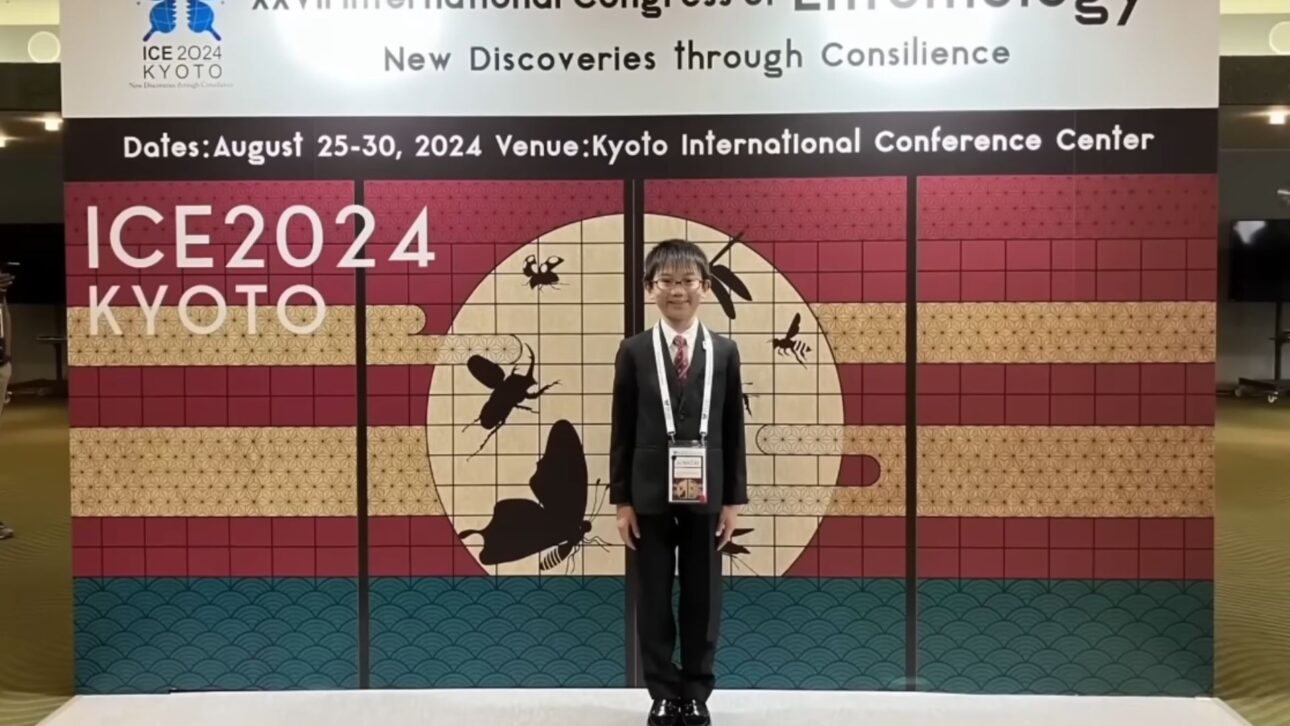
Jo Nagai’s passion for insects began very early. Unlike other children, he did not limit himself to capturing butterflies or beetles. His interest was in understanding the behavior of these animals, recording patterns, changes, and small differences that usually went unnoticed.
Even in early childhood education, he conducted experiments on the survival time of butterflies trapped in the cocoon. In the early years of elementary school, he began documenting the development cycle of caterpillars and won awards for his school projects. In no time, he accumulated hundreds of pages of handwritten notes about the species he raised at home.
It was precisely during these observations that he noticed something curious. The butterflies he raised seemed to behave differently from those captured in the wild. When released, they often flew towards him, a behavior that sparked a seemingly simple question: could it be possible that they remembered experiences from when they were still caterpillars?
The question led Jo to search for scientific articles on the subject. During this search, he found a study conducted by entomologist Martha Weiss, which had demonstrated the persistence of memories in moths after metamorphosis. The boy contacted the researcher by letter, sending pages and pages of observations made over the years and expressing his desire to reproduce the experiment with butterflies.
How the experiment was conducted
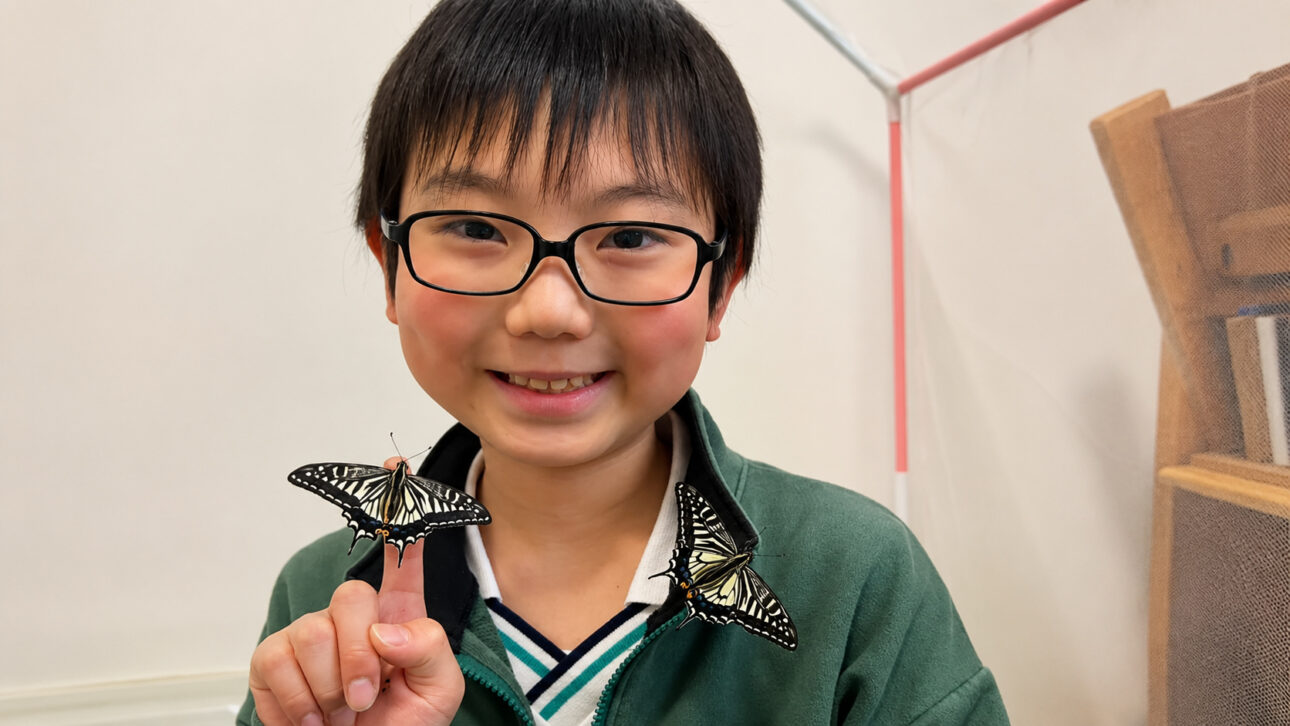
Even though he was initially advised to conduct a simpler study, Jo insisted on the original idea. With the support of Martha Weiss, he adapted the methodology for an improvised laboratory in his own home.
The experiment consisted of teaching caterpillars to associate a certain smell with an unpleasant experience. Whenever they were exposed to the scent of lavender, they received a mild electrical stimulus carefully calibrated by the young researcher himself to avoid unnecessary suffering to the animals.
This concern, in fact, represented one of the main differences compared to the original study. Instead of using potentially harmful chemicals and more intense shocks, Jo replaced the previously used odor with lavender essential oil and significantly reduced the intensity of the stimuli, closely monitoring any signs of stress in the caterpillars.
After metamorphosis, the butterflies were placed in a Y-shaped maze. In one of the paths, there was only sugar water; in the other, sugar water accompanied by the scent of lavender.
The results were surprising.
While the butterflies in the control group almost equally divided their choice between the two paths, approximately 70% of the trained butterflies specifically avoided the arm of the maze with the lavender scent, indicating that they retained the memory acquired during the caterpillar phase. The difference showed statistical significance, becoming the first demonstration of this behavior in the studied butterfly species.
The discovery that sparked even more interest from scientists


The work could have ended there. However, Jo decided to take it a step further.
Inspired by observations of shared characteristics among different generations of his own family, he began to investigate whether that learning could also influence the descendants of the trained butterflies.
During the following summer, he created a new generation formed exclusively by the descendants of the butterflies used in the first experiment. Unlike the previous generation, these caterpillars had never received any training related to the lavender scent.
Even so, when they reached adulthood and were placed in the same maze, the majority also avoided the path associated with the aroma, repeating almost the same proportion observed in the previous generation. Later, Jo repeated the process with a third generation and found similar results again.
Although the data suggests the possibility of a form of biological inheritance related to learning, the young researcher himself adopted a cautious stance. Upon noticing differences between males and females in the third generation, he highlighted that the sample was still small and that further tests would be necessary before any definitive conclusions.
This prudence was seen as one of the most impressive aspects of the entire work, demonstrating an unusual scientific maturity for someone just 10 years old.
International recognition and new paths for science
As the results began to circulate among researchers, Jo Nagai started to attract attention within the scientific community. At fairs, congresses, and academic events, experienced scientists began to listen attentively to his explanations about transgenerational memory in butterflies.
The young researcher was also invited to present his work to the Crown Prince of Japan and, in December 2024, he finally met Martha Weiss in person, whose original research had inspired the entire project. Two years earlier, a handwritten letter sent by an elementary school student traveled across the world and ended up transforming into an international scientific collaboration.
Although independent studies are still needed to confirm the results in other species and expand the evidence base, Jo Nagai’s work already represents an important contribution to the debate on memory, learning, and possible mechanisms of biological inheritance in insects.
More than a specific discovery, his journey also highlights how curiosity, careful observation, and persistence can lead seemingly simple questions to challenge concepts established by science.


