






 Portuguese
  Spanish


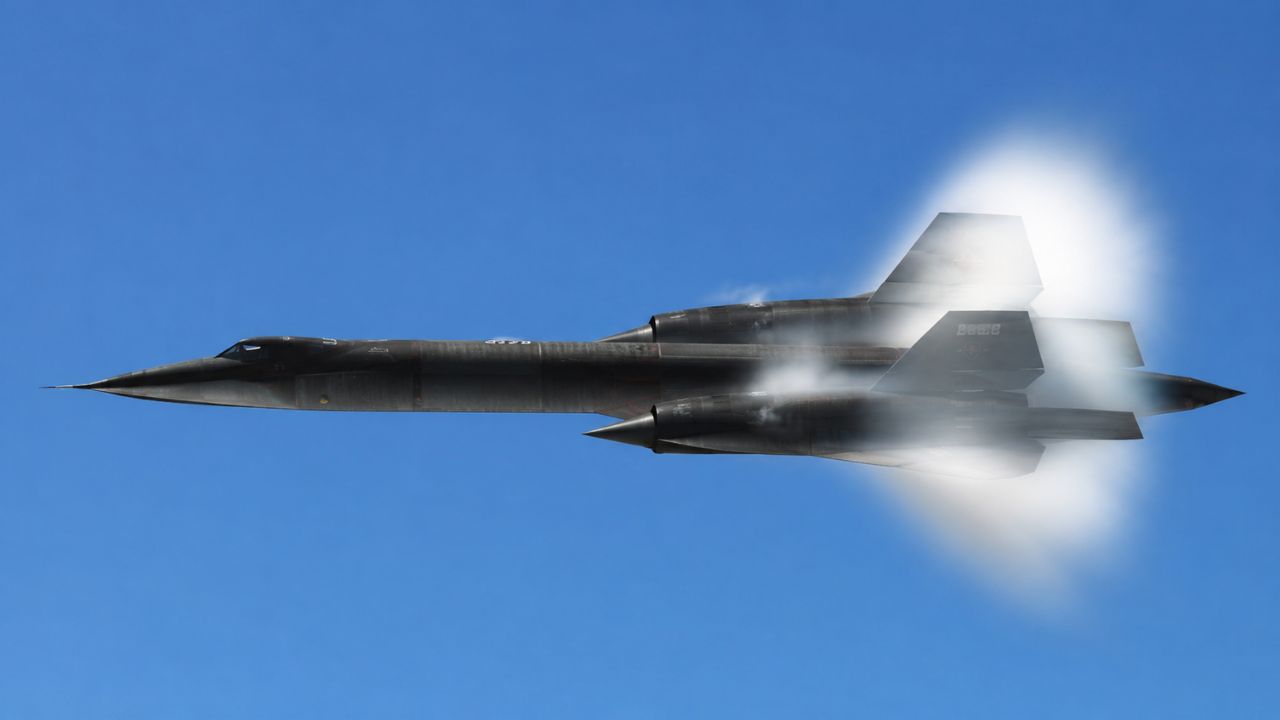

SR-71 Blackbird reached 3,418 km/h in flight between Los Angeles and Washington and assisted NASA in research on aerodynamics and atmosphere.
The SR-71 Blackbird covered the route between Los Angeles and Washington in just one hour, four minutes, and 20 seconds during a flight on March 6, 1990. With Lieutenant Colonels Ed Yeilding and Joseph Vida on board, the aircraft reached 3,418 km/h, a speed far superior to the range of 880 to 926 km/h normally associated with commercial airplanes.
The performance helps explain why the plane developed by Lockheed Martin became one of the most remarkable technologies of the Cold War. Designed for reconnaissance missions, the Blackbird could operate at Mach 3.2, just over three times the speed of sound, in addition to reaching extreme altitudes.
These capabilities were not only used for military activities. The conditions faced by the plane allowed it to also be used in research related to aerodynamics, propulsion, atmosphere, and the behavior of aircraft at high speeds.
-
The government allows the new ID card to be requested from a mobile phone to be delivered at home with the CPF as a unique number: states like São Paulo and Minas Gerais already offer delivery via Correios.

-
A couple from Belo Horizonte went bankrupt during the pandemic, turned tangerines into a successful business, and today earns R$ 400,000 with jams, sauces, and liqueurs with HogDidi.

-
He started just by solving a list of exercises, but ended up finding a curious cycle between the numbers 13 and 16 that even specialists did not expect to analyze.

-
‘Suíça Mineira’ in Brazil hides mountains above 2,000 meters, was born from the dream of a European immigrant, and became one of the most coveted destinations of the Brazilian winter.


SR-71 Blackbird turned speed into strategy
The Blackbird’s proposal was to combine great speed and operation at high altitudes during reconnaissance missions. The project began to be developed in the late 1950s, in an environment of complete secrecy.

The result was a large aircraft, 32 meters long, 16.9 meters in wingspan, and 5.6 meters in height. Despite the dimensions, the plane was built to achieve speeds that completely distanced it from the performance of commercial models.
Over 24 years of activities, the SR-71 Blackbird accumulated more than 2,800 flight hours under the command of United States Air Force officers.
Among the main numbers associated with the model are:
- operational speed of Mach 3.2;
- 32 meters in length;
- 16.9 meters in wingspan;
- 5.6 meters in height;
- more than 2,800 flight hours;
- 24 years of operations;
- ability to perform flights above 24 kilometers in altitude.
The combination of these characteristics led the plane to operate in very different conditions from those encountered by conventional aircraft.
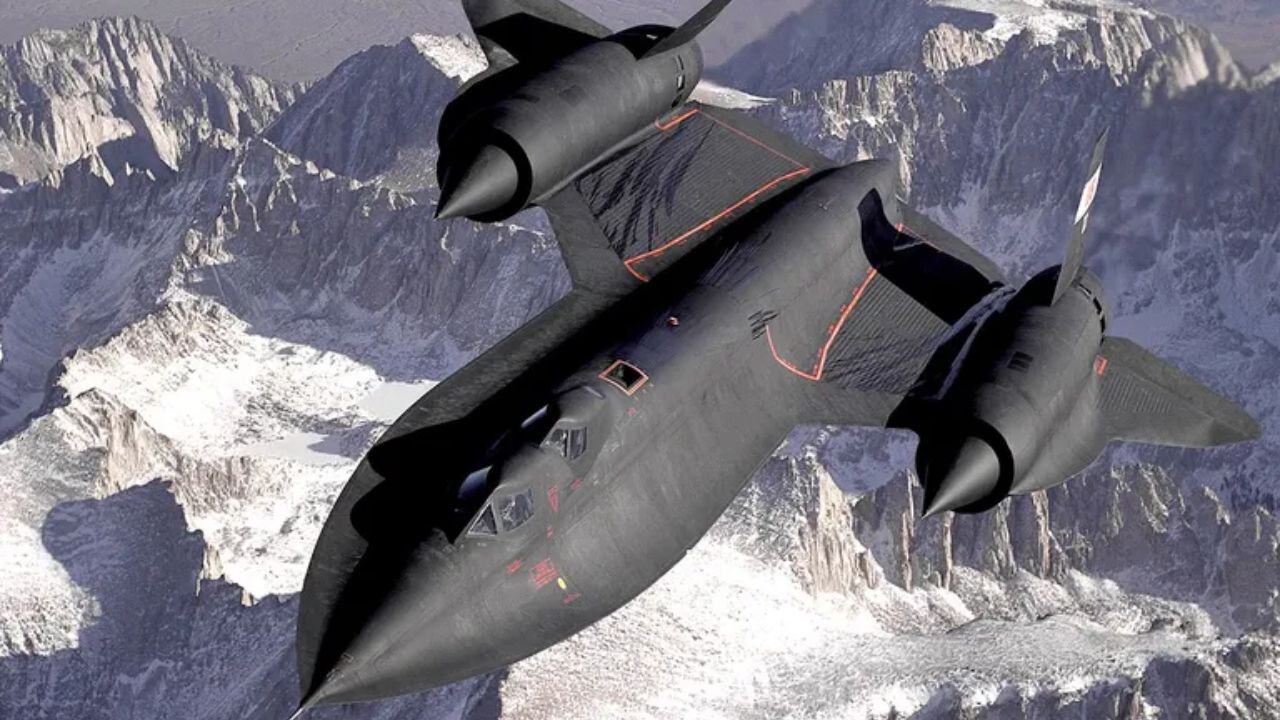
NASA used the SR-71 Blackbird in scientific research
Performance at high altitudes caught NASA’s attention. The United States space agency realized that the aircraft could function as a platform for experiments difficult to conduct with other aerial vehicles.
One of the projects conducted with the Blackbird involved a laser transmission system. Instead of relying on air pressure, the experiment used light to generate information about the aircraft’s speed and orientation, including the angle of attack.
The plane also allowed the study of atmospheric particles found at more than 24 kilometers in altitude. The data obtained in these operations were considered important for the development of hypersonic aircraft.
The scientific use demonstrated that the model’s importance was not restricted to reconnaissance missions. Its ability to operate in extreme conditions opened up space for analyses on:
- aerodynamic behavior at high speed;
- propulsion systems;
- breaking the sound barrier;
- particles present in the upper layers of the atmosphere;
- technologies aimed at hypersonic planes.
In this way, NASA utilized an aircraft created for military purposes as an instrument to produce information applicable to new aviation projects.
SR-71 Blackbird project began with the A-12
Before the SR-71 Blackbird assumed its final form, the development went through the A-12. The reconnaissance aircraft made its first flight in 1962 and remained completely protected by secrecy. This first stage served as a basis for other versions. One of them was the YF-12A, developed with a focus on interception.
The existence of the YF-12A was publicly acknowledged by then United States President Lyndon Johnson only in 1964. In December of the same year, the SR-71 Blackbird made its first flight.
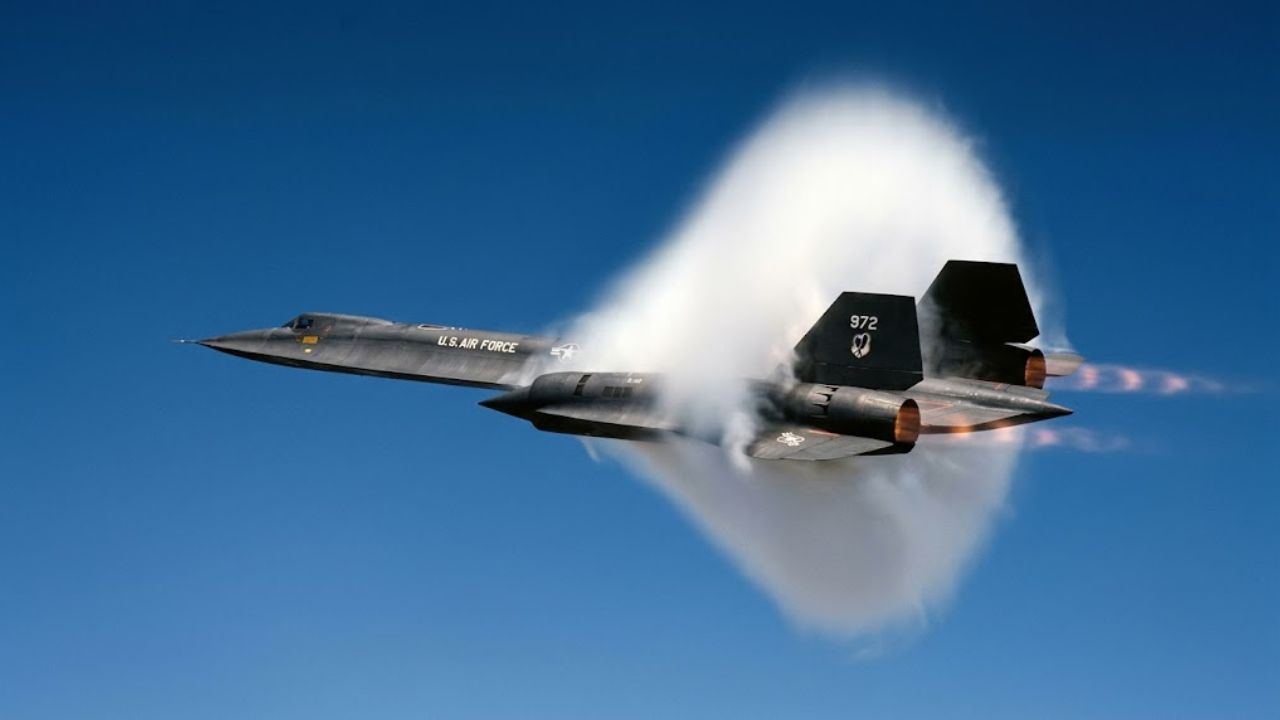
The sequence shows how the program advanced through different projects before presenting the aircraft that would become known for its speed. The process also reflects the secretive nature of a technology created during the Cold War.
1990 Flight Exposed the Difference to Commercial Aircraft
The route taken between Los Angeles and Washington in March 1990 put the SR-71 Blackbird’s capability in direct comparison with commercial aviation. While passenger planes typically operate between 880 and 926 km/h, the aircraft traveled at 3,418 km/h. This allowed the journey to be completed in just over an hour.
The mark was not just an isolated number. It synthesized decades of development focused on high-speed operation, aircraft control under extreme conditions, and conducting missions at high altitudes.
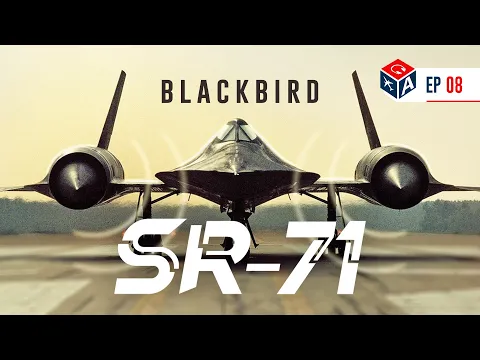
The flight also helped to consolidate the Blackbird’s image as the “fastest plane in the world,” a title by which the aircraft became known.
Technology Surpassed the Recognition Function
The impact of the project can be observed on two fronts. In the military area, the aircraft was designed to carry out reconnaissance missions with unusual speed and altitude. In research, these same characteristics allowed testing systems and studying atmospheric phenomena.
The contribution to experiments with lasers, aerodynamic analyses, and data collection above 24 kilometers showed that a platform developed in secrecy could generate information for other fields of aviation.
At the same time, the more than 2,800 hours accumulated over 24 years demonstrate that the plane was not just a technological experiment. The SR-71 Blackbird participated in a long operational trajectory under the responsibility of the United States Air Force.
With information from CanalTech


