





 Portuguese
  English
  Spanish
  4 min of reading
  0 comments


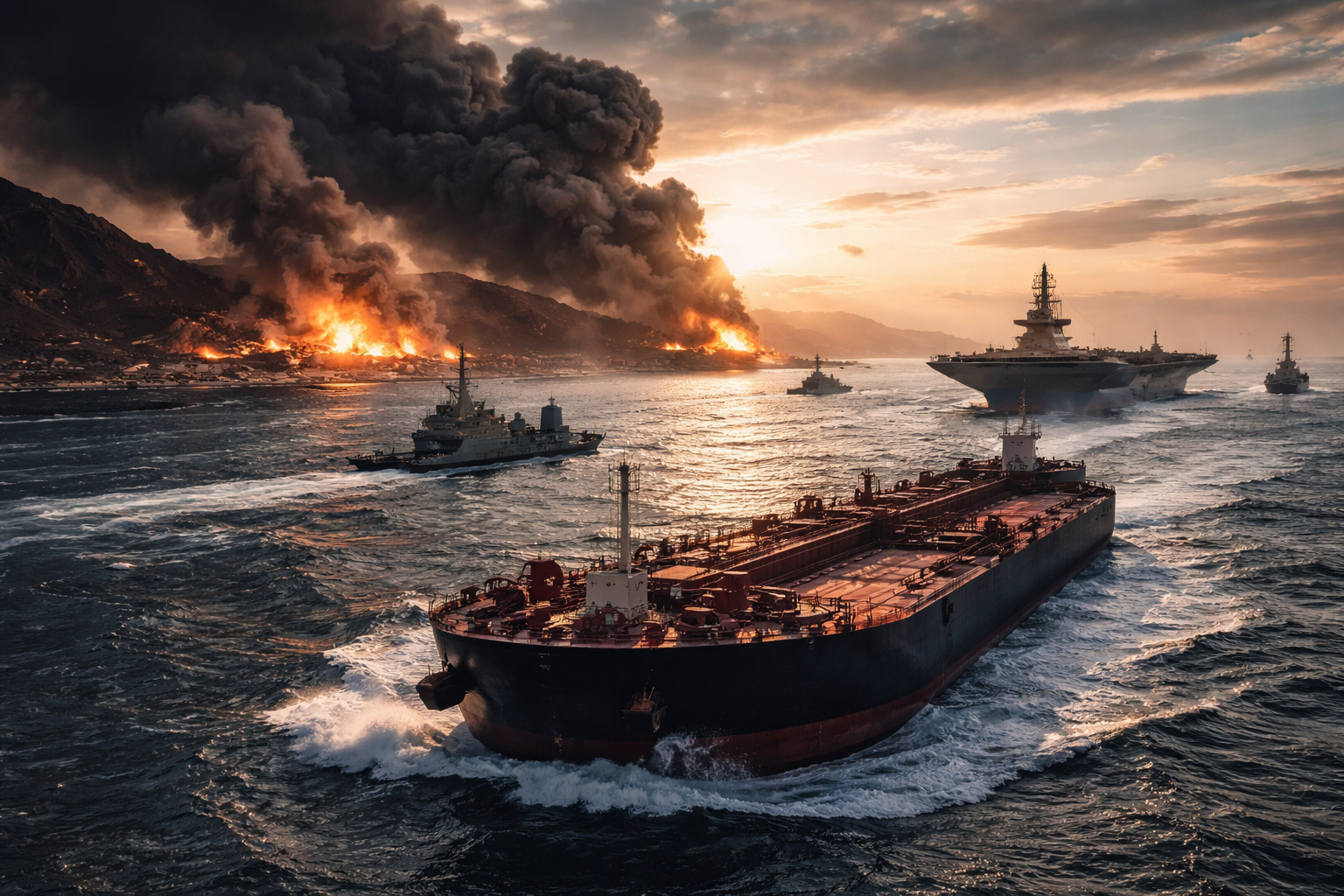
Analysts Project Global Volatility, Rising Oil Prices, and Direct Effects on Brazilian Stock Markets and Oil Companies
On Saturday, June 28, 2026, the United States confirmed large-scale combat operations against Iran, immediately raising the geopolitical tension in the Middle East. As a result, analysts began to project a Monday opening with strong risk aversion, according to assessments released by CNBC, Natixis, and RB Investimentos.
Furthermore, President Donald Trump declared that the action would eliminate threats to U.S. security. However, at the same time, global markets began to price in possible economic fallout. Therefore, the immediate expectation involves rising oil prices, falling stock markets, and a search for safe assets.

According to Florian Weidinger from Santa Lucia Asset Management, in an interview with CNBC, the implications exceed recent crises. Thus, unlike Venezuela, whose relevance was limited to a specific type of heavy crude oil, Iran produces about 3.3 million barrels per day, even under international sanctions.
-
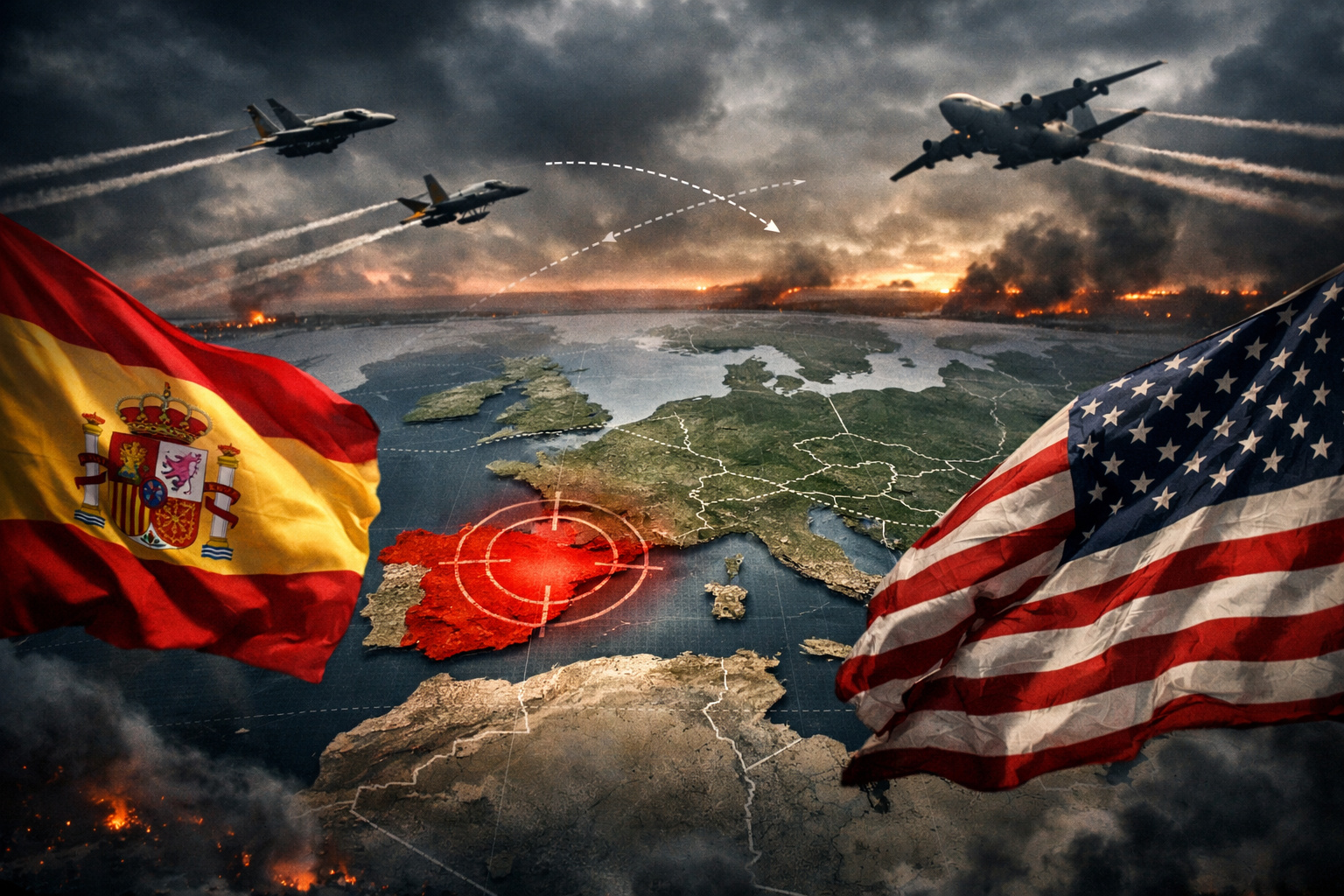
Spain challenges the USA and closes its airspace for operations against Iran, raising global tension and provoking the threat of a trade rupture.
-
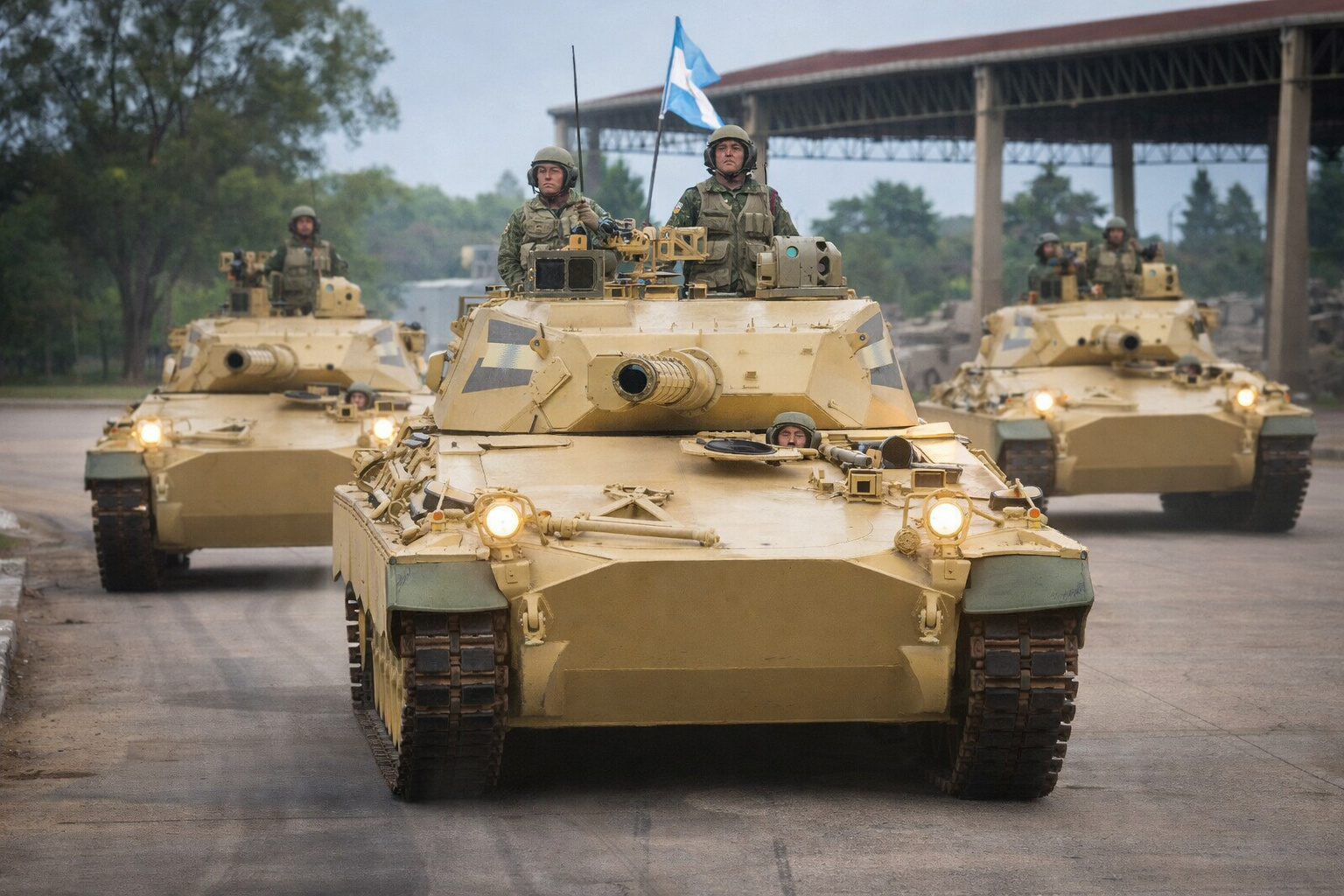
While no other country manufactures tanks in Latin America, Argentina activates the TAM 2C-A2 and raises a curiosity about the technological lag in the region.
-
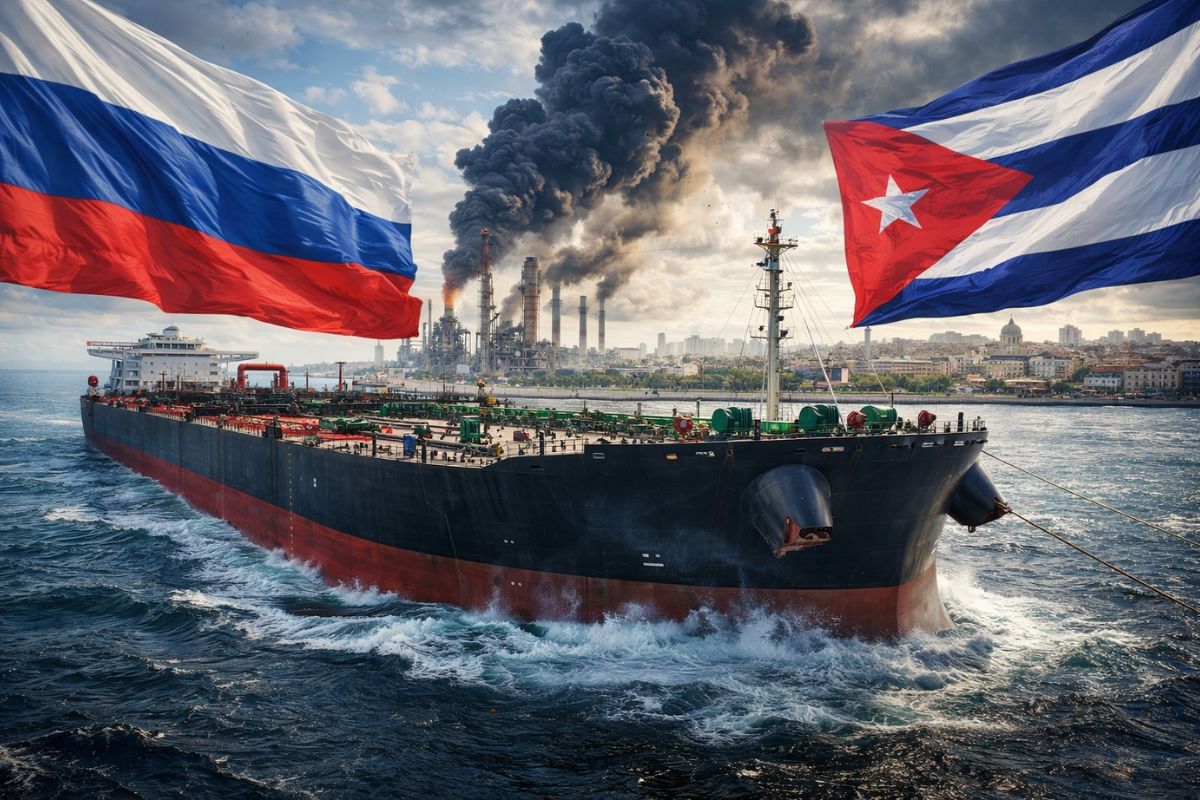
A Russian ship with 730,000 barrels of oil has just arrived in Cuba while Mexico negotiates fuel sales through private companies: the communist island is desperately seeking alternatives after losing its supply from Venezuela due to American military action.
-
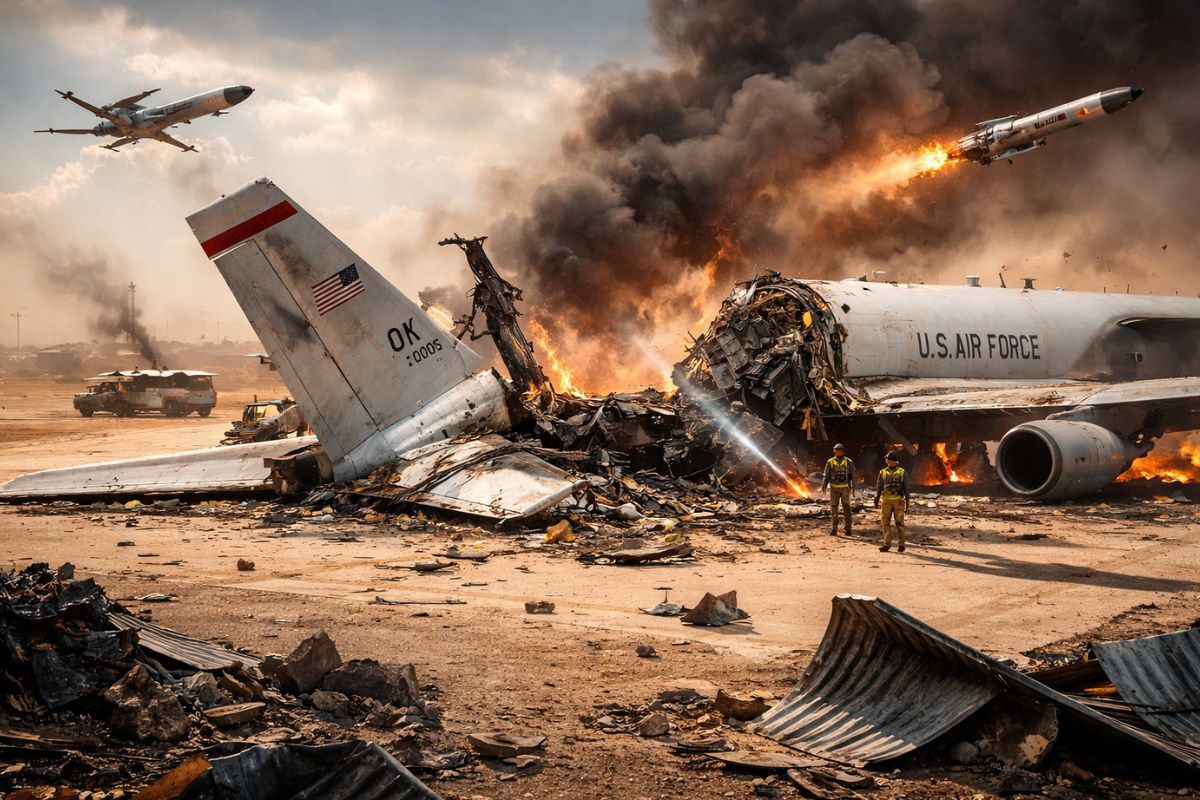
Iranian drones and missiles destroyed a 270 million dollar American spy plane in Saudi Arabia, splitting the E-3 Sentry aircraft in half and injuring 12 military personnel in an attack that exposes the vulnerability of U.S. bases in the Persian Gulf.

Currently, approximately 90% of Iranian exports go to China, according to market data. Additionally, the largest reserves are concentrated in Ahvaz, Marun, and the Western Karun complex, in Khuzestan province.
Strait of Hormuz Increases Systemic Risk
Meanwhile, global attention turns to the Strait of Hormuz, located between Iran and Oman. This strategic route transports about 20% of the world’s daily oil consumption and a significant portion of liquefied natural gas.
According to intelligence firm Kpler, in 2025, about 13 million barrels of oil per day crossed the strait, representing approximately 31% of global maritime flow. Therefore, any blockage would affect global energy supply chains.
According to Pedro Rodrigues, director of CBIE, the risk involves a potential military escalation with attacks on oil tankers. However, he emphasizes that there is a presence of an American aircraft carrier in the region, a factor that raises the strategic cost of any blockade.
Immediate Reaction from Financial Markets
Historically, as Gustavo Cruz from RB Investimentos highlighted, restrictions in the Strait of Hormuz have pressured inflation in Europe and the United States. Consequently, expectations for interest rate cuts were revised in those episodes.
In June 2025, when Israel attacked Iranian nuclear facilities, there was a negative opening in the stock markets. However, after confirming that the strait remained open, the markets recovered.
Now, according to Kenneth Goh from UOB Kay Hian, the pattern tends to repeat itself. Thus, a strengthening of the U.S. dollar, Japanese yen, and gold is projected, assets traditionally considered safe.
Moreover, Alicia García-Herrero, chief economist at Natixis for Asia-Pacific, estimates an initial drop of 1% to 2% in global stocks, while oil could rise by 5% to 10%.
Direct Impacts on Brazil and Petrobras
In Brazil, the market will primarily observe the oil companies. Among them, Petrobras (PETR3; PETR4), PRIO (PRIO3), and PetroRecôncavo (RECV3) stand out.
In February 2026, during similar tension between the U.S. and Iran, these stocks rose between 7% and 12%, tracking Brent crude oil, which closed at US$ 72 per barrel, the highest level in six months.
However, a report from JPMorgan indicated that Brazil appears relatively protected from an energy shock. This is because the country is a net energy exporter, with exports equivalent to 2.6% of GDP and imports at 1.6%.
Still, the bank warned of tail risks in emerging markets. Therefore, even with relative protection, Brazil may face greater financial volatility.
Medium-Term Scenarios for Oil
In the medium term, the scenario may change. In 2017, before the expanded sanctions, Iran produced 4.1 million barrels per day. Currently, according to sector data cited by Cruz, production hovers around 3.2 million.
Unlike Venezuela, whose infrastructure has deteriorated, Iran maintains an operational oil structure. Thus, should political change occur and alignment with the U.S. materialize, production could exceed 4 million barrels per day by the second half of the year.
Consequently, after any initial spike, the increase in supply would likely reduce the oil price equilibrium. Therefore, for the second half of 2026, a possible disinflationary effect is projected.
In the political realm, Cruz also assesses that external decisions may influence the domestic American environment. Thus, strategic moves may also reflect internal disputes.
Given this scenario, markets will closely watch the next responses from Iran and the evolution of the conflict. After all, will the rise in oil prices be merely temporary, or will it mark a new phase of global volatility?








Seja o primeiro a reagir!