





 Portuguese
  English
  Spanish
  3 min of reading
  0 comments


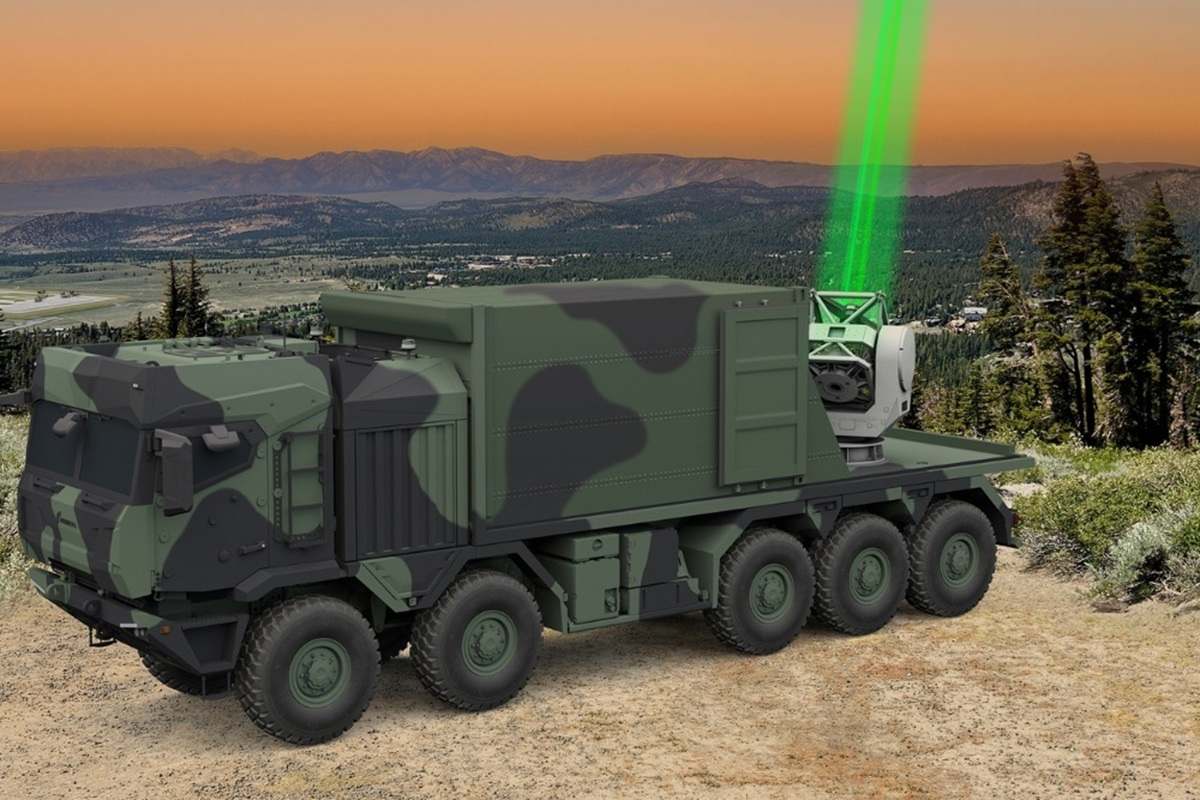
New Atlas Space Control System, Revealed at IAC 2025 in Sydney, Promises to Protect Satellites in Disputed Orbital Environment with Unprecedented Flexibility
The Australian company Electro Optic Systems (EOS) presented at the International Astronautical Congress (IAC) 2025, in Sydney, its new high-energy laser-based space defense system. Called Atlas Space Control, the resource integrates the Atlas family of space control tools developed by the company.
It was designed to face increasing threats to satellites in an increasingly competitive and contested orbital environment, offering flexibility and scalability for various missions.
Flexibility of Deployment and Functions
The Atlas can be configured as a fixed, mobile, or relocatable system, ensuring deployment in any region of the world.
-
They seemed like common bones, but scientists were surprised to find a relic over 12,000 years old that dates back to before the Bronze Age.

-
With an almost perfect ring of 70 km visible from space, known as the “Eye of Quebec” and over 100 km in length, the Manicouagan Crater in Canada reveals the colossal mark left by a giant asteroid and has become one of the most impressive formations ever identified on the Earth’s surface.

-
Scientists have found in China dinosaur embryos dating back 190 million years in various stages of development, and the discovery still preserves traces of extremely rare proteins in the bones, something that could change what is known about life before hatching.
-
The CEO of Honor in Spain says that smartphones will change with AI, foldables, and even robot phones; the component crisis is making cheap models more expensive in 2026 and shifting the focus to premium.

This versatility allows operators to maintain freedom of action in orbit in different scenarios.
Additionally, the system was developed to adapt to various types of operations, from surveillance and deterrence to active engagement in space disputes.
The modular design also offers scalable power, allowing adjustments according to mission needs. This encompasses everything from passive deterrence measures to more direct space control actions, always integrated with larger networks for situational awareness and joint multi-domain operations.
Advanced Detection and Tracking
The Atlas stands out for its use of state-of-the-art telescopes and domes capable of detecting, tracking, and analyzing space objects in real-time. The resource provides monitoring of satellites and debris, even those difficult to visualize, both during the day and at night.
This level of situational awareness enhances operator safety and ensures detailed data on the position, speed, and behavior of each object in orbit.
The importance of this type of technology grows with the increasing presence of satellites from governments and private companies, making space increasingly complex and contested.
Scalable Power for Diverse Missions
The system was developed with a focus on power adjustment, allowing effects to be tailored to the demands of each mission. It can act as a passive deterrence tool or be employed in more assertive measures for satellite protection.
Integration with joint operation networks enhances its ability to contribute to intelligence sharing and operational coordination among allied forces.
According to the company, the solution provides an extra layer of security in the global space environment, where satellites play a crucial role in both defense and civil services.
“Space is now a contested domain, and satellites that enable defense and civilian life are increasingly at risk. The Atlas was designed to protect these assets, offering operators scalable and deployable options for deterrence and space control,” stated Dr. Andreas Schwer, CEO of EOS.
He also emphasized that the system is grounded in the company’s four decades of experience in space reconnaissance and laser technology.
IAC 2025: Showcase for the Australian Space Sector
The presentation of the Atlas took place at the EOS Space Systems booth (457) and will be on display throughout the congress. The IAC 2025, held in Sydney, welcomed over 7,300 delegates from 90 countries, including representatives from 40 international space agencies.
The event also recorded a significant increase in Australian participation, with 410 papers submitted by local researchers.
Furthermore, it highlighted the relevance of space to everyday life and opened opportunities for the advancement of space technology in the country.
On Friday, October 3rd, the conference will be open to the public, with 7,200 visitors already registered. Attendees will have access to exhibitions, interact with 17 astronauts, and participate in activities at the Powerhouse Museum.
In 76 years of history, this is only the fifth time the IAC has been held in the Southern Hemisphere and the third time in Australia, a milestone that reinforces the country’s growing influence in the global space sector.






Seja o primeiro a reagir!