





 Portuguese
  English
  Spanish
  6 min of reading
  0 comments


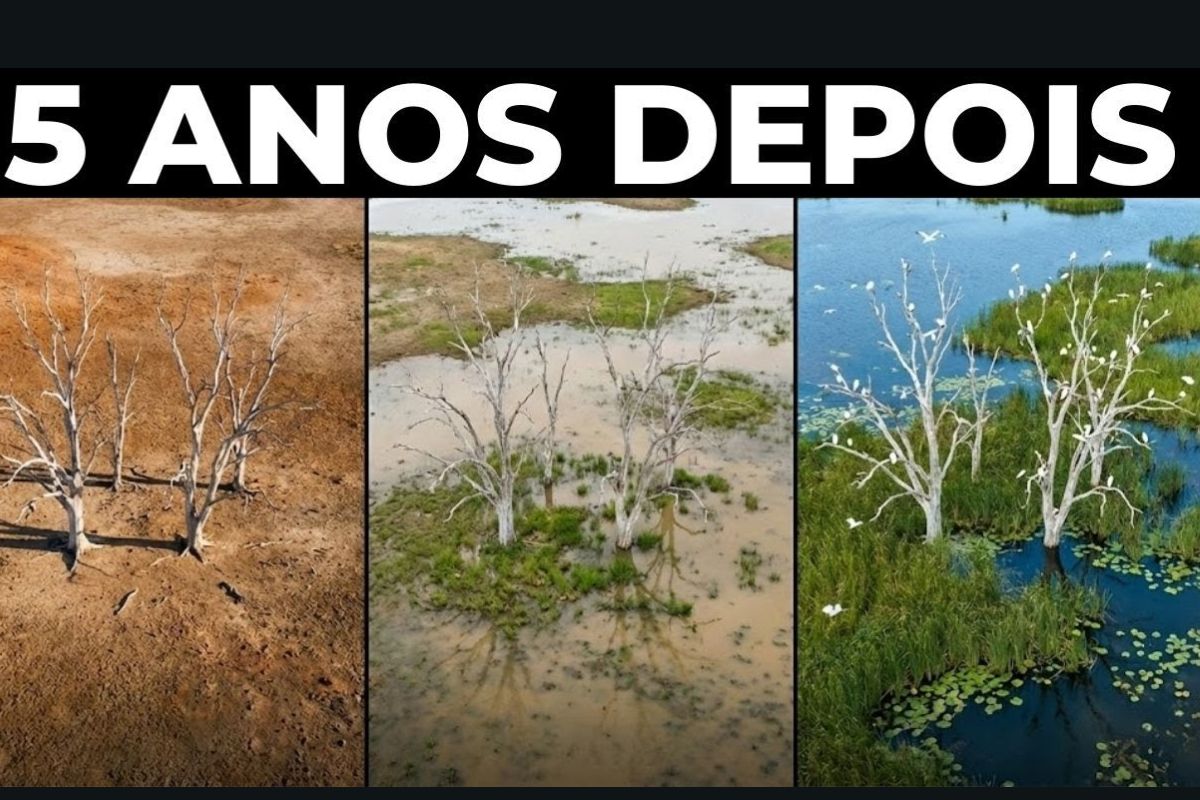
In Australia, the removal of the Mokoan Lake dam, built in 1970 in Victoria, exposed a marsh buried for decades. The shallow reservoir evaporated gigalitres, suffered toxic algae, and collapsed in the drought of 1982. After the 2004 decision, the breach of 2009 opened 8,750 ha restored with 33 wetlands.
In Australia, a landscape erased from the map for almost 40 years began to breathe again when engineers breached the dam that held Mokoan Lake, in northeastern Victoria, between Benalla and Glenrowan, over an ancient floodplain connected to the memory of the Yorta Yorta people.
What emerged from the mud was not just a marsh. The removal of the reservoir revealed rivers reconnecting with channels, forests reappearing, and an environmental restoration guided by science, community, and Indigenous culture, after decades of stagnation, evaporation, and ecological collapse.
A Living Marsh Was Drowned by an Artificial Lake That Delivered Nothing It Promised

Before Mokoan Lake, the region functioned as a floodplain with seasonal rhythms, supporting wildlife and cultural practices associated with the Yorta Yorta. Red gums and scarred sacred trees were part of this mosaic of marsh and forest.
-
For the first time in history, the Brazilian Air Force conducted a highly complex inspection on the C-99 jet independently, without relying on foreign companies, marking a new level of logistical autonomy and operational sovereignty.

-
Beet greens that end up in the trash in many kitchens contain a high concentration of antioxidants, and a 2025 study shows that extracts may have even more potent activity when transformed into microparticles.

-
Something was orbiting Earth before any human launched a satellite into space: scientists have found thousands of unexplained flashes in old photos of the sky, and a NASA researcher says the evidence points to non-human intelligence.

-
There is a gap of hundreds of kilometers between weather observation points in the United States, and now drones flying at 6,000 meters altitude in strong winds are filling this gap to predict tornadoes before they kill.


In 1970, the creation of the lake changed everything. Engineers carved a 7.5 km embankment through the lowland to capture rainwater meant for irrigation and recreation.
The cost was immediate: nearly 8,000 hectares of ephemeral forests and marshes vanished beneath shallow, stagnant waters. River red gums, unable to breathe submerged, fell silent as they died. Scarred sacred trees, linked to tools, ceremonies, and stories, were swallowed without ceremony.
The Failed Reservoir Evaporated Water, Fed Toxic Algae, and Lost Oxygen
The lake was designed as a shallow reservoir, with a large surface area. This made the system inefficient by design. Evaporation consumed impressive volumes, especially in the hot summers. Gigalitres disappeared into the air, exceeding its usefulness for farmers and local cities.
The water quality deteriorated. In the 1990s, toxic blooms of blue-green algae became routine, turning the surface into a green film and making the lake unsafe for swimming, boating, fishing, or irrigation.
Below the surface, oxygen-depleted conditions devastated aquatic life, and a space once associated with fishing and recreation came to be seen as a problem. Tourism declined, costs rose, and the aging dam structure raised safety concerns.
The Drought of 1982 Exposed What Was Buried and Accelerated the Turnaround in Perception
The drought of 1982 drastically reduced water levels. The lakebed cracked open and revealed a landscape that, for many, was the first evidence of what had been buried: a graveyard of dead red gums and the ghostly lines of ancient flood channels.
As recreational users turned away and farmers grew restless, alarms about irreversible ecological decline intensified. Permanent flooding had silenced the pulse of the floodplain. Seed banks rotted.
The diversity of the marshes collapsed. By the early 2000s, it became clear that Mokoan Lake was failing on three fronts at once: economic, ecological, and cultural.
The Decision of 2004 and the Breach of 2009: When Australia Chose to “Let the Land Return”
In 2004, after years of studies and debates, the Victorian government made a bold decision: to deactivate the reservoir and allow the land to return. Deconstructing a dam of this size was rare in Australia, but the cost of inaction had already exceeded the risk of giving up the lake.
In 2009, under a gray morning sky, the first excavators positioned themselves alongside the old embankment. With no fanfare, steel teeth met stone.
The wall, which had contained the broken river for almost 40 years and transformed a seasonal wetland into a stagnant lake, began to be deliberately dismantled. As the breach widened, water gushed out, first slowly, then rapidly.
Within days, the bed emerged exposed, cracked, and raw, with skeletal trees still standing in the mud and roots trapped in the soil.
Channels previously mapped only in memory reappeared in the terrain like veins finding flow again. It wasn’t just engineering; it was a turning point, opening up space for a landscape to function again.
A Committee United Science, Residents, and Yorta Yorta Elders to Guide the Restoration
The turnaround gained governance in 2010, with the formation of a new management committee bringing together scientists, land managers, local residents, and Yorta Yorta elders.
The mission was to restore life in a landscape that many deemed lost.
From the beginning, the recovery brought surprises. Scarred trees and marked red gums emerged from the mud like time travelers.
Frogs croaked in shallow puddles. Waterbirds returned to explore newly formed marshes in the lowest points of the basin.
Not everything was easy. Dust storms swept across the exposed bed. Invasive plants took root. Wild animals advanced rapidly.
The committee responded with targeted actions: planting native vegetation, stabilizing soil, and fencing off critical areas. Progress would be measured in years, not days.
When the River Remembers: Wet and Dry Cycles Return and Life Responds Quickly
With the wall breached and water released, the land began to pulse again. Seasonal rains stopped accumulating in a stagnant basin.
Instead, they began to flow, widening low channels, filling billabongs, and receding in the dry months. The natural cycles of wet and dry, once buried beneath the reservoir, returned with silent urgency.
Hydrologists monitored the response. Ephemeral wetlands reacted almost immediately. Nutrients circulated again.
Microorganisms flourished in the fresh foliage. Invertebrates increased. Small native fish, such as the Pigmy Perch and Gjons, recolonized reconnecting streams. The river didn’t need to be taught where to go. It remembered.
Birds arrived in numbers that surprised research teams. Ducks, swans, herons, and migratory birds returned, some nesting for the first time in decades.
Rare species reported in ecological surveys reappeared, such as the Slone Frog and the striped legless lizard. The recovery was documented with transects, photo points, and acoustic monitors, building evidence of rapid healing of the environment.
The Restoration Became a Community Experience and Reconnected Culture and Territory
With the landscape changing, the community began to occupy the space differently. Residents walked new trails, children counted frogs on school visits, volunteers planted reeds, birdwatchers recorded rare sightings.
Where there had been division over whether to maintain the lake, common ground emerged in the life returning before their eyes.
Restoring the land meant replanting what once stood tall and honoring those who knew the place long before the dam existed.
River red gums became a central focus of renewal, due to their ecological significance and cultural gravity. Volunteers planted tens of thousands of seedlings, each a promise to rebuild what had been submerged.
In this process, the red gums did not appear merely as trees. Their roots anchor banks, leaves feed insects and fish, hollows shelter birds and gliders.
Yorta Yorta elders walked through the floodplain, showing how to identify scarred trees, living markers of ceremonies, journeys, and stories.
Where sacred trees had been lost, new ones were placed with intention. Ceremonies marked moments with songs at dawn and smoke rising over the fresh soil. It was a restoration guided by ecology and respect, with healing flowing both ways.
What Australia Gained: 8,750 Hectares Protected, 33 Wetlands, and a Modern Example of Restoration
Years after the breach, the evidence is on the ground and in the sky. The Winton wetlands now encompass more than 8,750 hectares of protected reserve, with a mosaic of 33 ephemeral wetlands flowing again in seasonal rhythm.
Hand-planted red gums rise alongside the skeletons of trees that drowned.
Research teams recorded threatened species, such as the Slone Frog and the striped legless lizard, as well as native fish returning to the restored habitat.
Bird counts increased year after year, with new species documented and migratory visitors reclaiming ancestral stopover points. More than 1,200 students visited in a single year, learning on the land, guided by science and history.
Behind it all, a restoration plan of 17 million dollars, supported by land sales and community trust, went from theory to result.
In your opinion, should more dams be removed in Australia to accelerate environmental restoration like this?








-

-

-

-

5 pessoas reagiram a isso.