





 Portuguese
  English
  Spanish
  5 min of reading
  44 comments





Australia Builds Thousands Of Kilometers Of Fences To Keep Pests Secure, Protect Sheep And Crops, Contain Rabbits, Dingoes And Wild Pigs And Also Recover Native Animals In Entire Areas Of The Interior
Australia has decided to use fences to keep pests secure on a scale that almost no other country has attempted. Instead of building walls to separate people, the country has stretched thousands of kilometers of wire and netting across arid regions to block rabbits, dingoes, wild pigs, overabundant kangaroos, and other invasive species that were destroying pastures, crops, and entire sheep farms.
Over time, these fences to keep pests secure stopped being merely an emergency measure to save the agribusiness and became a huge conservation laboratory. They not only reduced losses but also helped to bring back threatened native species and transformed a collapse scenario into a rare example of conservation that generates profit and employment in the Australian interior.
A Country Fenced To Keep Pests Secure
The logic seems simple: if it is not possible to eliminate pests throughout the territory, the answer is to build fences to keep pests secure where they cause the most damage. In practice, this meant constructing continuous barriers in remote areas, in extreme heat, with sandstorms, water shortages, and complicated logistics.
-
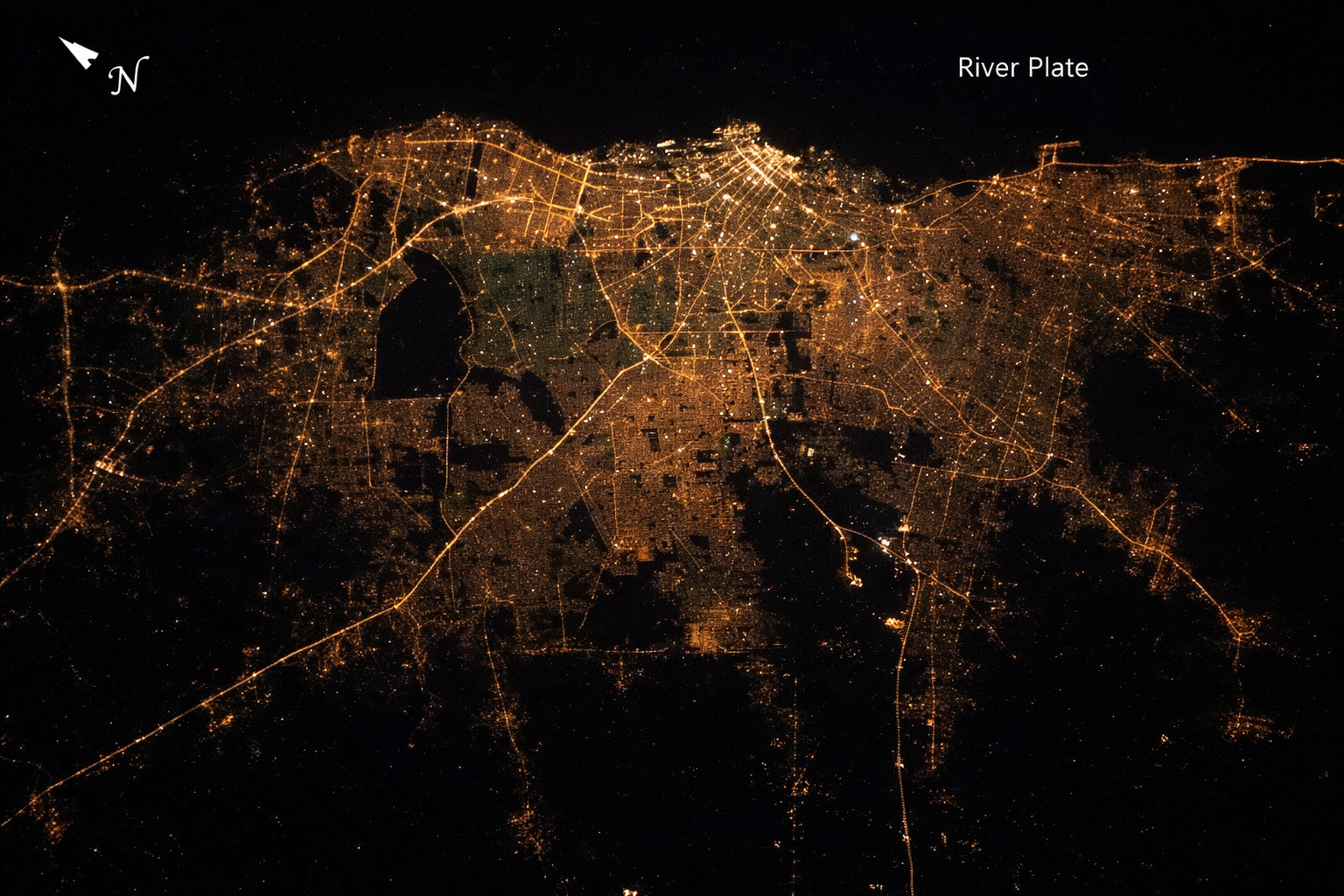
From space, Buenos Aires appears as a colossal spot of light surrounded by kilometers of darkness, revealing at a single glance the exact boundary between the metropolis and the countryside, seen from 400 km altitude.
-
NASA spent over 118 million reais to build a single bathroom that works in zero gravity, and it has just gone to space on the first crewed mission to the Moon in more than 50 years.

-
Man never set foot on the Moon? 5 scientific proofs confirm that humanity has been there and definitively dismantle conspiracy theories.

-
The Brazilian Army will adopt humanoid robots to test the concept of future combat, says a website, surprising everyone, but later revealing that it was all just an allusion to April Fool’s Day.


Over decades, the country has created some of the largest fence systems in the world, with thousands of kilometers in length, many of which are dedicated specifically to protecting sheep, crops, and fragile ecosystems from invaders that did not exist there before colonization.
When 24 Rabbits Became A National Disaster

It all started in 1859, when a wealthy colonist released just 24 European rabbits on his property to hunt. Within a few decades, this seemingly innocent decision turned into disaster: the population grew to hundreds of millions of animals, occupying much of southern Australia, where there were almost no natural predators, the climate was favorable, and pastures were abundant.
These rabbits devoured crops, tore vegetation down to the roots, and caused large-scale soil erosion. Annual losses in agricultural production reached such high levels that they jeopardized the survival of many farms and entire communities.
The First Generation Of Fences To Keep Pests Secure Is Born
In the face of chaos, the government makes a bold bet: to erect fences to keep pests secure, starting with the rabbits. In 1901, the first major rabbit-proof barrier, the State Barrier Fence, was born in Western Australia. The idea was to prevent the rabbits from the eastern states from advancing into the productive southwest.
This fence spans over 1,800 kilometers and becomes one of the longest continuous structures in the world at the time. The cost is extremely high, maintenance is a constant challenge, but the plan works for quite some time: the invasion of rabbits slows, agriculture survives, and losses in crops drop significantly.
As the years go by, this and other fences stop blocking only rabbits. They are adapted to keep out emus, kangaroos, wild pigs, and, above all, dingoes, the native wild dogs.
The Dingo Fence Draws A Line On The Map
Among the most impressive structures is the Dingo Fence, designed to keep dingoes away from sheep farming areas. At its peak, this fence exceeded 5,600 kilometers in length and is still maintained at around 5,300 kilometers today, crossing parts of the continent.
On one side of the fence, dingoes roam free, the ecosystem is more balanced, and the native fauna coexists with a top predator that controls foxes, cats, and other much more destructive species. On the other side, in agricultural areas, there are almost no dingoes, but their absence causes an explosion of invasive predator populations that attack small native mammals.
Even with this ecological side effect, for many farmers, the fence is a lifeline. Without these fences to keep pests secure, sheep farming in several regions would simply cease to be viable.
Cluster Fences: Fences To Keep Pests Secure That Save Sheep And Jobs

Starting in the 2010s, a new model emerged in Queensland: the cluster fences. Instead of a single giant fence, farmers organize in groups and fence several properties around a common perimeter, creating protected islands.
In these enclosed areas, the mission is clear: use fences to keep pests secure such as wild dogs, overabundant kangaroos, and wild pigs, significantly reducing attacks on the herds. In many cases, sheep losses to predators drop by more than 90 percent, wool quality improves, and lamb survival rates consistently rise.
Farms that were on the brink of bankruptcy due to constant attacks return to profitability. Land value increases, new jobs are created, and the regional economy gains momentum. For the government, studies show that the economic return far exceeds the cost of building and maintaining the fences.
When Fences To Keep Pests Secure Become Allies Of Nature
The most surprising effect of these fences to keep pests secure appears in the conservation of native fauna. By isolating areas and preventing the entry of invasive predators, Australia begins to create true walled sanctuaries, such as private reserves and wildlife projects that spread across arid regions.
Within these protected areas, threatened native mammals are able to recover, with significant population increases in just a few years for some species. These sanctuaries serve as living laboratories, showing how well-planned physical barriers can reverse some of the damage caused by invasive species and decades of inadequate management.
At the same time, the fences function as biosecurity barriers, reducing the entry of wild pigs and the spread of diseases in the herd, which directly impacts production costs and animal health.
Profitable Conservation: When Ecology And Money Go Hand In Hand
At first, many critics viewed the fences to keep pests secure as an outdated, expensive solution based solely on physical force. Over time, the numbers told a different story.
Fencing projects in livestock and crop regions began to show significant financial returns for the local economy, including increased productivity, improved wool quality, more surviving lambs, lower predator control costs, and recovery of degraded pastures.
Cities that suffered from droughts, pest attacks, and rural income loss began to see a more stable environment for investment, job creation, and resilience in facing climate shocks.
A Model That Inspires Other Countries
What started as a desperate act to save sheep farms and crops has turned into a worldwide case study in profitable conservation. Today, organizations and governments from other countries look to Australian fences as a reference for projects in regions struggling against invasive species and biodiversity loss.
The experience of Australia shows that simple infrastructure, when planned on a large scale and with patience, can rebalance ecosystems, protect the rural economy, and still open up space for new conservation strategies.
In your opinion, using fences to keep pests secure is a smart solution that balances profit and nature or a risky patch that could create new problems in the future?






Fencing is an old traditional as well as modern strategic planning and management of rangelands or grazing lands. From my years of training and work experience fences do not create fully isolated ecosystems or habitats of Protected Areas or Non Protected Areas as energy and material flow must flow within and between connected habitats or ecosystems based on natural cycles of matter and energy.
Fencing is can help in contriving wildlife or livestock movement and rangeland utilization for optimum utilization of a given area or paddock, help control predator attacks hence, reducing human wildlife negative interactions
However, fencing can also come with its own challenges in regards to breeding and genetic diversity if certain species cannot manage to move between connected or closely fenced sections if the breeding males or females cannot easily move across to access mates. It is also costly to build and maintain fences. Moreover, fencing can contribute to ecosystem fragmentation of original open land or spaces even when this is not intentioned.
It is a major concern that native species such as emus and wallabies and kangaroos can no longer migrate from drought stricken regions to better fodder. They group up in corners of these feral proof fences during drought, trying to migrate, and perish. It breaks grown men and womens hearts. Illegal to kill emus, legal to stop them from finding life giving water and food. It stinks.
I wonder if areas where feral animals are fenced out, if they actually thrive in the area they are contained in? I also winder if these animals – not dogs or donkeys or camels – could be used for their meat.