





 Portuguese
  English
  Spanish
  6 min of reading
  0 comments


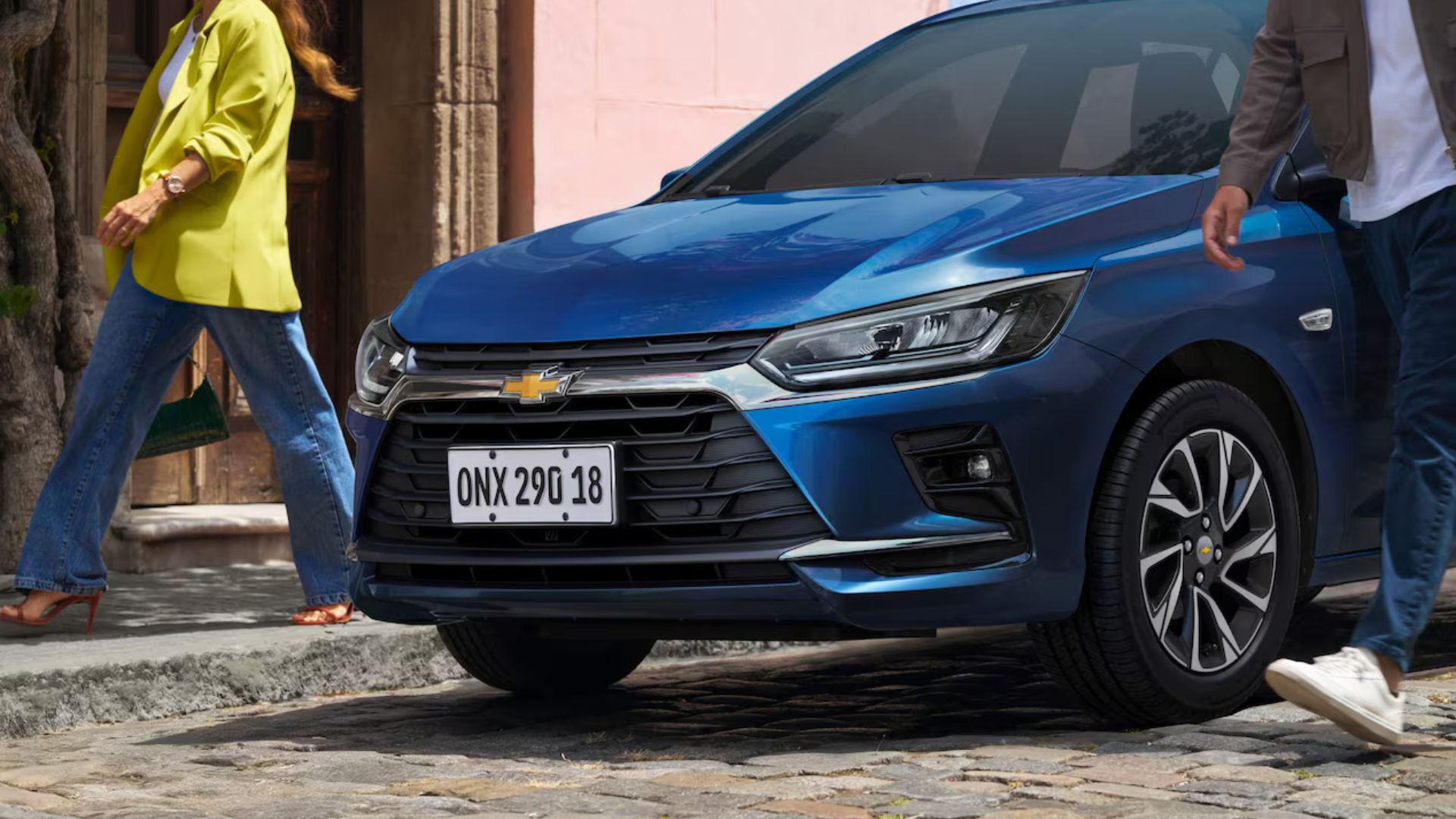
Revised Belt, Exclusive Manual Transmission and Rational Package Keep the Onix as a Relevant Alternative Among Compact Hatches, Even in a Market Dominated by SUVs and Electrification, Focusing on Real Consumption, Essential Equipment and Predictable Costs for Those Looking for a Brand New Car Without Exceeding the Budget.
The Chevrolet Onix LT 1.0 2026 arrives in the Brazilian market with a recipe that still drives a good part of its sales, based on an atmospheric engine, manual transmission, and a package of equipment designed for those who want a brand new car without migrating to more expensive SUVs.
In the evaluated version, the hatch combines mechanical changes related to the oil-bathed belt, visual updates, and a list of items that tries to balance the basics of daily life with features that were, until recently, more common in higher categories.
Even with the advancement of hybrids and electric vehicles equipped with larger screens and more sophisticated driving assistance, the compact hatch segment remains a central alternative for those buying with a tight budget and needing to forecast expenses beyond the car’s price.
-
Less than a Tera TSI, up to 710 km of range and charging in 9 minutes: the new BYD Song Ultra expands the Chinese brand’s bet on increasingly faster, more technological, and competitively priced electric SUVs.

-
With a 1.0 engine producing 75 hp and costing less than R$ 70,000, Fiat’s car returns to the podium as the cheapest in the country; a temporary promotion for the 2026 Like version reduces the price of the Fiat Mobi.
-
With a mild hybrid system of 48 V, 176 hp and a price of R$ 175,990 in the Sahara version, the new Jeep Renegade changes mostly on the inside, improves slightly in fuel consumption, and remains almost the same car.
-
With a 293.5 cm³ engine and a range of up to 400 km with a 14.1-liter tank, the Honda CB 300F Twister 2026 has up to 24.7 hp, an initial price of R$ 25,150, and already exceeds R$ 29,000 in the Fipe Table.

In this context, expenses such as insurance, maintenance and repairs are taken into account, factors that help explain why the Onix LT 2026 tries to sustain its proposal, especially when discounts and commercial conditions bring the final price closer to R$ 90,000, even though the list price remains above that.
Visual Update and Functional Changes in the Onix 2026
The 2026 line marks a design update that aims to correct practical points of urban use, highlighting the redesigned front bumper, which reduces the chance of scraping on potholes, ramps, and steeper accesses.

This adjustment directly impacts the routine of those facing speed bumps, garages, and uneven streets, as well as contributing to rejuvenating a model that had been on the market long enough to require visual touch-ups.
Mechanically, the oil-bathed timing belt remains in the design, but undergoes changes aimed at addressing criticisms and concerns from owners, with the adoption of a new belt described as more robust and associated with a new supplier.
Nevertheless, the central point remains the same: it is a system that requires strict attention to the correct lubricant and maintenance plan since the timing belt’s operation directly depends on the engine oil conditions.
LT Version Blends Visual Simplicity and Valued Equipment
In the Onix LT 1.0 2026, the proposal stands out for bringing together the most complete version with the atmospheric engine while still maintaining an entry-level positioning within the hatch range.
In practice, this results in an unusual combination of simple visual elements with equipment that usually weighs in on the purchase decision during the test drive or in the showroom.
On one side, there are items typical of more affordable configurations, such as 15-inch steel wheels with hubcaps and halogen headlights; on the other side, there are valued features such as keyless entry and push-button start.
Additionally, finishing details help distance the image of a basic car, with door handles and mirror caps in the body color and chrome application on the grille, even without the complete LED lighting package of higher versions.
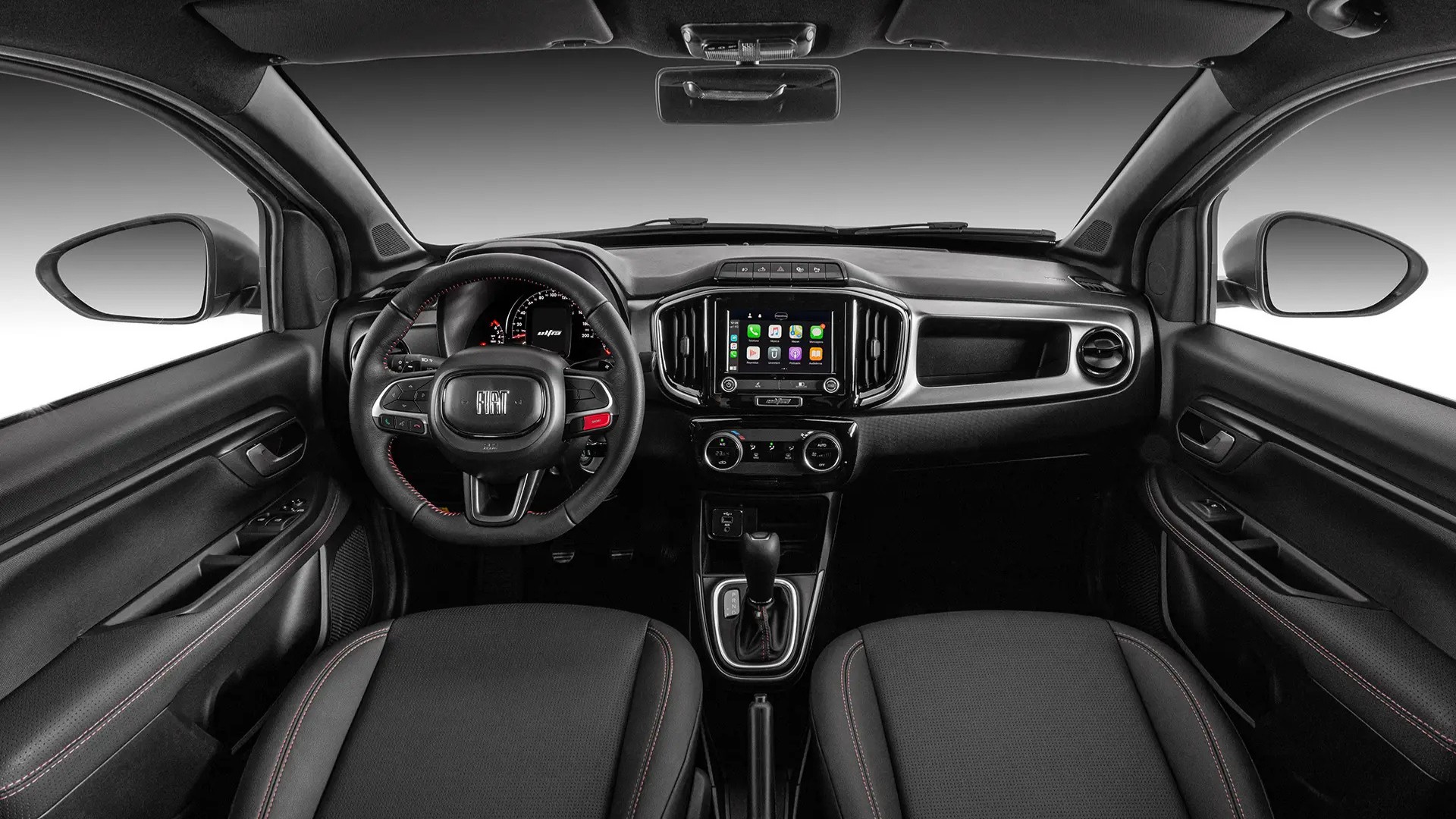
Inside the cabin, the visual integration between the dashboard and multimedia center enhances the feeling of modernization, with an 8-inch screen and wireless mirroring, while the instrument cluster maintains a traditional solution with dials and a central onboard computer.
The setup prioritizes functionality and ease of use without promising a revolutionary interface, which tends to please those looking to just connect their phone and stick to their routine without distractions.
Recalibrated 1.0 Atmospheric Engine and Six-Speed Manual Transmission
Chevrolet has recalibrated the 1.0 atmospheric engine to meet environmental requirements and seek efficiency gains while keeping the original concept with three cylinders, dual overhead camshafts, variable intake and exhaust, and indirect injection.

In the 2026 line, the declared figures reach 80/82 hp of power and 10.2/10.6 kgfm of torque, depending on the fuel, values aligned with what is expected from an atmospheric engine in this segment.
The element that changes how this performance appears in daily use is the six-speed manual transmission, which remains a rare differential among entry-level compact hatches, as most competitors still use five-speed gearboxes.
The presence of the sixth gear helps reduce revs at cruising speed, while the closer ratios in the first gears favor acceleration and recoveries at low speed, an important characteristic for those frequently facing heavy traffic.
In driving, the setup tends to feel more willing than the numbers suggest, as long as the driver keeps the engine in the appropriate range, accepting that downshifts will be necessary on hills, overtaking, or when the car is loaded.
Still, the gearbox’s gearing reduces the sensation of lack of power typical of some 1.0 atmospheric engines and contributes to a more balanced everyday driving experience.
Real Consumption in Urban Use and Behavior on the Highway
Fuel consumption is one of the main arguments for those looking for an atmospheric hatch with a manual transmission, and the Onix LT 2026 tries to meet exactly this buyer profile.
In mixed urban use, with segments of freer traffic, onboard computer records can approach 14 km/l with gasoline, especially when driving emphasizes early gear changes and frequent use of sixth gear.
On the highway, the Onix 1.0 maintains a rhythm compatible with the flow but shows clear limitations in overtaking and on longer climbs, a situation that intensifies when the vehicle is loaded.
In these scenarios, it is necessary to anticipate maneuvers and work the gearbox more to keep the engine in favorable rotations, respecting the characteristics of an atmospheric setup.
Interior Space, Suspension and Essential Comfort Items

In the comfort and convenience package, the Onix LT 2026 delivers items that many buyers consider essential in daily life, such as automatic headlight activation, electric windows and mirrors, and cruise control.
Important adjustments for ergonomics are also included, such as height and depth adjustments for the steering column and the driver’s seat height adjustment, factors that directly impact posture and comfort behind the wheel.
The interior space remains a relevant point within the category, with a cabin capable of comfortably accommodating a small family in everyday use, while the trunk keeps to the compact hatch proposal aimed at urban environments.
The suspension is perceived as a more mature setup than in previous phases of the model, aiming to better filter irregularities without making the car excessively soft, resulting in a more balanced handling on Brazilian roads.
Price, Discounts and the Choice for a Brand New Car
The main discomfort for those evaluating the Onix LT 2026 usually appears in the listed price, which places the hatch in a high tier for a model with a simple visual in some details.
Nevertheless, the car tries to justify the value with the connectivity package, the presence of keyless entry, push-to-start, cruise control, and the six-speed manual transmission, as well as a focus on fuel economy.
In practice, the weight of the decision falls less on the official price and more on the negotiated value, as campaigns and commercial conditions often reduce the gap between the Onix and options for higher-category used cars.
Still, the brand new car remains attractive for those who do not want to inherit a maintenance history and prioritize warranty and predictable costs.
In this scenario, the Onix LT 2026 shows how the Brazilian popular hatch has evolved without abandoning its essence, maintaining a focus on the indispensable, adding some impactful items, and attempting to control usage costs with a rational mechanical setup.
Between choosing a more equipped used car and a more restrained brand new one, what weighs more today in your decision: the peace of mind of warranty or the feeling of getting a larger car for the same money?







-

-

-

5 pessoas reagiram a isso.