





 Portuguese
  English
  Spanish
  4 min of reading
  0 comments


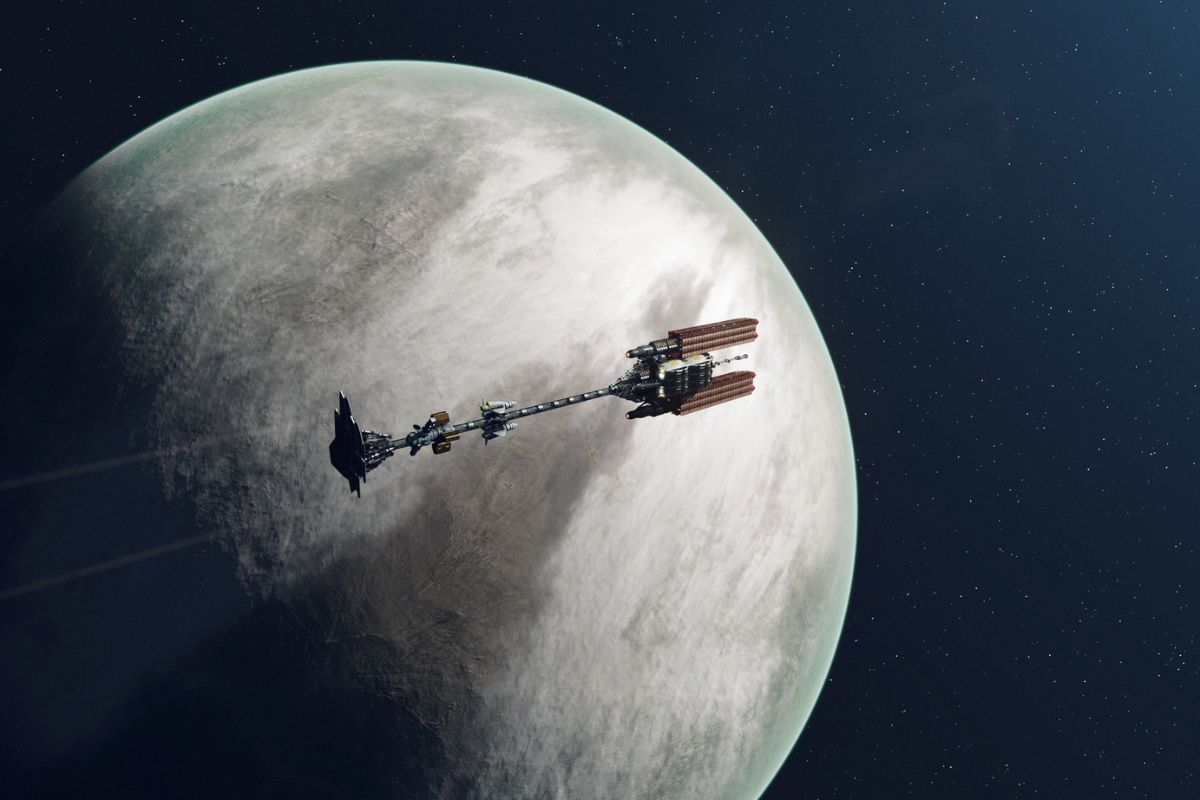
Unprecedented experiment in microgravity showed that ultralight graphene aerogels can be accelerated by laser with speed and direction control and researchers say they are paving the way for a future of propulsion without propellant
In science fiction, spaceships are pushed by beams of light. In Avatar, in Star Trek, in dozens of movies and books, the idea of moving something in space using only light appears as something as natural as sails in the wind on a cosmic ocean. The problem is that, in real life, light pushes so little that a mosquito landing on your arm exerts more force than the entire sunlight on a one-square-meter sail.
Well, scientists have just proven that this doesn’t matter.
What did the ESA experiment demonstrate?
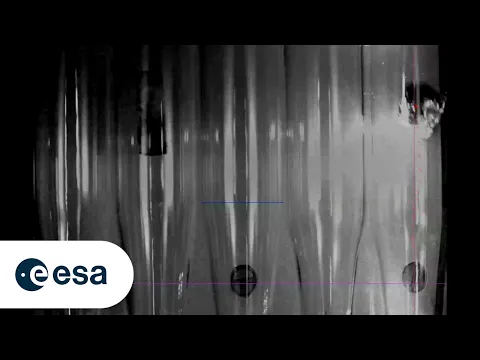
Researchers from the European Space Agency (ESA), in partnership with the Université Libre de Bruxelles (Belgium) and Khalifa University (United Arab Emirates), conducted an experiment that could change the future of space travel. They proved in microgravity conditions that graphene aerogels, ultralight materials, can be propelled by laser without any fuel.
-
A student spent years dragging friends to see a solitary 1.8-meter stone in a forest in England until archaeologists decided to investigate and discovered a 3,700-year-old ritual site hidden beneath the ground, featuring five fallen stones, a ceremonial platform, and a spring that fed Bronze Age rituals.

-
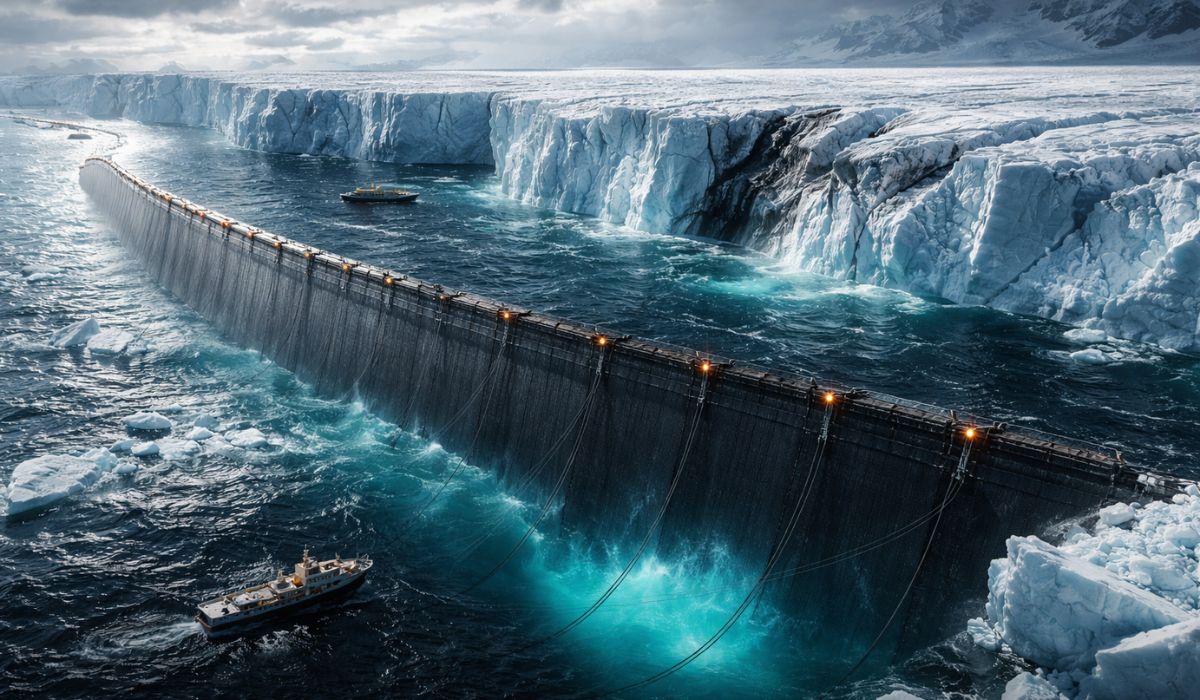
With 80 kilometers in length and 152 meters in height, a gigantic underwater barrier could become the last resort of engineering to contain the Judgment Day Glacier and buy time against the rising oceans on the planet.
-
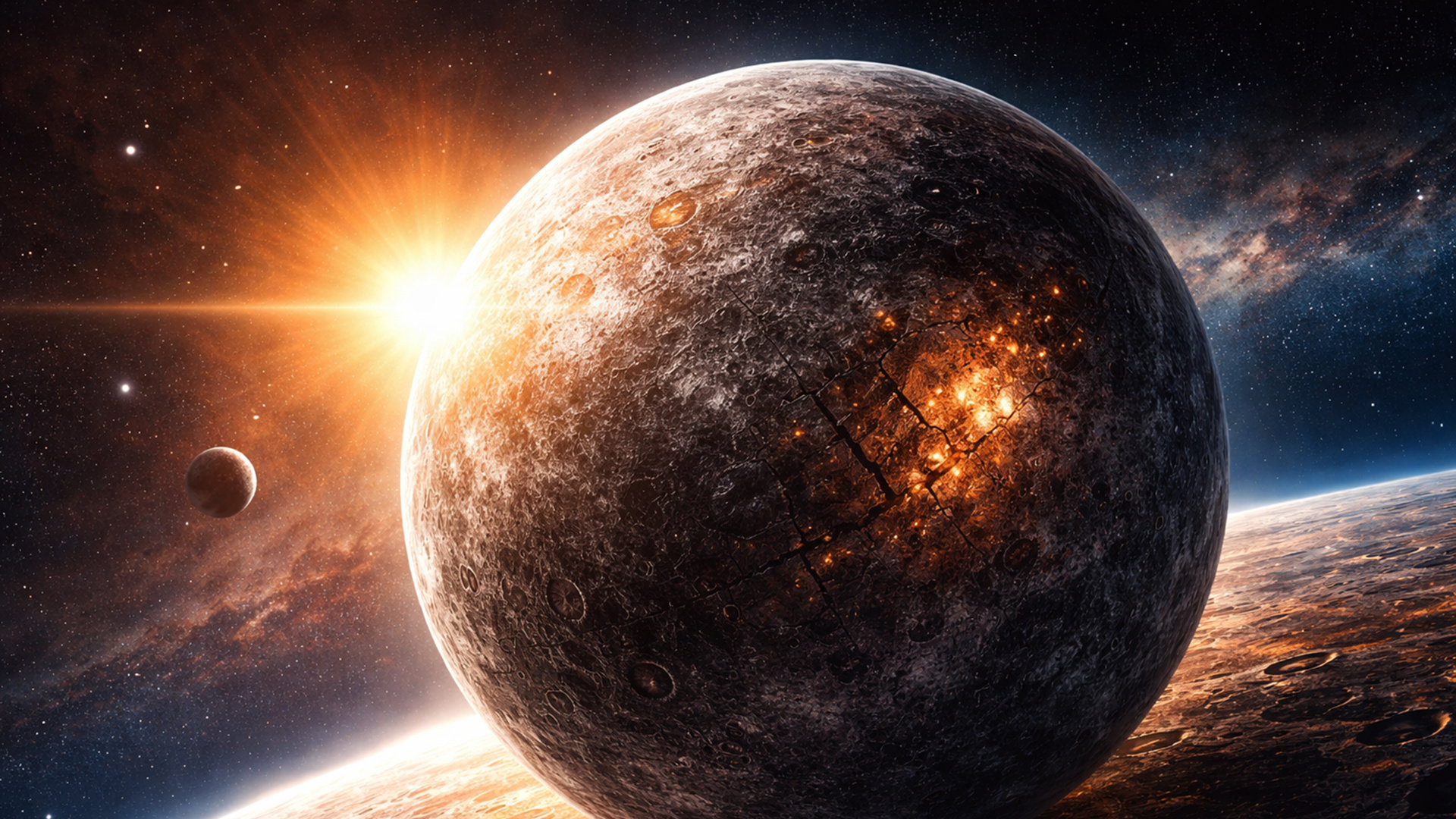
Why is Mercury so strange? The smallest planet in the Solar System has more iron than the others and days longer than years.
-
Tropical forests are nearing a temperature limit that could kill the leaves at the tops of trees and trigger a cascading collapse that would turn the planet’s largest carbon reservoir into a source of emissions.

The detail that changes everything: the intensity of the laser acts as an accelerator. The stronger the beam, the higher the speed. It’s like having an accelerator pedal made of light. The researchers were able not only to move the object but also to control the speed and direction precisely.
“We are paving the way for a future of propulsion without propellant”, declared the ESA research team. The phrase sounds like a movie script. But it is published science tested in a real environment.
How is it possible to move something with light?
The physics behind it is elegant and simple. Photons, the particles that make up light, have no mass but carry momentum. When a photon hits a reflective surface and bounces back, it transfers momentum twice: once on the way there and once on the way back. This transfer generates a tiny force. An almost invisible push.
But in the vacuum of space, where there is no friction, no air, and no resistance, this tiny push accumulates continuously, for months, for years, without stopping. A chemical rocket burns fuel for minutes and then just floats. A light sail accelerates continuously as long as there is light hitting it.
The difference is huge over time. A traditional rocket will never exceed a certain speed because it carries the weight of its own fuel. A light sail carries nothing. Theoretically, it can reach significant fractions of the speed of light.
Has this been truly tested in space?

Yes. In 2010, the Japanese probe IKAROS became the first spacecraft in history to travel in space using a solar sail, going to Venus propelled only by sunlight. It worked. It’s not theory. It’s not simulation. It’s a real spacecraft that reached another planet pushed by photons.
What scientists are doing now is taking the next step: replacing sunlight with powerful lasers fired from Earth. The advantage is that a laser concentrates much greater energy in a much smaller point, allowing accelerations that sunlight would never achieve.
In March 2026, researchers from Tuskegee University published in the Journal of Nanophotonics an advancement in photonic crystal sails that achieve 90% reflectivity at the propulsion laser wavelength, minimizing heating and maximizing thrust. It’s material engineering to make fiction work in practice.
What changes if this technology scales?
It changes everything. Three concrete examples:
Satellites that never become junk. Today, when a satellite runs out of fuel for its orbital adjustment thrusters, it becomes space debris. With laser propulsion and graphene, the satellite can correct its position indefinitely without fuel. This transforms equipment worth millions of dollars that lasts 15 years into equipment that lasts decades.
Interplanetary travel in weeks, not months. Researchers from McGill University proposed in 2022 a laser thermal propulsion system capable of getting a spacecraft to Mars in 45 days. The standard system takes 7 to 9 months. Less time in space means less exposure to cosmic radiation for astronauts.
Interstellar travel in decades, not millennia. The Breakthrough Starshot project, funded by billionaire Yuri Milner, plans to send micro spacecraft the size of a chip to Alpha Centauri, the closest star, using a 100-gigawatt laser. At 20% of the speed of light, the journey would take about 20 years. With traditional rockets, it would take over 70,000 years.
Why did Avatar get it right?
Because James Cameron intuited something that physics already knew but engineering had not yet proven: that the most elegant way to travel through space is not to burn fuel, but to surf on light. No dead weight, no tanks, no explosions. Just a beam of energy pushing an ultralight sail through the infinite vacuum.
The ESA experiment with graphene is another step in that direction. Small in scale, giant in implication. Because every time someone proves that light can move matter in space with control and precision, the boundary between science fiction and real engineering gets thinner.
And when that boundary disappears completely, the rockets we now consider the pinnacle of technology will seem as primitive as a horse-drawn cart looks to someone looking from inside a bullet train.
With information from ESA, Interesting Engineering, Phys.org, Journal of Nanophotonics, and Space.com.







Seja o primeiro a reagir!