





 Portuguese
  English
  Spanish
  3 min of reading
  0 comments


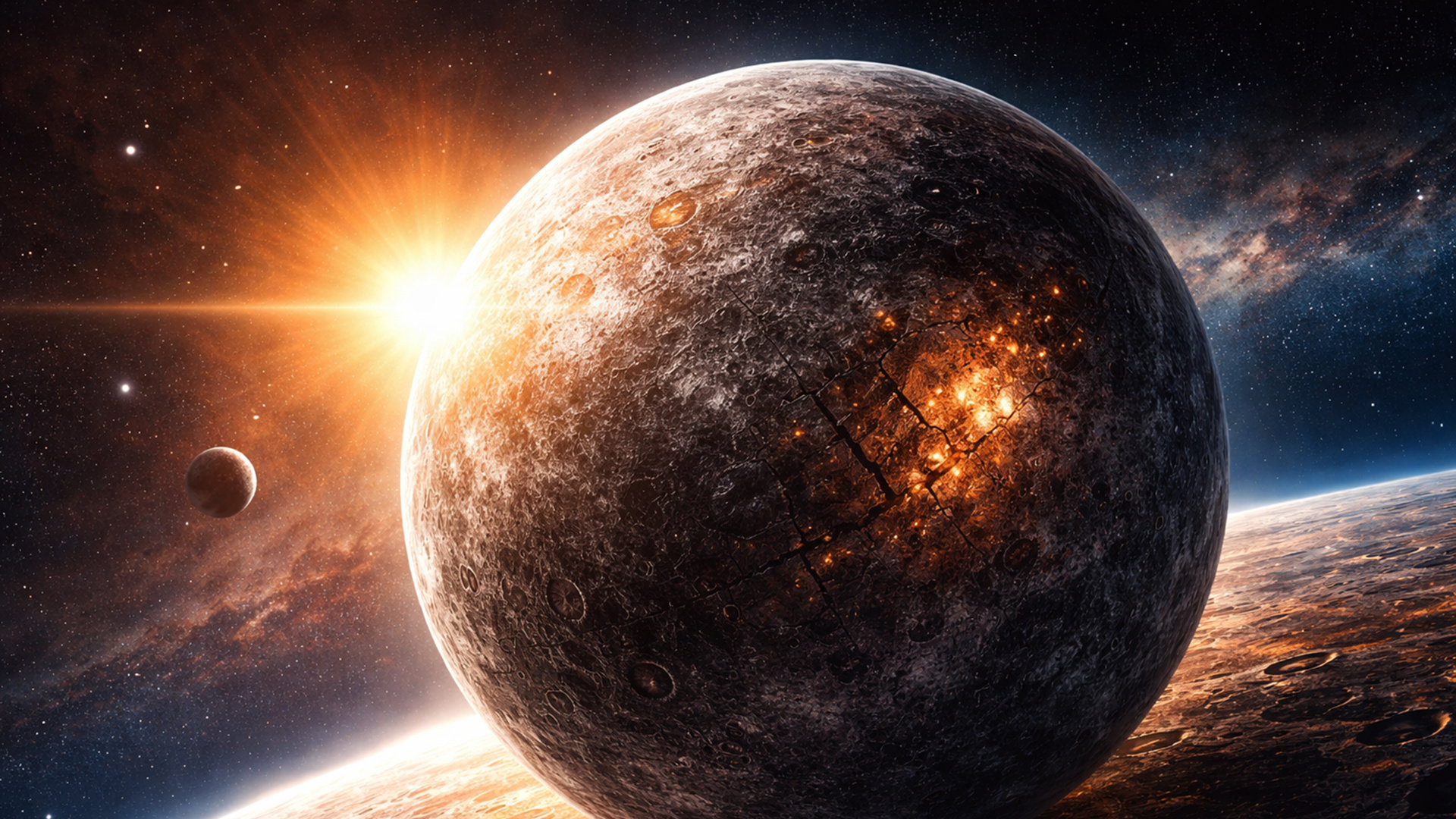
Mercury, the smallest planet in the Solar System and the closest to the Sun, draws attention for gathering rare extremes: solar days of 176 Earth days, temperatures between 430 °C and -180 °C, a large concentration of iron, ice in dark regions, and space missions marked by high complexity
Mercury, the smallest planet in the Solar System and the closest to the Sun, has extreme characteristics that help explain why it remains one of the most challenging worlds for space exploration. Known since ancient Babylon, the planet has solar days longer than its years and experiences temperatures ranging from 430 °C during the day to -180 °C at night.
Missions to Mercury and the challenges of exploration
So far, three space missions have been sent to Mercury. Two of them were organized by NASA, Mariner 10, launched in 1973, and Messenger, from 2004, while the BepiColombo mission, initiated in 2018, is ongoing under the command of the European Space Agency and the Japan Aerospace Exploration Agency.
The small number of missions to Mercury is linked to the great difficulty of reaching the planet.
-
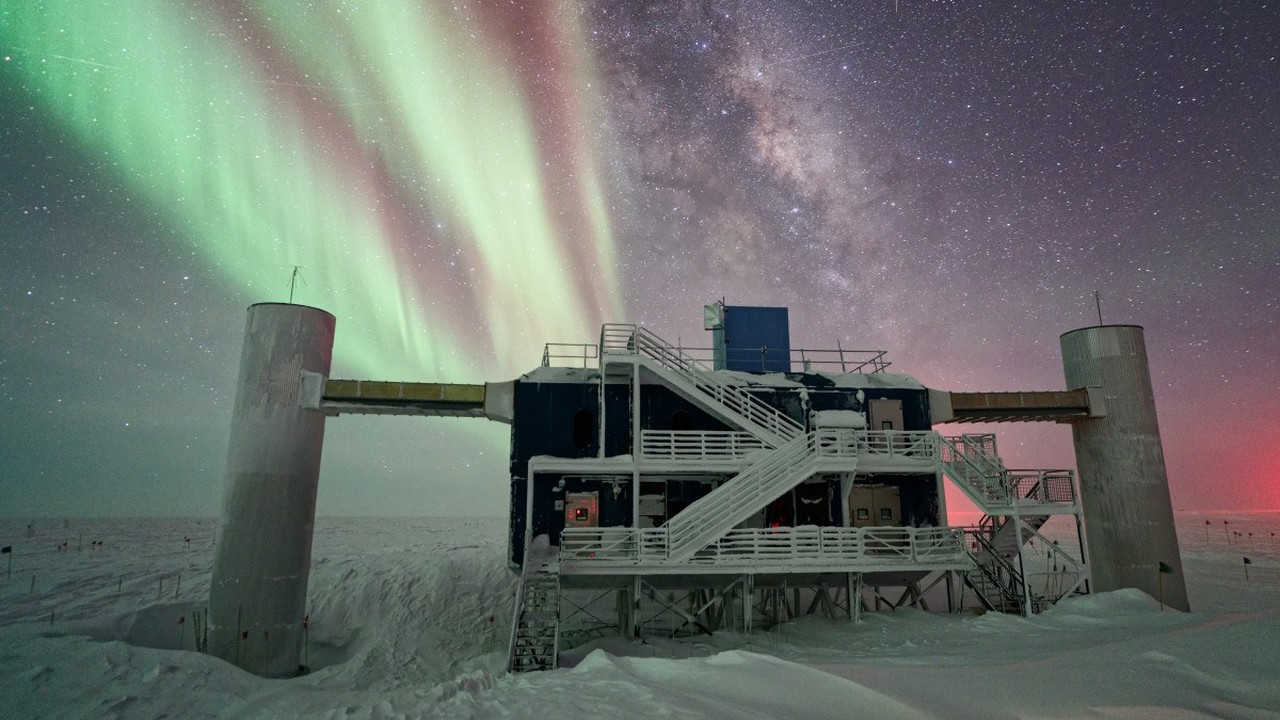
At the bottom of the South Pole ice, the IceCube observatory drilled more than a kilometer and a half of ice to hunt ghost particles and test whether gravity obeys the rules of quantum physics.

-
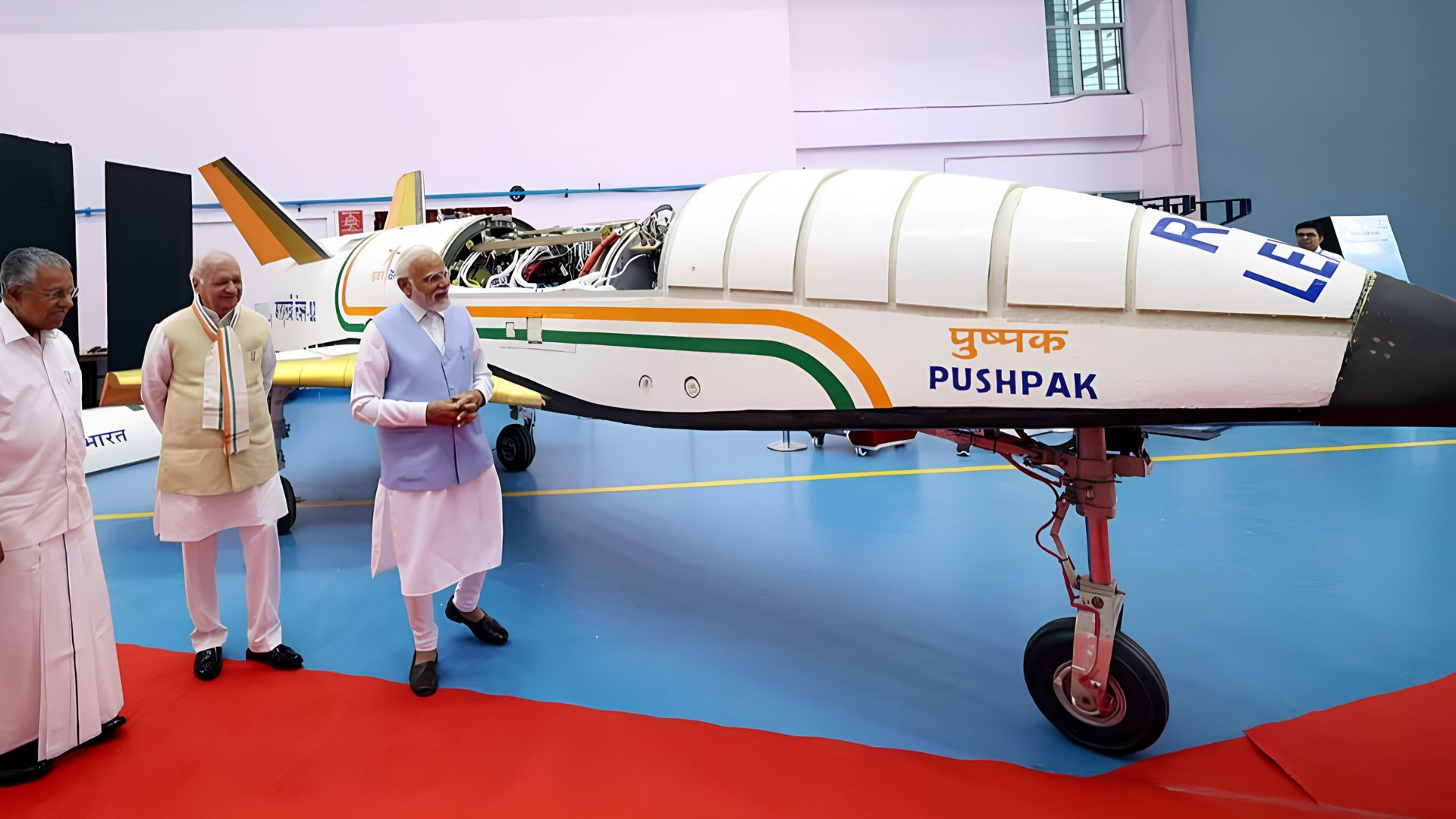
While the United States and China compete over giant rockets and lunar bases, India made a “spaceplane” land on its own at over 320 km/h after being released by a helicopter at an altitude of 4.5 km; Pushpak shows that New Delhi also wants to enter the era of reusable space vehicles.

-
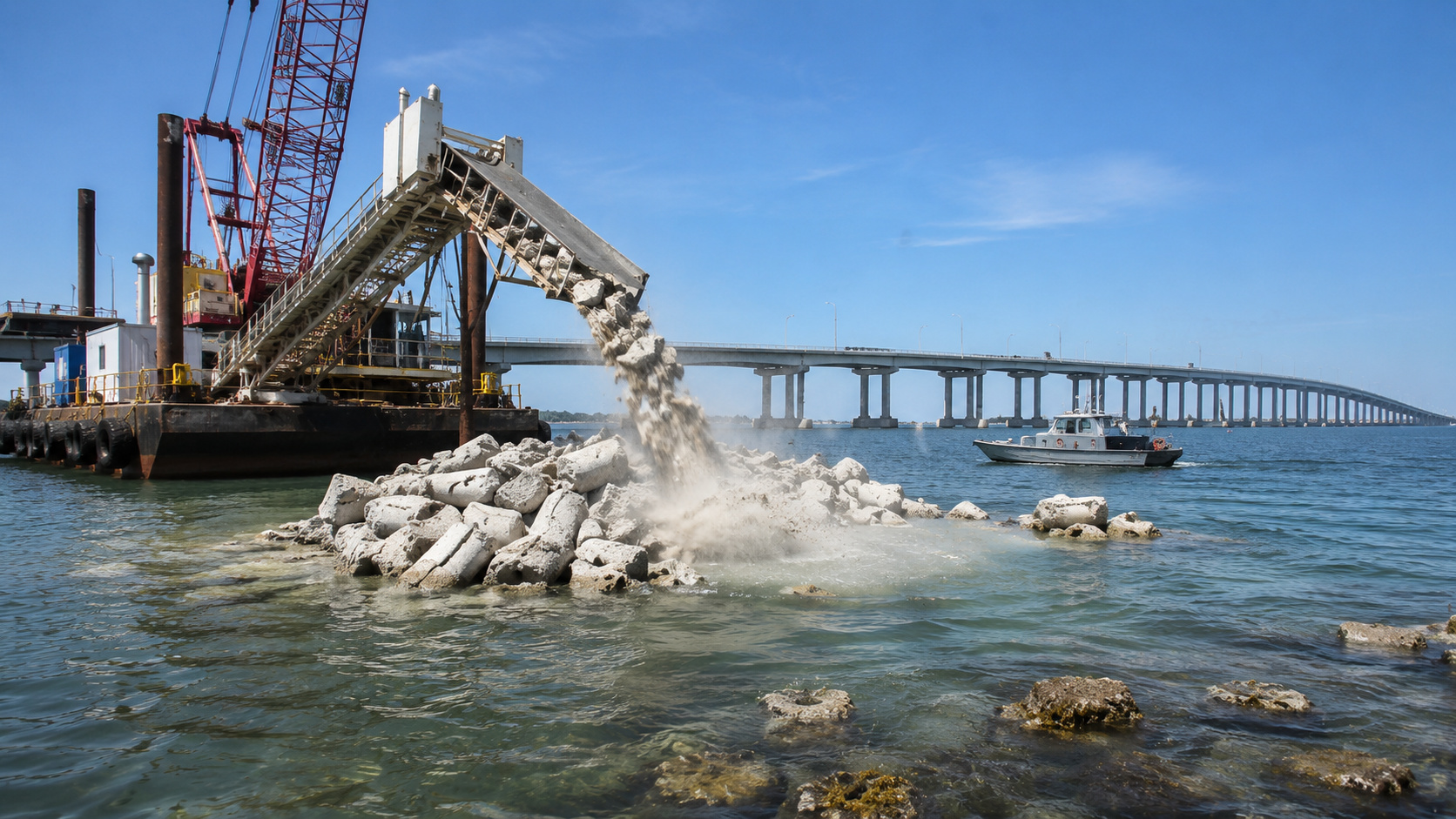
Virginia engineers transform 100,000 tons of demolished concrete from the Hampton Roads bridge into artificial reefs in the Chesapeake Bay, turning the debris from a mega-construction project into marine shelter while the old structure was still being dismantled.

-
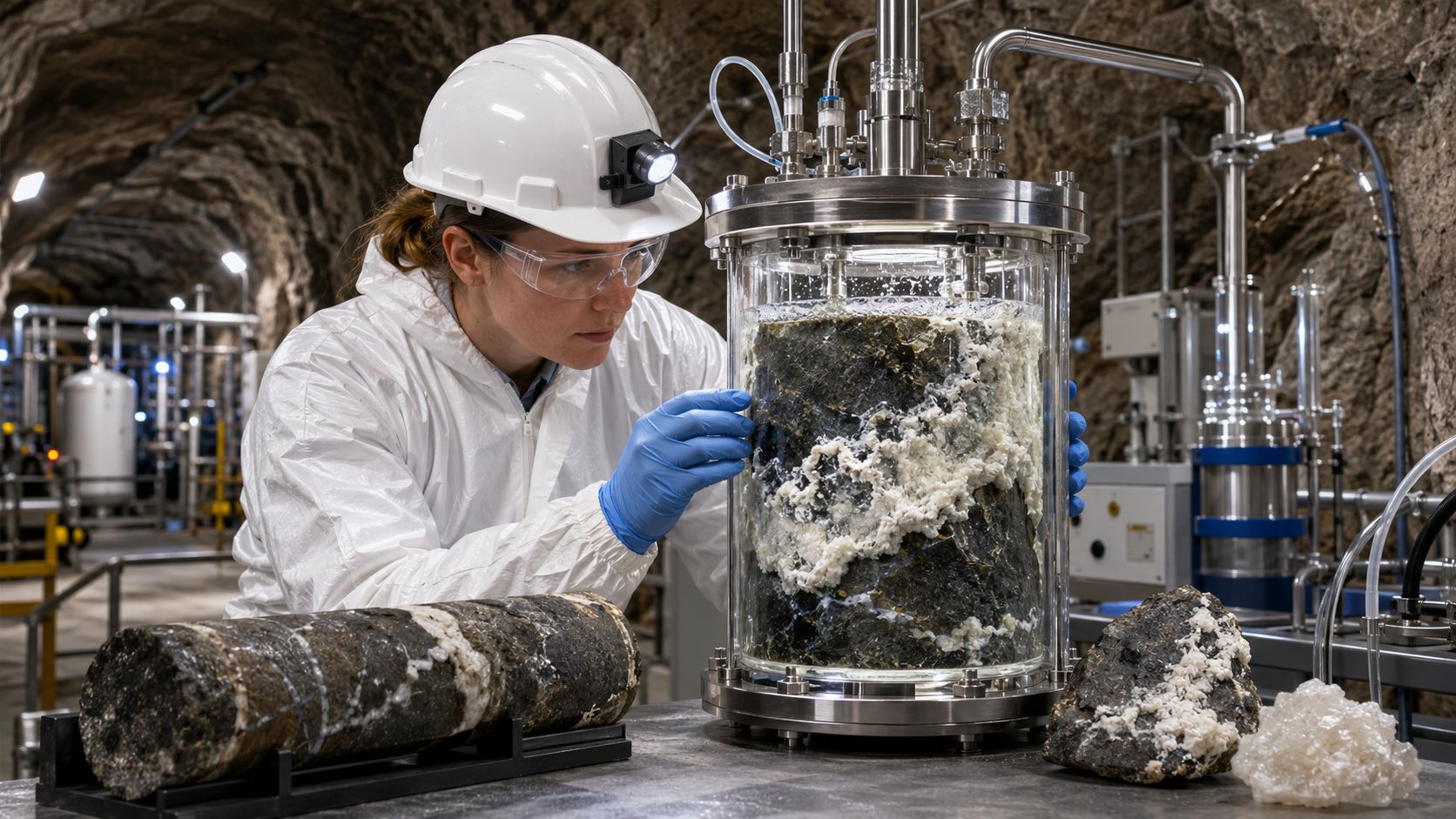
Researchers in South Dakota are studying microbes found in an extreme underground environment, more than 1,200 meters deep, capable of accelerating the conversion of CO₂ into solid minerals in weeks, with potential applications in power plants, factories, and construction materials.
The strong gravitational influence of the Sun requires spacecraft to use much more energy than needed for missions to more distant regions of the Solar System, in addition to the use of thermal shields capable of withstanding the extreme heat in its orbit.
The smallest planet in the Solar System
Mercury has a diameter of 4,880 kilometers, which is about one-third the size of Earth. Its appearance resembles that of the Moon, with a rocky surface marked by craters and an almost nonexistent atmosphere.
The conditions on the planet make life as we know it unviable. The thermal contrast is one of its most severe features, with intense heat during the day and extreme cold at night, although areas that never receive sunlight harbor large amounts of water ice.
On Mercury, the day lasts longer than the year
One of the most curious characteristics of Mercury is the relationship between its orbital movement and its rotation. The planet takes 88 Earth days to complete one orbit around the Sun, while its sidereal day lasts 1,408 hours, equivalent to 58.6 Earth days.
The result is that a solar day on Mercury, measured from one sunrise to the next, lasts 176 Earth days. This happens because, despite being the fastest planet in the Solar System, reaching about 172,000 kilometers per hour in its orbit, its rotation is relatively slow.
This behavior generates another unusual phenomenon. At certain points on the planet and during the eight days of highest orbital speed, the Sun appears to retreat in the sky for a moment, producing a double sunrise and also a double sunset.
A planet rich in metals and iron
Mercury also stands out for its composition. About 70% of its materials are metallic, and the planet has the highest iron content among all the planets in the Solar System.
Its core occupies 57% of the total volume, a proportion much higher than that of Earth, where this part represents 15% of the planet. This characteristic reinforces the hypothesis that Mercury suffered, in the early Solar System, the impact of a large object capable of stripping away part of its crust in a violent process.
A planet without moons and with a preordained destiny
Mercury is a solitary planet, just like Venus, for not having natural satellites. Its proximity to the Sun also defines its distant fate: it is expected to be the first planet in the Solar System to disappear, in about 5 billion years, when the star begins its transformation into a red giant.
Until then, Mercury will continue to offer rare phenomena for observation from Earth. One of them is the transit of the planet between Earth and the Sun, an event that occurs every few years and had one of its last passages recorded in 2019, with a new occurrence expected in 2032.





-

1 person reacted to this.