





 Portuguese
  English
  Spanish
  3 min of reading


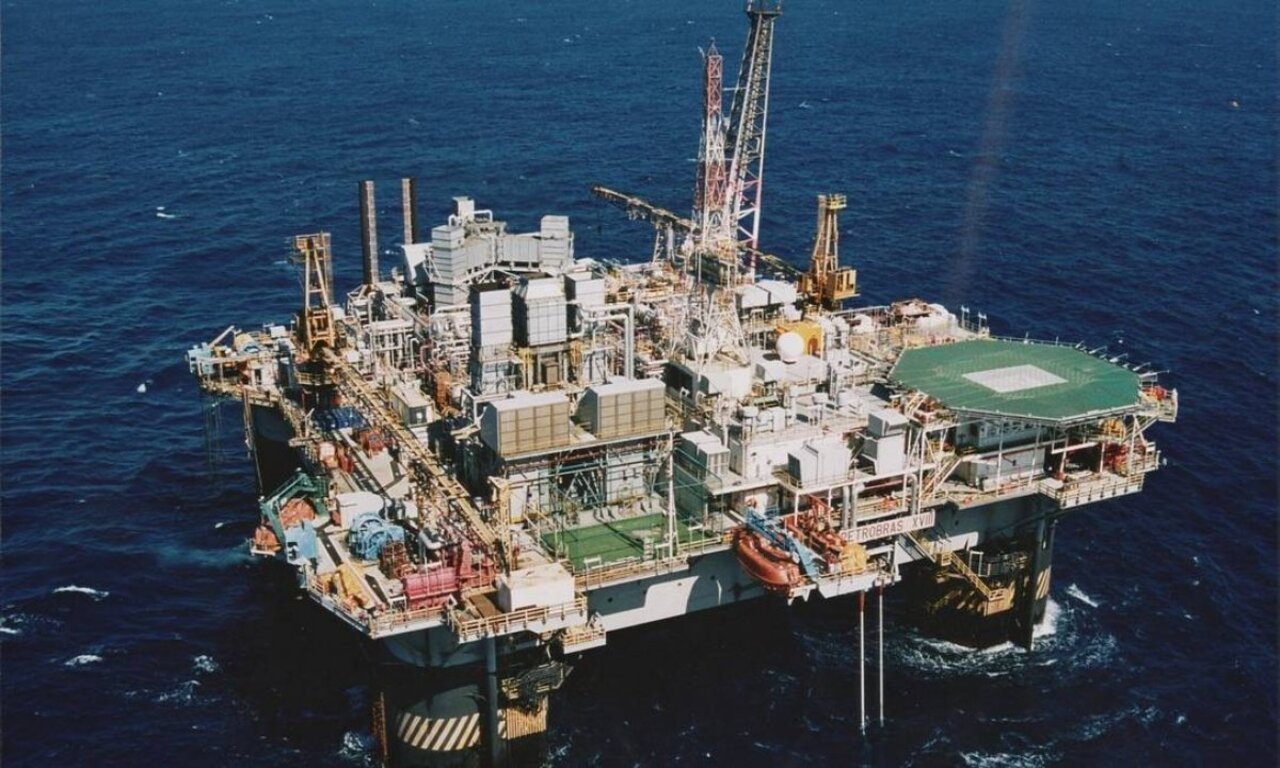
According to Ineep, the Campos Basin Experienced a Decline in Daily Oil Production
Located in the northern Fluminense region, the Campos Basin recorded the lowest production volume of this century at the end of 2020, with 679,000 barrels of oil per day. Of this total, only 607 barrels of oil were extracted by Petrobras, according to data released by the company and compiled by the Institute of Strategic Studies on Oil, Natural Gas, and Biofuels (Ineep).
Also Read
The data from Ineep shows a decline compared to the statistics from 2000, when oil production in the Campos Basin reached the mark of 1 million barrels per day. The region’s performance has been declining year after year.
In 2017, production in the Campos Basin fell below 1 million barrels of oil per day. And, over the last six years, it has halved, according to Ineep (in 2015, it was 1.34 million barrels of oil per day). This is due to giant fields that, in the past, responded for 80% of the oil extracted in the country entering a phase of decline. The sustainability of resource utilization in the region depends on investment and the use of recovery technologies.
-
Lula reveals a masterstroke by Petrobras to undo a deal made by Bolsonaro, which involves the return of an important refinery that currently produces less than half of what was expected and makes Brazil dependent on international diesel.
-
A study confirms that the natural gas sector will reduce greenhouse gas emissions in Brazil by 0.5% and accelerate the energy transition by 2026.

-
Petrobras implements a severe adjustment and confirms a 55% increase in the price of aviation kerosene with a proposal for installment payments for the companies.

-
The rise in oil prices could ensure an extra revenue of R$ 100 billion for the Federal Government, indicates a recent economic study.


Ineep Explains the Data on the Campos Basin
According to Ineep, despite shrinking its presence, Petrobras still accounts for 90% of the total produced in the Campos Basin. This is because the production of private competing companies in the region has also decreased.
From 2015 to 2020, oil extraction fell by 47%, from 133,700 barrels per day to 71,200 barrels per day. Only Parenco, Trideny, and PetroRio extracted more oil in the Campos Basin during this period. In contrast, Shell, Equinor, and Dommo saw significant reductions. Chevron suspended production in 2020.
“These data show that the replacement of Petrobras by the private sector will not happen automatically and, so far, is resulting in a sharp decline in production in the region. This can be explained, on one hand, by the inability of private oil companies to make the enormous investments undertaken by the state-owned company and, on the other hand, by the fact that these companies have shifted their priorities over time. Shell and Chevron, for example, tend to focus their efforts in the pre-salt area instead of the Campos Basin,” states Ineep in its study.
About the Campos Basin
The Campos Basin is a Brazilian sedimentary basin located off the northern coast of the state of Rio de Janeiro, extending to the south of the state of Espírito Santo, between parallels 21 and 23 south. It covers approximately 115,800.00 square kilometers.
The main exploration and production activities are carried out in the city of Macaé, where Petrobras has a base at Imbetiba Beach, in addition to the municipalities of Campos dos Goytacazes, São João da Barra, Quissamã, Carapebus, and the southern region of the state of Espírito Santo.










Seja o primeiro a reagir!