





 Portuguese
  English
  Spanish
  3 min of reading
  0 comments


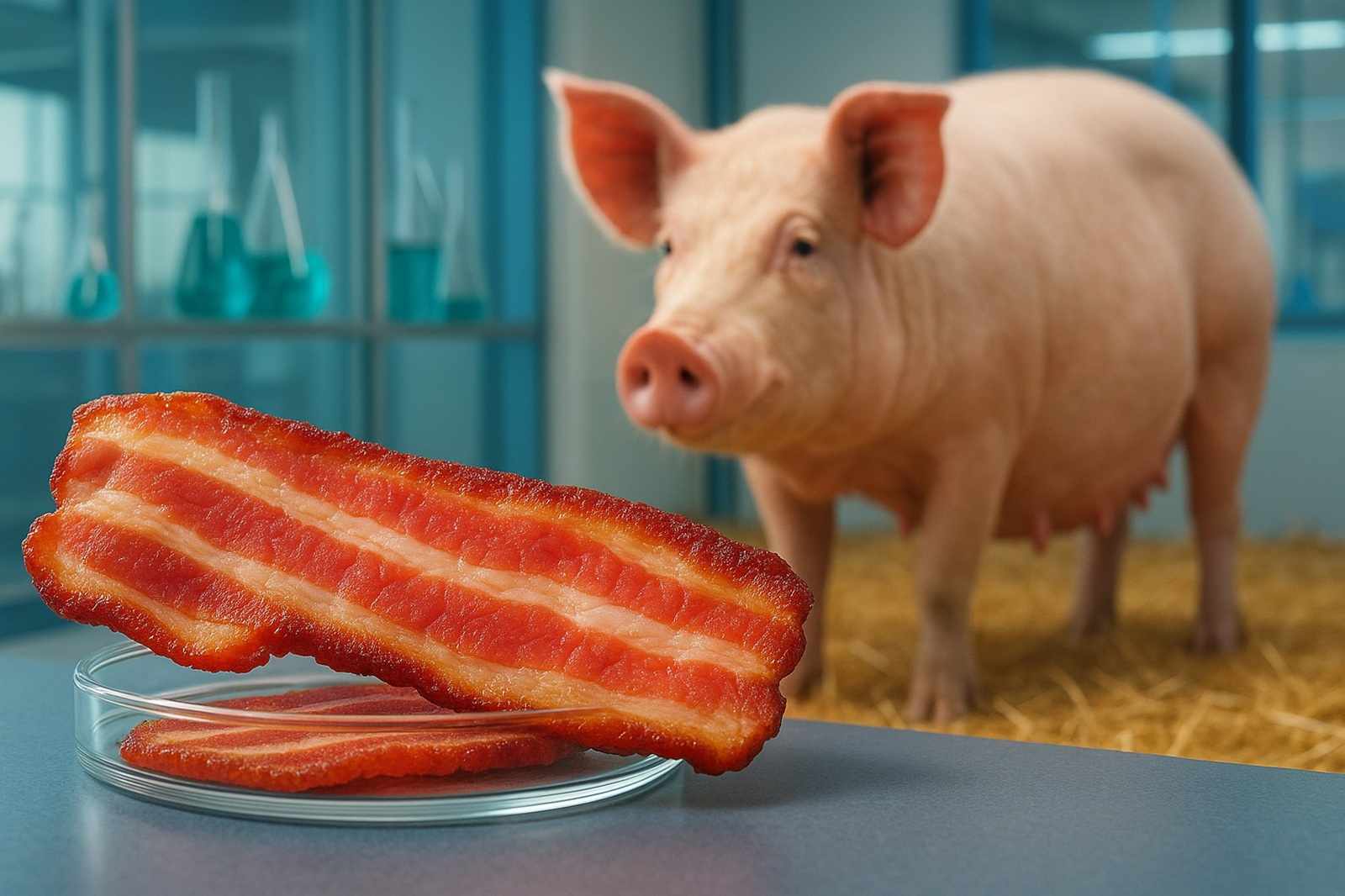
Mission Barns Bets on Lab-Grown Fat as an Alternative to Intensive Pig Farming, Offering Products Like Bacon, Sausages, and Meatballs Without the Need for Slaughter
Pork can be cheap, fatty, and tasty, but its production involves significant challenges and difficult issues to ignore. Pigs are highly social animals, capable of demonstrating personality traits, as well as emotions like stress and fear.
They also rank among the most intelligent animals, coming in fifth globally and showing levels of consciousness comparable to that of a three-year-old human child.
At the same time, the industrial farming of these animals generates significant environmental impacts.
-
Goodbye common refrigerator: essential appliance starts to gain competition with technology that preserves food for longer and reduces waste.

-
Germany discovers how to reuse old window glass without melting anything and can transform 220,000 tons per year into new high-performance panels, using material from nearly 150 million old windows that would be discarded.
-
China creates hypersonic engine that can make planes and missiles fly more than 6 times the speed of sound with less weight, more range, and without system change.

-
Mysterious object on Mars divides NASA and Harvard after Curiosity image reignites suspicions about what was really found on the planet.

Despite this, since the 19th century, society has continued to raise, fatten, and slaughter pigs on a massive scale. Now, a new possibility is starting to take shape with Mission Barns, a startup that bets on meat grown in bioreactors as a sustainable alternative to the traditional industry.
Harvesting and Growing Cultivated Fat
The company claims to have developed a process aimed at reducing the cruelty associated with intensive production. It all begins with the collection of a small sample of adipose tissue taken from a live animal. In the case of Mission Barns, this donor is Dawn, a Yorkshire sow living in upstate New York.
After collection, laboratory technicians provide plant-based sugars, proteins, and vitamins to the fat culture.
This material is then placed in a cultivator designed to mimic the natural growth that would occur in a pig’s body.
In two weeks of incubation, a fatty base is obtained, ready to be transformed into food.
Transformation into Meat Products
After incubation, this cultivated fat is combined with plant protein to generate a product that, according to the startup, is technically real meat.
The fundamental difference lies in the absence of slaughter, eliminating a significant portion of the cruelty present in conventional production.
The result can be used in a variety of traditional products, such as sausages, salamis, and bacon. According to a review published by Grist, the flavor is described as “diet meat,” with notes slightly less intense than regular pork, yet still achieving an excellent final result. For many, the simple fact that Dawn is still alive is an important element of this proposal.
Characteristics and Possibilities of the Product
The meat cultivated by Mission Barns is classified by Grist as “unstructured.” This means it does not attempt to replicate specific cuts, like loin or ham. The goal is to replace products that use pork as a base, allowing for greater creative freedom.
This format opens the door for culinary and growth explorations that turn the bioreactor into an extension of the kitchen. The bacon obtained through this technique presents a “good smoked flavor from applewood,” while the meatballs are described as having a “elastic” texture that is just right.
Approval and Expansion
In March, Mission Barns received approval from the Food and Drug Administration to operate in the United States, becoming only the third company authorized to market lab-grown animal cells for public consumption.
Currently, the operation remains small. Grist reports that a package of eight meatballs costs $13.99 in Berkeley, California. The price is still considered high for the average consumer, but is a far cry from the nearly $300,000 that was previously charged for a lab-grown burger in the past. The company plans to scale up its production and sell its patented bioreactors to other companies in the food industry.
A Possible Future
It is still uncertain whether Mission Barns will be able to transform the consumption habits of pork in one of the world’s largest consumers of animal protein. However, if the initiative means that animals like Dawn can avoid industrial slaughter to satisfy society’s consumption desires, the startup believes the effort will be worthwhile.






Seja o primeiro a reagir!