





 Portuguese
  English
  Spanish
  3 min of reading
  0 comments


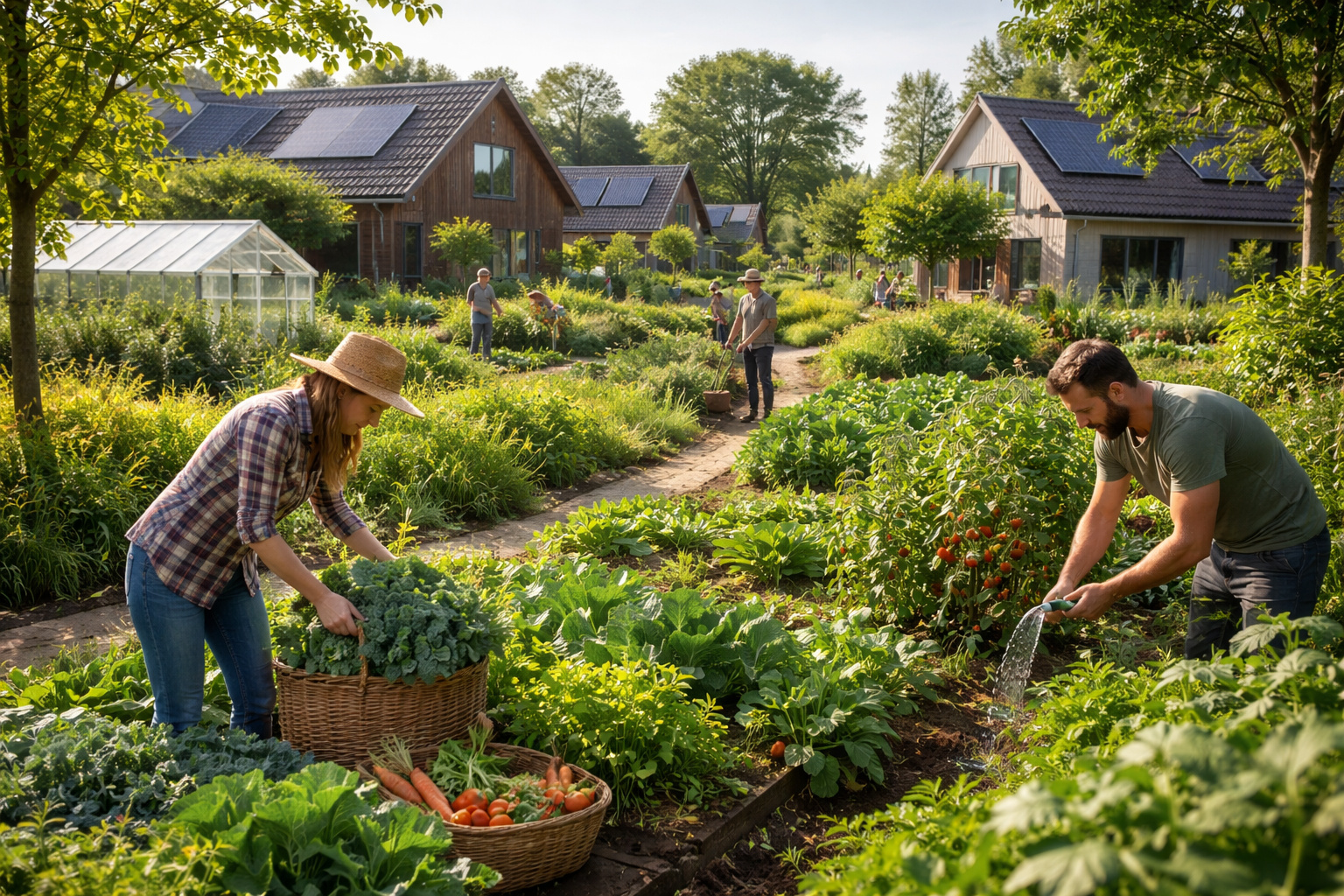
Oosterwold Transforms The Relation Between City And Country By Requiring Urban Agriculture On Every Lot Since 2016
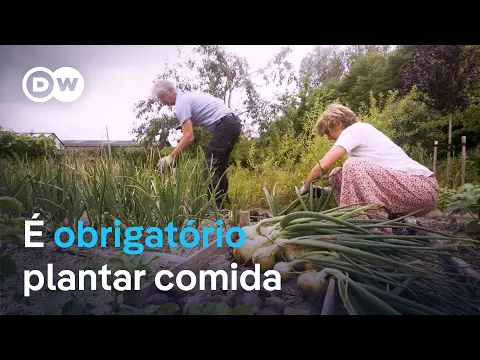
A unique urban experience began to gain prominence around Almere, in The Netherlands, starting in 2016. This is the neighborhood Oosterwold, designed as a practical experiment in sustainable urbanism. From the outset, the project established a central rule. Each resident must dedicate about 50% of their land to growing food, which directly alters the traditional logic of cities.
This urban design brings housing and agricultural production closer together. At the same time, it reduces the historical separation between country and city. Thus, urban daily life begins to include gardens, orchards, and productive areas. As a result, the neighborhood consolidates as a living laboratory of sustainability embedded in the urban fabric.
Urban Rule Transforms Land Use In Oosterwold
First of all, the distinctive feature of the neighborhood lies in how the lots are occupied. In this context, purchasing a lot is only authorized with a formal commitment to urban agriculture. In other words, ornamental landscaping is no longer a priority, while food production takes center stage. Therefore, fruits, vegetables, herbs, and other edible crops begin to integrate into residential spaces.
-
With earth, bamboo, straw, and lime mortar, a specialist builds a house for just over $460 and draws attention for its cost being much lower than traditional construction.
-
Rodrigo de Freitas Lagoon advances in environmental recovery with sanitation, elimination of irregular sewage, and the resumption of water sports in Rio de Janeiro.

-
Sustainable housing gains strength with a nationally awarded project in Campo Grande, highlighting innovative solutions that combine sustainability, urban integration, and efficiency in the use of natural resources.
-
City Where Residents Live Underground to Escape 52°C May Be a Picture of the Future on an Increasingly Hot Planet

Moreover, the model creates a productive belt within the city. Thus, food no longer travels long distances. At the same time, the neighborhood reduces exclusive reliance on external supply chains. Consequently, urbanism gains a clear and continuous food function.
Gradual Growth And Collaborative Planning Since 2016
Since its implementation in 2016, Oosterwold has grown gradually. This advancement occurs in a planned and participatory manner. Over the years, residents have begun to collectively decide on streets, accesses, common areas, and land use. Thus, the neighborhood develops without a rigid design imposed beforehand.
This process transforms the place into a collaborative urban planning experiment. At the same time, it strengthens the sense of collective responsibility. Thus, every decision directly impacts the organization of space and the maintenance of the original proposal.

Residential Gardens Shape The Daily Life Of Residents
In practice, each residence coexists with a significant productive space. Thus, vegetable beds, mixed orchards, simple greenhouses, and small-scale agroforestry systems emerge. At the same time, there is no single standard for cultivation. Therefore, each resident adapts the land use to their routine.
Formal oversight is limited. However, the neighborhood’s open design encourages productive land use. In addition, the watchful eye of neighbors serves as a constant incentive for cultivation. Consequently, the land remains active.
Reconciliation Between Urban Work And Agricultural Production
Many residents maintain full-time jobs outside the neighborhood. Still, cultivation remains viable. For this, practical strategies are adopted. Among them, reduced beds, automated irrigation, and the choice of hardy species stand out. Thus, daily care fits into urban routine.
In this sense, the project’s focus is not on high agricultural productivity. On the contrary, the priority is to create a continuous culture of care for the territory. Therefore, the symbolic and social value of local production outweighs the volume harvested.
Local Production As The Axis Of Sustainable Urbanism
Over the years, Oosterwold has consolidated a clear proposal. Producing food becomes part of urban life, not just the countryside. As a result, the neighborhood demonstrates that sustainability can be incorporated into daily life without unrealistic promises. Thus, since 2016, the model continues to serve as a practical reference for the integration of housing, urban agriculture, and community participation.
The Oosterwold experience raises an unavoidable reflection: to what extent could traditional cities incorporate food production as a structural element of urban planning?










Seja o primeiro a reagir!