





 Portuguese
  English
  Spanish
 4 min of reading
  0 comments


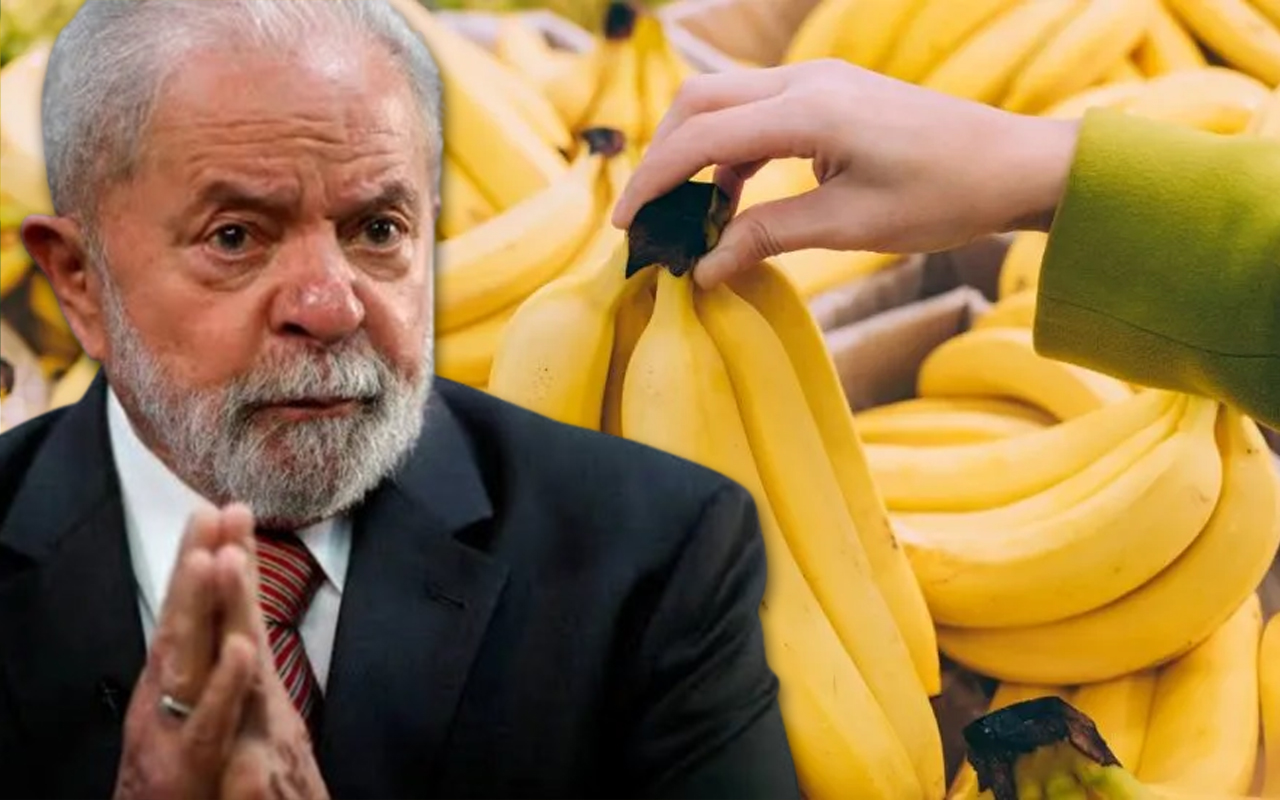
After the Meeting Between Lula and Daniel Noboa, the Government Decided to Start the Opening with Dried Banana and Conclude by the End of 2025 the Risk Assessment for Fresh Fruit. In Santa Catarina, Producers Fear Price Drops and Phytosanitary Threats.
President Luiz Inácio Lula da Silva stated that Brazil will comply with a court decision to reopen the market for Ecuadorian products, starting with dried banana. According to the Planalto, the risk assessment for fresh bananas will be completed by the end of the year. The measure was echoed by official vehicles, which highlighted the gradual nature of the reopening.
The announcement includes banana in the package of actions to balance trade with Ecuador, alongside agendas such as pig farming and fishing. For consumers, the change is not automatic: fresh banana in natura will only proceed after the Pest Risk Analysis (ARP), an indispensable technical step.
At the same time, municipalities and producers are pressuring for transparency in the criteria and stringency in inspections. Official communication indicated that the opening is phased by product category, which allows time to reinforce controls.
-
The shot backfired: the United States sanctions intended to curb China ended up creating a record revenue boom for Chinese chip manufacturers, with growth of up to 247% in a single year.
-
With a dependency of up to 80% on gas imported from the United States, Mexico responds with a robust energy strategy, betting on shale gas, creating a scientific committee, and preparing to expand natural gas production to reduce vulnerability and strengthen its energy security in the coming years.

-
Goodbye to the classic stamp in the passport and welcome to total digital control: the new border system of the European Union is already in operation with mandatory biometrics, and those who download the Travel to Europe app before their trip can save time.

-
How much does a minimum wage employee really cost in 2026? The amount can reach close to R$ 3,000 and surprises business owners.

Why Santa Catarina Is on Alert, Export Participation, and Price Risk
Santa Catarina is a leader in the banana chain. In the 1st half of 2025, the state accounted for 45.9% of the national revenue from fruit exports and shipped about 21,800 tons, nearly half of the total Brazilian amount of 43,800 t, according to consolidated data from the Agricultural Observatory of Santa Catarina. This weight explains the local concern about imported competition.
The political reaction was quick. The Alesc approved a motion of repudiation against the reopening, and municipal chambers, such as that of Guaramirim, also expressed their stance. The motions claim unfair competition and effects on family farming, dominant in northern Santa Catarina.
In the short term, the most noticeable impact is likely to be on prices. The Observatory itself recorded drops to producers in May and June in the state, indicating a market already sensitive to supply. With imports, even if gradual, pressure may increase if fresh bananas are authorized.
Phytosanitary Risk Under Discussion, BBrMV and Fusarium TR4
The most repeated point by entities and producers is the phytosanitary risk. The BBrMV (Banana Bract Mosaic Virus) has already been reported in Ecuador in Cavendish cultivars, and its spread occurs via aphids and plant material, which raises caution regarding barriers and quarantine. Scientific reviews describe BBrMV as a serious threat in producing countries.
Another concern is Fusarium TR4, a fungus causing plant wilting that has been spreading in South America. The MAPA has already warned about increased monitoring when neighboring Peru confirmed the pest, and recent studies map the expansion of TR4 in the region, including records in Colombia and Venezuela. Therefore, the ARP and inspection protocols will be crucial.
By official procedure, the Pest Risk Analysis evaluates biological and economic evidence to define proportional phytosanitary measures. Without a robust ARP, the likelihood of interceptions and embargos increases, bringing insecurity to the entire chain.
Regulatory Timeline of Opening and Closing Until 2025
The history is one of ups and downs. In 2014, the Brazilian government eliminated restrictions and established requirements for importing bananas from Ecuador. In 2017, Normative Instruction 46 established rules for the entry of the fruit, but in 2019, IN 4 suspended the effects of the previous norm, once again halting trade. In 2025, the Planalto resumed the topic with phasing and a new ARP.
Specialized agencies and media emphasize that, in addition to the sanitary dispute, there have been judicialization and commercial noise. Sector reports remind us that Ecuador once called on international organizations when imports were blocked again in 2019.
Local authorities mention that restrictions date back to the 1990s, information frequently cited in municipal communications, reinforcing the view that the issue is recurring and sensitive.
Impact on Consumer Wallet
For consumers, the most likely effect is a price relief if supply increases, but it will all depend on the pace of the opening and logistical costs. Cepea points out that the banana market is very sensitive to supply, which can generate volatility. In Santa Catarina, there were already significant drops to producers this year, which helps explain the fear of new pressure on local harvests.
In the regulatory field, the MAPA needs to complete the ARP for the fresh fruit and publish any complementary rules. In the sanitary field, the priority is barriers, inspection, and traceability to mitigate BBrMV and TR4. In the political arena, producing states promise to continue pressing for guarantees before any broader release.
In summary, the opening starts small and conditional. The final impact on the shelf and in the Santa Catarina banana farm will depend on the quality of the ARP, the execution of barriers, and the response capacity of Brazilian production to maintain standards and competitiveness.
What do you think, will the import of bananas from Ecuador lower the price of fruit at the market or put family production and the health of Santa Catarina’s banana farms at risk? Leave your opinion in the comments.







-

-

-

-

-

-

22 pessoas reagiram a isso.