





 Portuguese
  English
  Spanish
  4 min of reading
  0 comments


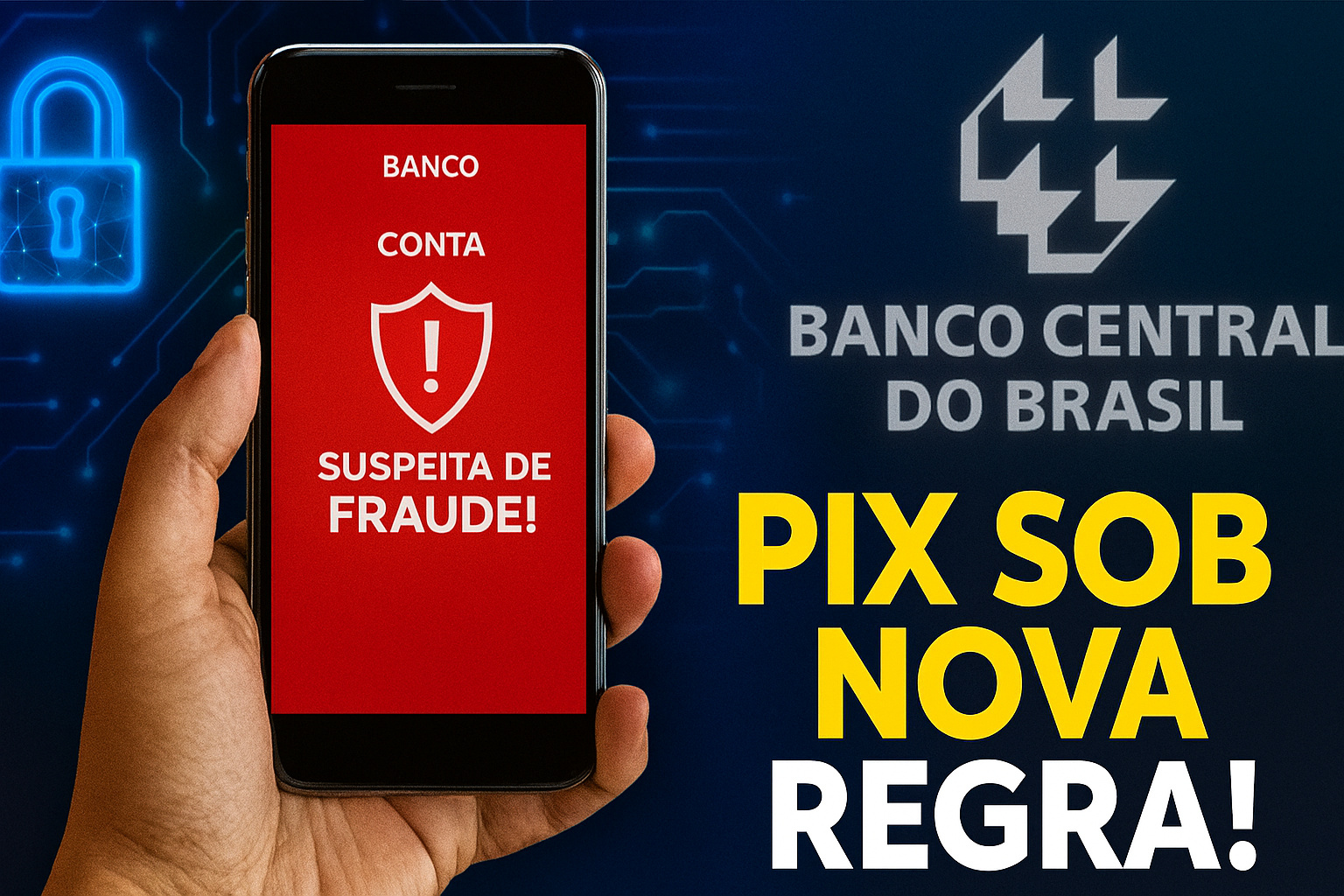
Central Bank Requires Banks to Reject Suspicious Fraud Transfers. New Rule is Already in Effect and Changes Pix Security Across the Country.
The Central Bank of Brazil (BCB) confirmed in September 2025 one of the most stringent measures ever adopted against financial fraud in the country. The BCB Resolution No. 501/2025, published in the Official Gazette of the Union on September 11, requires banks, fintechs, and digital wallets to automatically reject payments and transfers directed to accounts classified as suspicious of fraud. The regulation is already in effect and marks a new phase in the security policy of the national financial system.
Rules Take Effect and Expand the Fight Against Digital Fraud
With the explosion of Pix usage, which now exceeds 180 million users, the number of virtual scams has also grown exponentially. According to the Central Bank itself, more than 2.5 million reports of fraud involving electronic transfers have been recorded since 2021.
The new resolution aims to tackle the origin of the problem: the “shell accounts” used by criminals to receive amounts from scams.
-
How investment in technology can revolutionize the national economy and enhance industrial gains, according to a study that highlights the direct impact on productivity, innovation, and wealth retention within Brazil.

-
The largest food company on the planet, JBS, has just opened a 4,000 square meter laboratory in Florianópolis to develop customized proteins that modulate muscle mass gain, immune response, and metabolic performance.

-
After nearly 30 bids and competition among industry giants, a Spanish company purchases one of the largest airports in Brazil for almost R$ 3 billion and takes over the management of Galeão in a concession that will last until 2039.

-
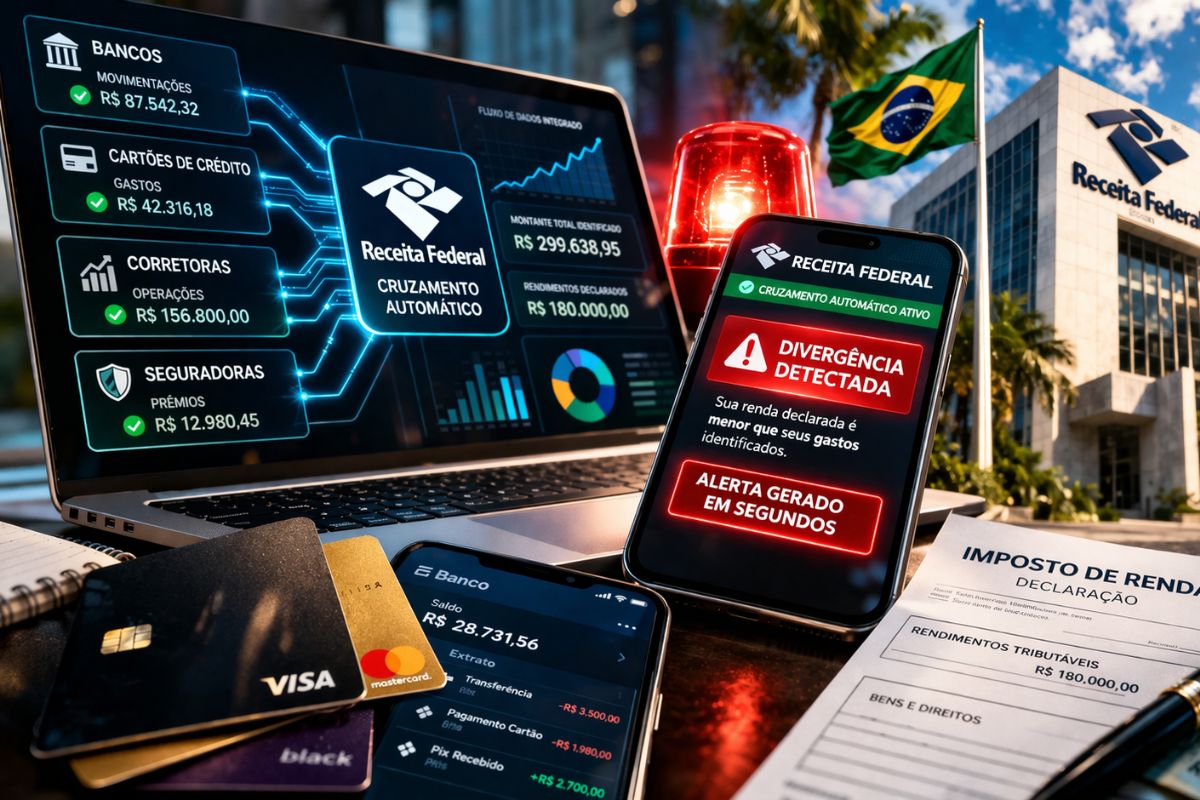
The Federal Revenue Service now automatically cross-references everything you declare with data from banks, credit cards, brokerage firms, and insurance companies, and any discrepancy between your income and your expenses triggers an alert in seconds.

Under the new rule, financial institutions must refuse any payment identified as high-risk even before the money leaves the customer’s account.
This means that the blocking will no longer rely on subsequent reports, but can occur preventively, based on information shared in the Special Refund Mechanism (MED) — the same system already used to reimburse victims of fraud in Pix.
How the New Automatic Blocking Works
With BCB Resolution No. 501/2025, each financial institution now has the obligation to integrate its monitoring systems with the central registry of suspicious accounts maintained by the Central Bank.
Thus, whenever an account is added to the high-risk list, all other institutions will be automatically notified, beginning to reject new transfers intended for that recipient.
Furthermore, the resolution mandates that banks must adopt artificial intelligence and behavioral analysis mechanisms to detect atypical movements such as serial transfers, sudden increases in amounts, or repeated suspicious withdrawals.
These systems need to identify and halt the transaction in real-time, with justification records and immediate communication to the Central Bank and COAF (Council for Financial Activities Control).
Penalties for Institutions That Do Not Comply with the Rule
The Central Bank has also tightened supervision: banks and fintechs that do not reject suspicious transactions may be fined and even face operational restrictions.
According to the authority, the goal is to create a safer environment and reduce the misuse of the instant payment system. The penalties provided follow the Article 44 of Law No. 4,595/1964, which regulates the national financial system, and may vary according to the severity and recurrence of the violation.
For the Central Bank, this measure does not restrict the use of Pix nor impose additional costs on the average user, but aims to eliminate loopholes exploited by specialized criminal groups. The agency also emphasized that banc secrecy will be preserved, as only transactions suspected of fraud or money laundering enter the radar for blocking.
Direct Impacts for Consumers and the Market
In practice, consumers may notice “transfer rejected” notifications when trying to send money to an account under investigation.
In such cases, the money will not be debited and the customer will be advised to seek another payment method. For financial institutions, the challenge will be to adapt internal monitoring systems and ensure automated responses in fractions of a second, without disrupting legitimate operations.
The resolution was well received by consumer defense organizations and cybersecurity experts, who see the measure as a decisive step in reducing electronic fraud, especially those involving the misuse of personal data.
With the advance of these regulations, the Central Bank signals a new phase in financial security policy.
After establishing Pix as the country’s main payment method, the agency now seeks to shield the system against fraud and criminal operations, without undermining the speed that has made the service so popular.
New updates, expected in 2026, should include the use of facial biometrics integrated with MED and the possibility of blocking multiple accounts linked to the same suspected CPF.









-

-

-

-

-

-

219 pessoas reagiram a isso.