





 Portuguese
  English
  Spanish
  4 min of reading
  0 comments



Bank Errors in Transfer, Nigerian Spends Part of R$ 5.6 Million, Involves Mother and Sister in Operations, and Ends Up Sentenced to 1 Year in Prison, Still Owing About R$ 1 Million
On January 19, 2026, a case in Nigeria demonstrated what can happen when a bank makes a mistake and the customer chooses to pretend nothing happened. Ojo Eghosa Kingsley received, due to a system failure at First Bank Nigeria Plc, the equivalent of R$ 5.6 million in his account and did not notify the institution. Instead of reporting the unexpected deposit, he began spending the money over several months.
According to the Economic and Financial Crimes Commission of Nigeria, EFCC, Kingsley used the amount between June and November 2025. After tracking the transactions, the investigation led the case to the Edo State High Court. There, he confessed to what he did, pleaded guilty, and was convicted of theft and fraudulent conversion. Even with part of the amount recovered, the bank makes a mistake in the transfer, but the final loss and criminal consequences fell on the customer.
How the Bank Makes a Mistake and Money Appears in the Account
The episode began when the bank makes a mistake in processing and makes a deposit that should not exist. The systemic failure of First Bank Nigeria Plc, all at once, placed the equivalent of R$ 5.6 million in Ojo Eghosa Kingsley’s account.
-
According to an analysis by NASA, only one human-made structure is visible from space, and it is not the Great Wall of China or the Pyramids of Egypt.

-
After 377 years of history, the Brazilian Army will have its first female general: Colonel Claudia Cacho has been promoted to brigadier general by Lula and will receive the sword and command baton this Wednesday in Brasília.

-
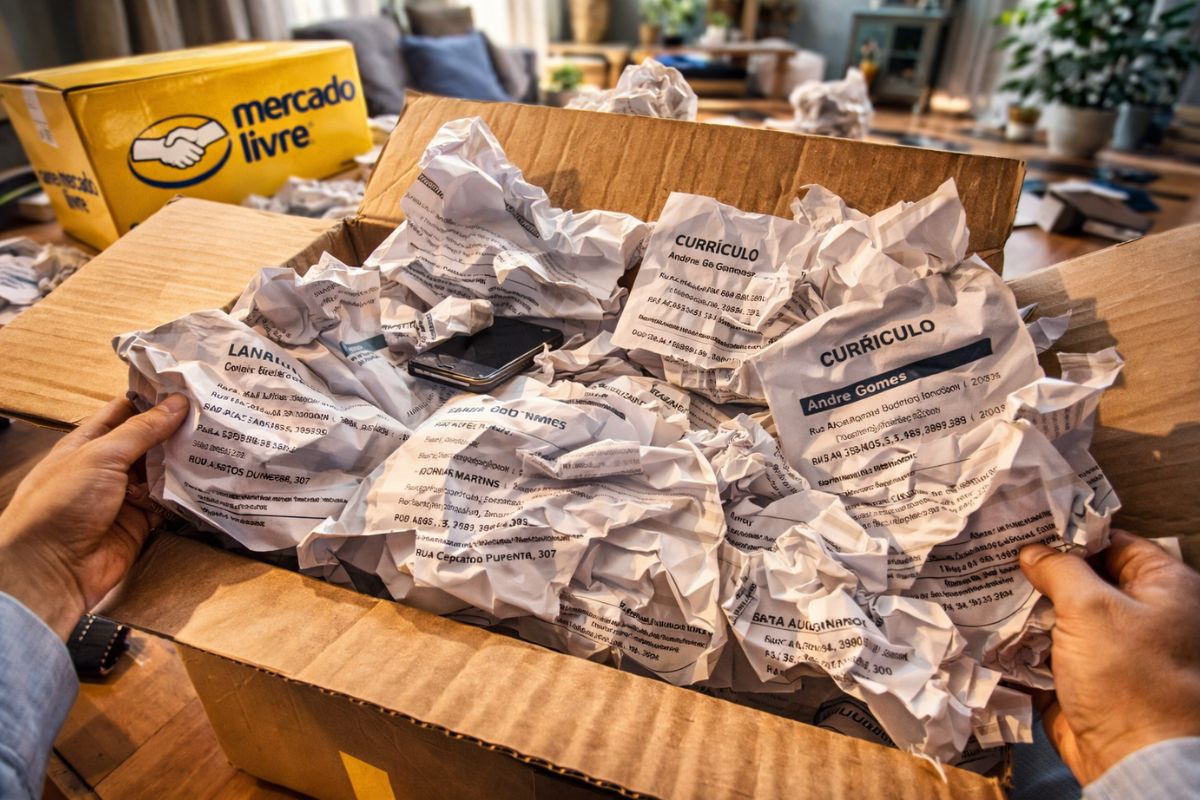
A Mercado Livre customer opened their package and found 32 resumes of people looking for jobs crumpled as protective paper inside the box, exposing names, addresses, documents, and phone numbers of dozens of candidates.
-
Iceberg A23a, one of the largest in the world, is undergoing accelerated collapse and may disappear: what explains the end of the ice giant?


Instead of treating the deposit as suspicious, the account holder assumed he could use the amount. When a bank makes a mistake and the customer appropriates the money, the financial system and the Justice system treat the case as a crime, not as a mere “correctable mistake.” This is exactly what happened in Nigeria.
From Banking Error to Criminal Conviction
As investigations progressed, the EFCC detailed the period of use of the money, from June to November 2025. Ojo was then brought before the Edo State High Court, where he admitted that he knew the amount was not his and still decided to spend part of it.
The Nigerian Justice convicted him of theft and fraudulent conversion. The sentence established one year in prison, with the possibility of substituting the sentence for a fine of about R$ 19,000, equivalent to 5 million naira.
As he had no funds to pay the fine, he chose to serve the sentence in prison. And even if he had paid, the obligation to return the money would still remain.
How He Spent Millions That Did Not Belong to Him

EFCC documents show that Kingsley transformed the deposit into a lifestyle well above his reality. He not only spent resources directly, but also transferred part of the money to family accounts, complicating the situation even further.
A significant portion of the funds was sent to bank accounts of his mother, Itohan Ojo, and his sister, Edith Okoro Osaretin.
Furthermore, he allocated money to complete a personal construction project, using the bank’s failure to expedite a work that would normally take much longer to finish.
How Much the Bank Managed to Recover and What Still Remains
Although the case began when the bank makes a mistake in the system, recovering the money required a combination of technical and legal actions. In total, more than R$ 4 million were recovered.
The bank itself reversed about R$ 1.1 million by canceling transfers. The rest was traced and recovered by the EFCC from accounts linked to the accused and his relatives. On January 12, 2026, the agency officially returned about R$ 3 million to the bank during a formal ceremony.
Still, approximately R$ 1 million remained pending recovery, an amount Kingsley is still obligated to repay. In other words, in addition to prison, he carries a substantial debt originating from money that never belonged to him.
When the Bank Makes a Mistake, What Happens to the Customer
The case of Ojo Eghosa Kingsley clearly illustrates that the fact that a bank makes a mistake does not automatically turn a customer into the “owner” of that money.
In many legal systems, including in the Nigerian context, spending amounts credited by mistake is treated as misappropriation, theft, or fraudulent conversion.
Here, the bank makes a mistake in the system, but it was the account holder who decided to use the money. From the moment he realized the error and chose to remain silent, he assumed the risk of facing criminal charges.
The investigation by the EFCC, the conviction in the Edo Court, and the obligation to reimburse about R$ 1 million show that, in such cases, the safest path is always to notify the bank immediately and not move the amount.
In your place, upon noticing that a bank makes a mistake and deposits millions into your account, what would you do?








-

-

-

-

-

-

16 pessoas reagiram a isso.