





 Portuguese
  English
  Spanish
  4 min of reading
  0 comments


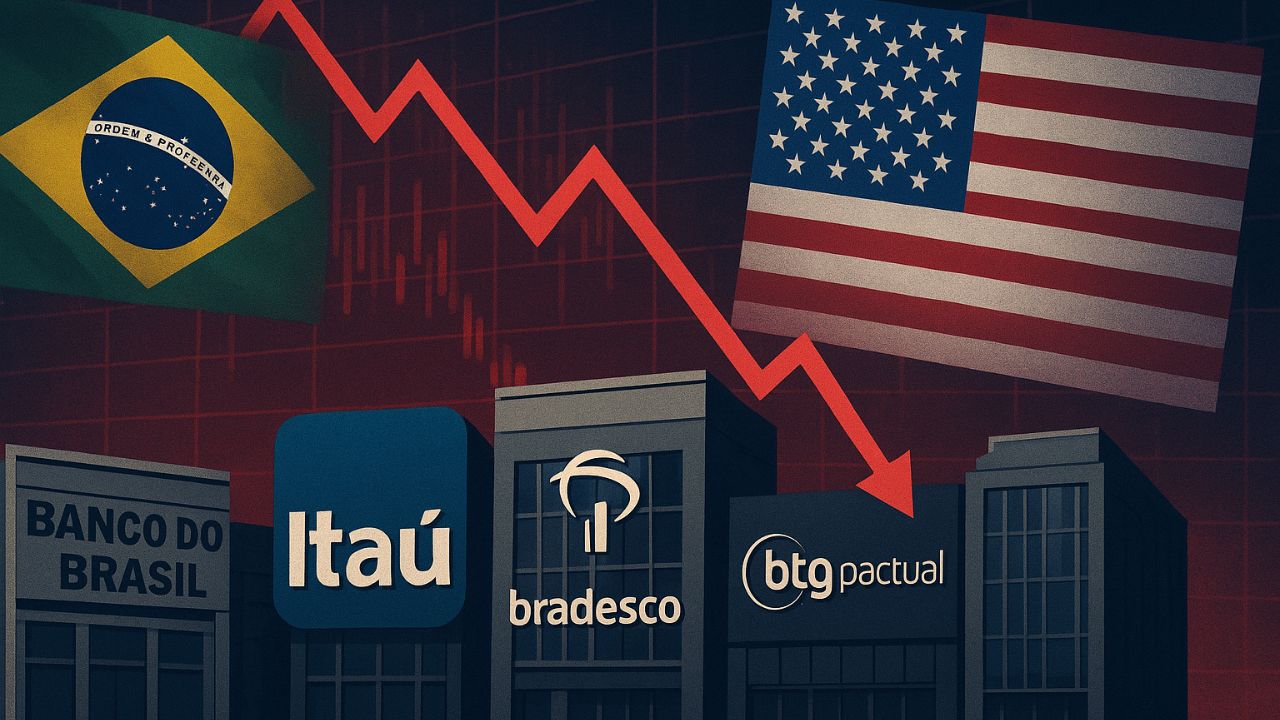
Flávio Dino’s Decision on the Magnitsky Act Had a Significant Impact on Brazilian Banks. Shares of Itaú, Banco do Brasil, and Others Plummet
On Tuesday, August 19, 2025, the shares of Brazil’s largest banks plummeted on the stock exchange, accumulating a loss of nearly R$ 42 billion in market value.
The drop was motivated by the decision of Minister Flávio Dino of the Federal Supreme Court (STF), published on August 18, 2025, which determined that foreign laws, such as the Magnitsky Act from the U.S., do not have automatic validity in Brazil.
The measure opened a legal impasse that left institutions like Banco do Brasil, Itaú, Bradesco, BTG Pactual, and Santander in an unprecedented position of vulnerability.
-
Lula responds directly to Trump and says that Pix is from Brazil and will not change under pressure from anyone, after a report from the United States pointed out the Brazilian payment system as an American trade barrier.

-
Amazon has just announced a new fee on all deliveries, and your online purchases will become more expensive starting April 17, including for those buying from the United States here in Brazil.

-
He sold his share for R$ 4 thousand, saw the company become a giant worth R$ 19 trillion, and missed the opportunity of a lifetime.

-
Elon Musk’s Starship megafrocket puts $8 billion at risk, raises alarms in the market, and could affect technology, mining, and space internet startups in the coming years.


The resolution came shortly after the imposition of sanctions by the United States against Minister Alexandre de Moraes, also of the STF, accused by the Donald Trump administration of restricting freedom of expression and ordering arbitrary arrests.
The legal clash had a strong impact on the financial sector, as the market fears that Brazilian institutions will be caught between complying with international mandates and respecting the decision of the Supreme Court.
Billion-Dollar Drop Hits Major Banks
According to a survey by the consulting firm Elos Ayta, Itaú lost 3.05% in share value, Bradesco dropped 3.43%, BTG Pactual fell 3.48%, and Santander had a decline of 4.88%.
Banco do Brasil was the most affected, with a drop of 6.03%, reflecting the additional difficulty faced by the institution, which manages the payroll of federal employees and would have a hard time severing ties with government members.
Moreover, shares of B3 itself fell 4.79%, reinforcing the signal of instability. Experts believe that the immediate impact could be manageable, but legal uncertainty tends to increase asset volatility in the short term.
What Is at Stake with the Magnitsky Act
The Magnitsky Act is U.S. legislation that allows the Treasury Department to impose sanctions on foreign officials accused of corruption or human rights violations.
In the case of Moraes, the OFAC (Office of Foreign Assets Control) determined the freezing of assets in the U.S. and prohibited American companies and citizens from doing business with him.
Up until August 18, 2025, Brazilian banks assessed that the impact would be limited to operations related to the dollar and assets located in the United States.
However, Flávio Dino’s decision changed this understanding by reinforcing that, in Brazil, such measures would only be valid with authorization from the STF.
Banks at a Crossroads: Comply with STF or U.S.?
The dilemma was summarized by a director of a major Brazilian bank interviewed by Reuters, who stated:
“The way this business is done, it’s interconnected; the difference in power strength between the U.S. and the Brazilian economy puts us in a position of having no choice, a position of subjugation, really. There’s not much that can be done.”
If they fail to comply with OFAC, banks risk losing access to the international financial system. On the other hand, disobeying a decision from the STF would create a direct conflict with Brazilian justice.
This “crossroads” increases tension within the sector, especially for institutions with operations in the United States.
Reactions and Market Analysis
Ricardo Campos, CEO and CIO of Reach Capital, assessed in an interview that:
“The case itself is marginally bad but manageable for the banking system. These institutions, due to internal compliance and risk policies, may choose to end or restrict services – a legitimate decision, but one that would certainly generate discomfort with the Supreme Court.”
Meanwhile, Rodrigo Marcatti, economist and CEO of Veedha Investimentos, reminded that:
“Although Brazil does not have to follow American laws internally, companies operating abroad – especially banks – need to adapt to this legal environment as well, which raises risks concerning international operations and even licenses.”
In the short term, the episode is expected to increase the perception of risk in the market and particularly impact bank shares, which had been on a streak of positive results until mid-August.
Official Position of Financial Institutions
On August 18, 2025, Banco do Brasil (BBAS3) declared that it is prepared to handle complex scenarios and emphasized that it complies with the regulations of more than 20 countries in which it operates, in addition to Brazilian legislation.
In press conferences about second-quarter results, held before Flávio Dino’s decision, Itaú stated that it complies with the laws of each jurisdiction in which it operates, while Bradesco declared that “the law is meant to be followed.”
On the other hand, the president of BNDES, on August 19, 2025, emphasized that the development bank is not subject to the effects of the U.S. measure.







-

-

2 pessoas reagiram a isso.