





 English
  Francês
  Alemão
  Italiano
  Japonês
  Norueguês
  Portuguese
  Spanish
  2 min of reading
  0 comments


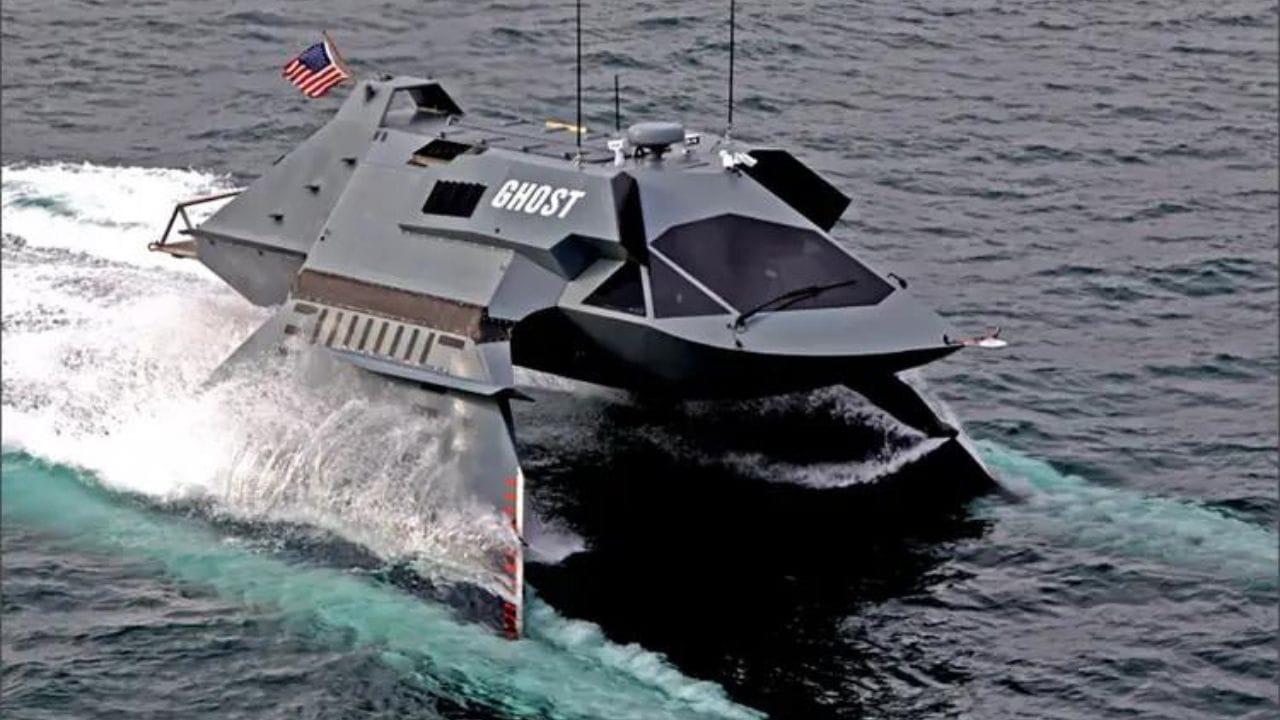
It May Seem Like A Movie Scene, But It’s Pure Technology: Imagine A Boat That Flies Over The Water, Dodging The Waves As If They Were Just Details. It Seems Crazy, But It’s The Dream That Almost Became A Reality With The Boat “Ghost”, A Revolutionary Project That Had Everything To Shake The Naval World.
If you think it’s just another stylized catamaran, you’re very mistaken. The “Ghost” uses a technology called SWATH (Small Waterplane Area Twin Hull) that basically submerges part of the boat in the water to reduce the impact of the waves.
Born from the visionary mind of Greg Sancoff and materialized by Juliet Marine Systems, this extraordinary vessel reinvents the paradigms of naval design.
They are like two mini-submarines that support the boat. The result? A smoother ride than “a knife cutting through butter”, even with waves up to 3 meters high!
-
Antarctica reveals an unusual clue high in the Hudson Mountains, and what appeared to be just an isolated rock began to expose a secret hidden under the ice for ages.

-
Salaries of up to R$ 25,000, a shortage of professionals, and exploding demand in 2026 make the no-code automation specialist one of the most sought-after careers in Brazil, even without requiring a degree or programming knowledge.

-
The first commercial-scale hydrogen-powered brick factory will be established.

-
Goodbye to the noisy exhaust fan: silent and smart technology transforms modern kitchens with more comfort, design, and efficiency in everyday life.


Speed And Stealth: The Trump Cards Of The “Ghost”
Equipped with gas turbine engines and a diverse weapon system, this boat not only cuts through the water like lightning, but is also almost invisible to radars.
The first interested client was none other than the U.S. Navy. And it doesn’t stop there: the “Ghost” was designed for anti-submarine operations, combating piracy, and defending against smaller threats like kamikaze drones.
But then why isn’t this innovative boat cruising the seven seas? Simple: the U.S. Navy backed out. Despite all the innovation, the project was deemed limited to operations only in coastal waters.
Furthermore, DARPA (Defense Advanced Research Projects Agency) offered a contract in exchange for patent rights, which didn’t materialize. The result? The “Ghost” was abandoned and now rests as a museum piece in Portsmouth, New Hampshire.
An Innovation That Sank
The “Ghost” is a typical example of how a technological innovation can go from heaven to the ground in a short time. It had potential, but stumbled on bureaucracy and a lack of strategic vision. Today, it is more of a curiosity in an exhibition park, but who knows what the future holds?
Perhaps other navies around the world will still discover the potential of this technology and give the “Ghost” the chance it never had.
And so the question remains: are we neglecting innovations that could revolutionize entire sectors just because we are comfortable with what we already know? In the case of the “Ghost“, it seems so.






-

Uma pessoa reagiu a isso.