





 Portuguese
  English
  Spanish
  3 min of reading
  4 comments


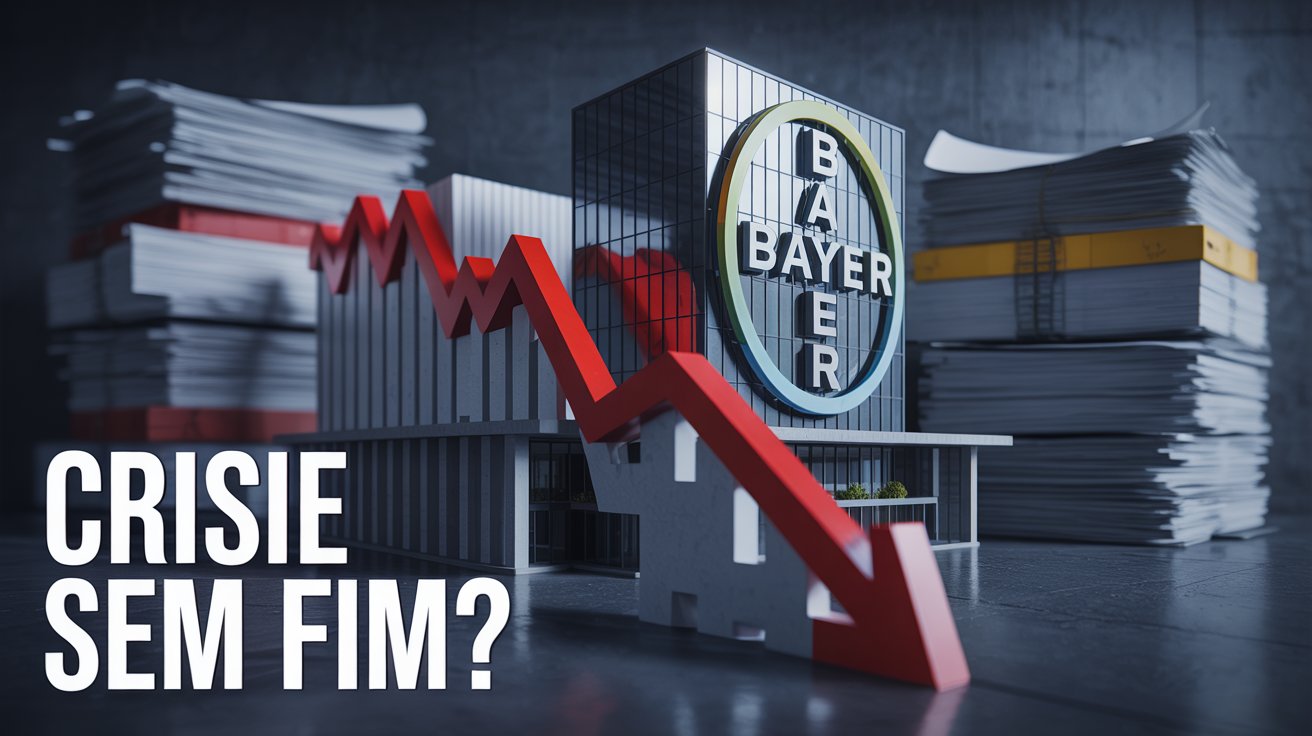


German Company Faces Billion-Dollar Lawsuits in the United States, Dramatic Drop in Market Value, and Expands Cuts in Its Workforce as Part of a Global Restructuring Plan Announced Along with the Second Quarter Balance Sheet.
Bayer announced last Wednesday (06) the layoff of 12,000 full-time employees as part of a broad global restructuring plan.
The measure, confirmed by Reuters, comes amid financial and legal pressure generated by lawsuits against the herbicide Roundup, acquired along with Monsanto in 2018 for US$ 63 billion.
The acquisition, which aimed to strengthen market leadership in agrochemicals, resulted in a billion-dollar liability and a loss of about 80% of the company’s market value.
-
China alone accounts for 70% of trade within the BRICS, while Brazil establishes itself as an essential supplier of food and minerals: understand how the group, which already represents nearly 40% of the world’s GDP, is changing the game.

-
Starting in May, those who do not have registered biometrics will not be able to apply for Bolsa Família, sickness benefits, or unemployment insurance: understand the new rule that changes access to benefits for millions of Brazilians.

-
A new law being voted on in Brazil proposes a minimum fare of R$ 10 per trip and R$ 2.50 per kilometer for Uber and 99 drivers, and promises to ensure they earn as well as taxi drivers did during the golden age of taxis in the country.

-
Bauer Group collapses after failed judicial recovery: 25 years, 800 vehicles, and a network of gas stations leave a debt of R$ 50 million and 100 layoffs, exposing costs, tight margins, and expensive credit in Brazil.

The German multinational currently faces over 67,000 lawsuits in the United States linking glyphosate, the active ingredient in Roundup, to alleged cancer risks.
U.S. courts have ordered the company to pay millions in damages and questioned the safety of the product, despite favorable opinions from the Environmental Protection Agency (EPA).
Cuts and Administrative Reorganization
According to Bayer, the cuts primarily affect administrative and management positions.
The goal is to accelerate internal decisions and reduce fixed costs, a strategy considered essential in light of competition from Asian generics and falling glyphosate prices.
Since the start of the restructuring program in 2024, about 7,000 positions had already been eliminated.
By the end of June 2025, the company had approximately 90,000 employees worldwide.
The company emphasizes that the reorganization also seeks to simplify its management structure, shortening the chain of command to react more quickly to market changes and the progress of legal proceedings.
Billion-Dollar Provisions and Accumulated Losses
The impact of the lawsuits has already cost Bayer more than US$ 10 billion in damages.
Recently, the company set aside an additional US$ 1.37 billion (around € 1.2 billion) to cover new claims, raising the total amount allocated to these provisions to US$ 7.4 billion.
In 2024, Bayer reported a net loss of € 2.55 billion.
The negative performance, combined with deteriorating investor confidence, increased pressure on CEO Bill Anderson and his management team.
Strategies to Contain the Crisis
The company is evaluating two alternatives to try to end or reduce the flood of lawsuits.
One is to negotiate a new collective agreement in the United States, with special attention to pending cases in the state of Missouri, where Monsanto is headquartered.
The other option under consideration is to seek Chapter 11 relief, a mechanism equivalent to U.S. bankruptcy protection, but limited to the Monsanto subsidiary.
This measure would allow concentrating the actions in a single jurisdiction and temporarily suspend new trials.
A similar strategy has been unsuccessfully attempted by companies such as Johnson & Johnson and 3M.
Recent Convictions and Future Risks
In January 2024, a jury in Pennsylvania ruled that Bayer must pay US$ 2.25 billion to a client who alleged that they developed cancer due to using Roundup.
The case reinforced fears of new billion-dollar convictions and deepened uncertainty about the company’s future.
Glyphosate is widely used in soybean, corn, and cotton crops.
Bayer defends its safety and asserts that scientific research and regulatory evaluations demonstrate that the herbicide poses no risk to human health when used correctly.
Anticipation for Supreme Court Decision
In the coming months, the U.S. Supreme Court is expected to decide whether it will accept a new appeal related to glyphosate.
At the same time, Bayer is intensifying its efforts with the U.S. Congress to try to pass laws that limit its liability in future actions.
Rodrigo Santos, global president of the agricultural division, stated that the goal is to resolve or stabilize the litigation within 18 months, preventing the legal liabilities from jeopardizing the group’s viability.
The Bayer-Monsanto case exposes a dilemma that goes beyond the agrochemical sector: to what extent can a billion-dollar acquisition turn into an irreversible strategic liability?









Deus dá, Deus tira. Fui obrigado a pagar muita propina para fornecer à Monsanto/Bayer. Nomes Gilberto Oliveira e Alexandre Moreira. Me encostaram na parede para poder fornecer pra Fábrica. Me ferraram depois de me usurpar e caíram fora da empresa e eu que fui cortado, mas ainda há uns propineiros lá dentro lesando a empresa. Posso citar nomes? Alam Pinto, Agnaldo Lopes, Lucas Morais entre outros ****. Se não aceitar os termos deles vc não fornece.
Deus é maior! E está pondo abaixo Esse Veneno que está destruindo a vida da pessoas!! Aqui no Brasil é usado em quase tudo. Por isso tantas doenças…pesticidas sintéticos! Tanto que eles vendem medicamentos para Câncer, Hipócritas ****!! TEM QUE FALIR
Fica ativo rapaz, vai produzir pra vc ver na prática como q é. E outra vc não viu o título do post? 12000 funcionários demitidos, sai do sofá confortável e vai ver como que funciona o mundo.
A pior coisa que a Bayer fez foi adquirir a MonSanto. Sem dúvidas, um péssimo negócio.