





 Portuguese
  English
  Spanish
  8 min of reading
  0 comments


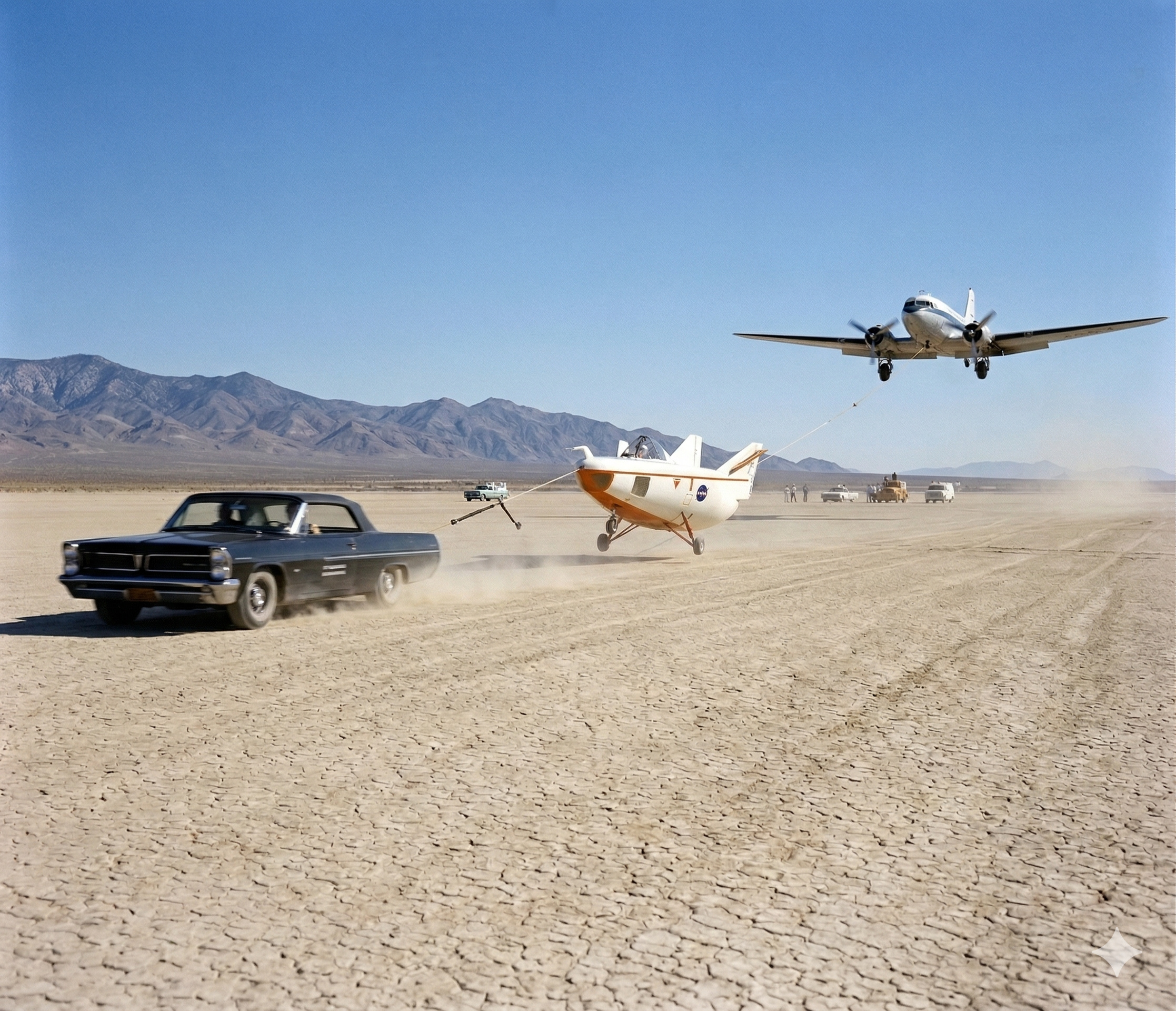
Meet the M2-F1, the NASA experiment that used a “wingless plane” towed by car and plane to prove that spacecraft could land like airplanes.
In 1963, in the United States, NASA began a series of tests with the M2-F1 at the Flight Research Center in Edwards, California, which, at first glance, seemed more like a bold engineering gamble than a conventional aerospace program. The goal was to validate a radical concept for the time: to prove that a vehicle could use its own body to generate lift and, in the future, pave the way for more controlled reentries and landings on runways.
This concept was named lifting body. As NASA itself explains, the aerodynamic lift of these vehicles was obtained from the shape of the fuselage, rather than from conventional wings. With the addition of control surfaces, the design allowed for stabilizing the vehicle and regulating its trajectory during descent, which was crucial for atmospheric reentry missions.
The idea did not come out of nowhere. In the late 1950s, studies conducted at what is now the Ames Research Center showed that a slightly modified blunt shape could survive the heating of reentry and still produce lift. At that time, the contemporary capsules of the Mercury and Gemini programs followed a much more limited profile, with ballistic return and ocean landing, which reduced the margin for maneuver and maintained dependence on recovery operations.
-
In Japan, a 150 kg humanoid robot named AIREC has begun testing to assist patients, change diapers, and alleviate a crisis where there is only 1 candidate for every 4.25 positions for elderly caregivers.
-
A cold air mass has already arrived in Brazil and is advancing in the coming hours with temperatures that may approach 0°C in the southern mountains and a risk of frost in the middle of April, surprising those who had not yet felt the autumn of 2026.

-
Equatorial Game aims to reach 120 thousand students with energy efficiency, gamification, and solar energy in public schools across seven states.

-
One of the worst volcanoes in history, which erupted 7,300 years ago, is raising alarms again because its caldera is filling with magma once more in Japan.

It was in this context that the proposal to develop vehicles capable of reentering the atmosphere and landing on runways, like airplanes, gained traction. According to the official NASA fact sheet on lifting bodies, the tests conducted at Edwards between 1963 and 1975 demonstrated the feasibility of maneuvering and safely landing a wingless vehicle, a concept that would later help form the technical foundation of the space shuttle.
The M2-F1 and the birth of the “lifting body” concept
The first vehicle built along these lines was the M2-F1, an experimental prototype that became known as the “flying bathtub” due to its unusual shape. The design was compact, about 6.1 meters long, and featured a wide, rounded fuselage without wings.
The project was led by engineers like Dale Reed, one of the main advocates for the lifting body concept within NASA. Instead of investing millions of dollars in a complex prototype right away, the team adopted a pragmatic and low-cost approach.
The M2-F1 was built with a simple structure, using plywood over a metal tubular frame. This choice was not only economical but also strategic, allowing for quick modifications during testing.
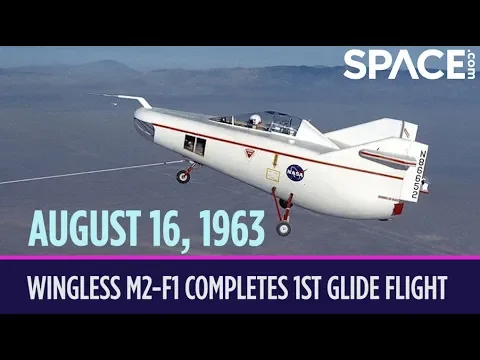

The goal was not to create an operational vehicle, but to prove an aerodynamic concept that could revolutionize the return of spacecraft to Earth.
This detail is crucial: the M2-F1 was not a prototype of a spacecraft itself, but rather a flying laboratory to validate fundamental principles of control and stability in flight without wings.
Ground tests with car and speeds over 190 km/h
Before any attempt at real flight, engineers needed to understand how the vehicle would behave under controlled conditions. To this end, ground tests were conducted using an unusual method: the M2-F1 was towed by a car.
The chosen vehicle was a modified Pontiac Catalina, equipped with a powerful engine capable of reaching speeds over 190 km/h. The lifting body was attached to the car by a cable, allowing pilots to test stability, directional control, and response to commands.
During these tests, conducted on the dry lakebed of Rogers at Edwards Air Force Base, pilots could experience the vehicle’s behavior as it began to generate partial lift.
These trials were crucial for identifying control and stability issues before risking real flights, significantly reducing the risks of the program.
Even with this cautious approach, the tests were not without difficulties. The unconventional shape of the M2-F1 created complex aerodynamic challenges, including lateral oscillation tendencies and difficulty in control at certain speeds.
Still, the results were promising enough to move on to the next phase.
The leap to real flights with the C-47
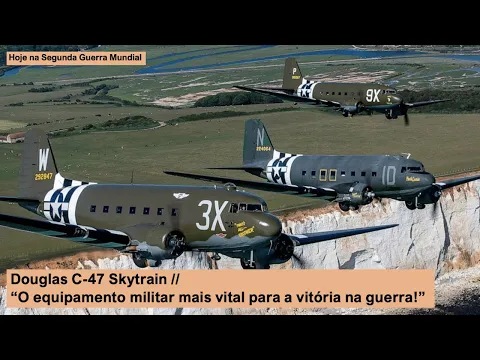
After the initial validation on the ground, the program evolved to flight tests. For this, NASA used a Douglas C-47 Skytrain, a military transport aircraft derived from the famous DC-3.
The procedure was relatively simple but required precision: the M2-F1 was attached to the C-47 and taken to an altitude of approximately 3,000 meters. It was then released to perform a gliding flight to the runway.
Without its own engine, the lifting body relied solely on its aerodynamics to control the descent. It was at this moment that the lifting body concept was put to the test.
The pilots, including experienced names like Milt Thompson and Bruce Peterson, needed to control the vehicle using movable surfaces on the tail and fine attitude adjustments.
Throughout the program, more than 70 towed and gliding flights were conducted, each contributing to the refinement of the concept.
The results showed that, despite its unusual shape, the M2-F1 was capable of making controlled landings on runways, validating the central hypothesis of the project.
Why the lifting body concept was so important
The success of the M2-F1 had direct implications for the future of space exploration. Until then, atmospheric reentry was treated as an essentially ballistic event, with limited control and a strong dependence on parachutes.
The lifting body concept demonstrated that it was possible to transform reentry into a controlled flight phase, allowing for trajectory adjustments, greater landing precision, and reduced structural loads.
This paved the way for the development of more advanced vehicles, such as the M2-F2, HL-10, and other prototypes tested by NASA throughout the 1960s.
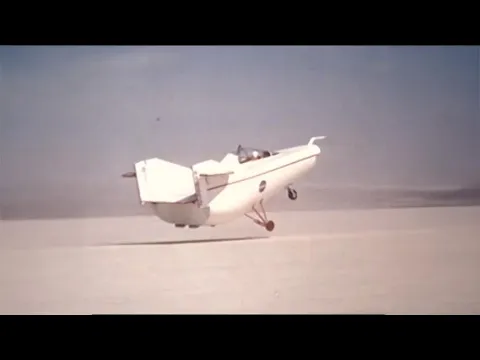
More importantly, this set of experiments directly influenced the design of the space shuttle, which would use conventional wings but incorporate similar aerodynamic principles to ensure runway landings.
Without the data obtained from the M2-F1, the development of the Space Shuttle program would have faced much greater challenges.
The direct legacy in the space shuttle program
When NASA began developing the space shuttle in the 1970s, one of the fundamental requirements was that the spacecraft be reusable and capable of landing on a runway, like an airplane.
This requirement was not trivial. Reentering the atmosphere at speeds over 25,000 km/h and decelerating to a controlled landing requires an extremely delicate balance between aerodynamics, materials, and flight control.
The experiments with lifting bodies provided essential data on stability, control at high speeds, and behavior in low-lift regimes.
Although the space shuttle had wings, its fuselage also contributed significantly to lift generation, especially during the initial phase of reentry.
In other words, the concept tested in the M2-F1 was not abandoned but incorporated and expanded into a much more complex and operational system.
Moreover, the tests helped form a generation of engineers and pilots specialized in experimental flights, creating a knowledge base that would be used for decades.
Low-cost engineering that generated global impact
One of the most impressive aspects of the M2-F1 program was its relatively low cost. Compared to other NASA projects, the lifting body was developed with limited resources and an almost artisanal approach.
The wooden construction, the use of common vehicles for testing, and the reuse of existing aircraft show that innovation does not necessarily depend on large budgets but on solid concepts and efficient execution.
This type of approach is often cited as an example of successful experimental engineering, where hypotheses are tested quickly before larger investments. The success of the M2-F1 reinforced the importance of simple prototypes in validating complex ideas, a practice that continues to be used in modern aerospace programs.
The technical challenges faced during the project
Despite the overall success, the M2-F1 program faced a series of technical challenges. The absence of wings meant that the vehicle’s control depended heavily on its geometry and rear control surfaces. This made flight more sensitive to small attitude variations, requiring significant skill from the pilots.
Another challenge was the low glide ratio, which limited the margin for error during the approach for landing. Unlike conventional airplanes, which can adjust their trajectory more flexibly, the M2-F1 had more restricted options.

NASA Identifier: NIX_ECN-408
Additionally, the behavior at different speed regimes was still poorly understood, requiring an incremental and cautious approach in testing.
These challenges, however, were not insurmountable obstacles but rather learning opportunities that enriched the program as a whole.
How the M2-F1 changed the way of thinking about returning from space
Before the lifting body, returning from space was seen as an essentially passive process, focused on the survival of the capsule and the astronaut. After the tests of the M2-F1 and its successors, it became possible to think of reentry as an active phase of flight, with control, precision, and repeatability.
This had an impact not only on the United States space program but also on other agencies around the world. Today, concepts derived from lifting bodies continue to be studied in hypersonic vehicle and reusable capsule projects.
The idea that the vehicle’s own body can generate efficient lift remains relevant, especially in missions requiring controlled reentry in different atmospheres.
Do you think NASA should have only pursued the wingless concept
The M2-F1 may have seemed like an improvised “flying bathtub,” but its results helped redefine one of the most critical aspects of space exploration.
Without it, the path to the space shuttle would likely have been longer, more expensive, and riskier. Today, with the return of reusable vehicle projects and the growing interest in crewed missions beyond low Earth orbit, concepts like the lifting body are gaining relevance again.
In light of this, an interesting question arises: if NASA had taken the lifting body concept to the extreme, completely abandoning wings, would the future of space aviation have been different?










Seja o primeiro a reagir!