





 Portuguese
  English
  Spanish
 3 min of reading


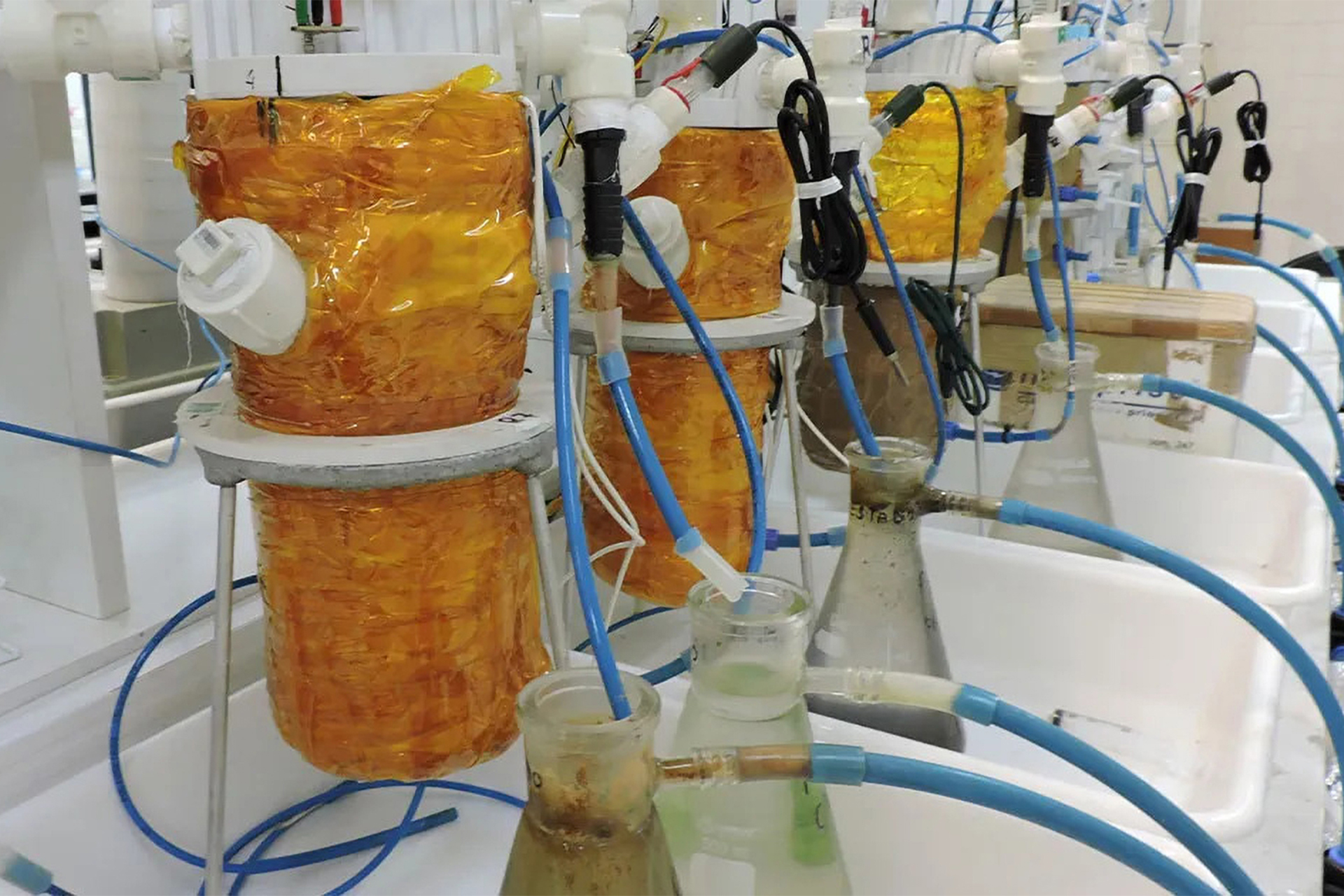
Researchers from the Environmental Sanitation and Technologies Laboratory at USP have discovered a way to produce renewable energy from sewage, using a type of biobattery. According to the research published by the entity, the researchers built a model of a Microbial Fuel Cell (MFC) capable of producing energy from discharged water.
The research group from the Graduate Program in Sustainability, responsible for the biobattery, is currently working with their advisors on improvements aimed at optimizing the prototypes to make them more efficient and capable of generating a larger amount of electricity.
According to those responsible for the study and development, the prototypes are the result of previous research conducted with the intention of recovering a variety of resources from wastewater treatment plants. These systems, developed through technologies and processes, have ceased to be consumers of electrical energy, becoming generators of new energy resources.
-
While the world looks at oil, the war with Iran is already disrupting helium supply from Qatar, affecting car and iPhone chips, threatening AI expansion, and putting pressure on aluminum packaging at the highest value in four years.

-
Global warming will expose a treasure hidden under the ice of Antarctica and may spark an international dispute over gold and valuable minerals.

-
A street vendor from Praia Grande built a robot made of scrap from scooters and washing machines that pulls his popcorn cart on the beach, emits sounds, and interacts with customers, becoming an attraction on the coast of São Paulo.

-
The specifications of the Xiaomi 18 Pro Max have been leaked, and the highlight is a dual 200 MP camera with a new 22-nanometer technology that promises to consume less energy and capture details in shadows and bright areas using LOFIC HDR.
How the Microbial Fuel Cell Developed by Brazilian Researchers at USP Works
The operation of the Microbial Fuel Cell biobattery consists of two separate chambers. In one of them, where treatment occurs, bacteria grow forming a biofilm on the conductive material and feed on the pollutants present in the effluent delivered to the chamber. The electrogenic bacteria are capable of spontaneously creating an electric current through the process of feeding on these substances, which is then transmitted to the conductive material upon which the bacteria built the biofilm.
The electric current generated in the first chamber is collected and then transferred, through an external circuit, to the second chamber, where a chemical reaction occurs. The energy produced by the system that can be used to power batteries or electronic devices is the electric current that flows through the conductive wire as it passes from one chamber to another.
The more favorable the conditions for these bacteria, such as increased temperature in the Microbial Fuel Cell, the more active they will be, resulting in an increase in the amount of energy produced. Therefore, researchers at USP are seeking ways to improve the design.
The Optimization Procedures for the MFC Biobattery Are Now the Focus of the Efforts of Researchers at USP
Many aspects are being analyzed, some of which include the optimization of bioprocesses, the automation of the system, the identification and use of materials for constructing the chambers that make up the MFC, among others.
The goal is to contribute so that, in the future, the MFC can move from a laboratory scale to operating in urban sewage treatment plants, as well as alcohol production plants and industrial effluent treatment stations. In other words, the aim is to make the biobattery more applicable to real-world settings.






Seja o primeiro a reagir!