






 Portuguese
  Spanish


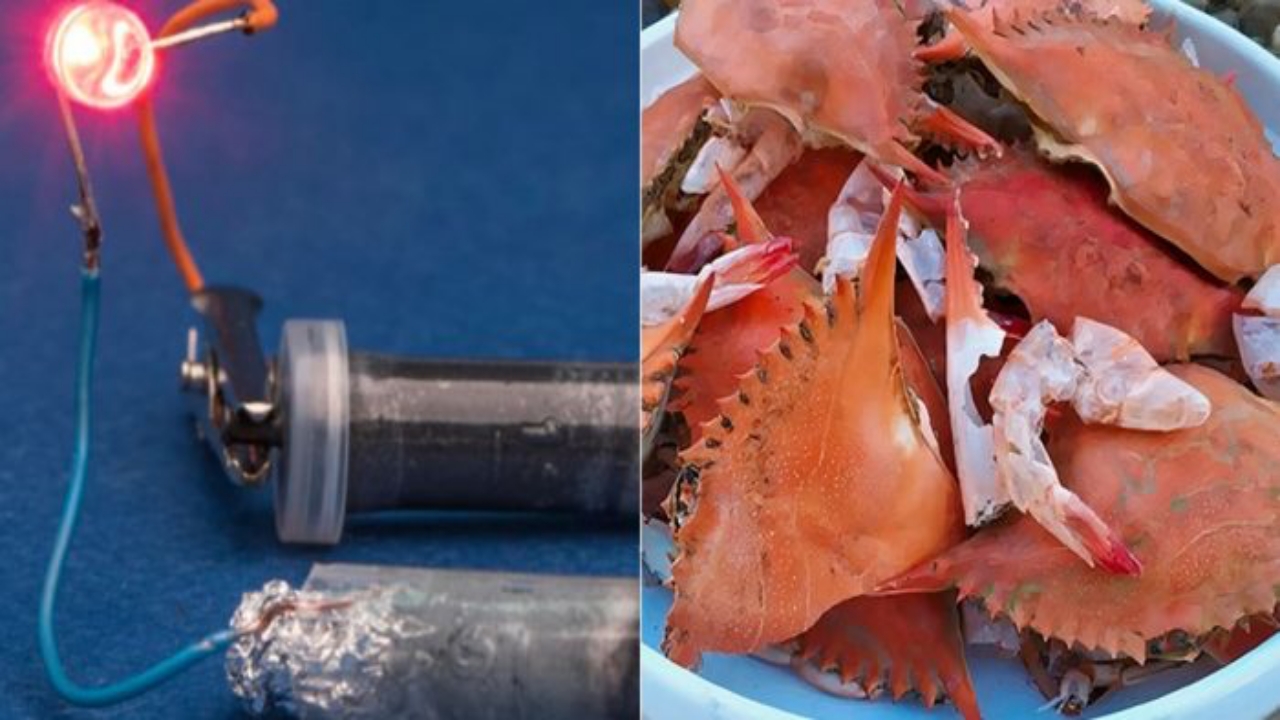

The New Battery Remains 99.7% Efficient After About 400 Hours of Use and Can Replace Lithium, Which Stays in the Environment for Hundreds or Thousands of Years!
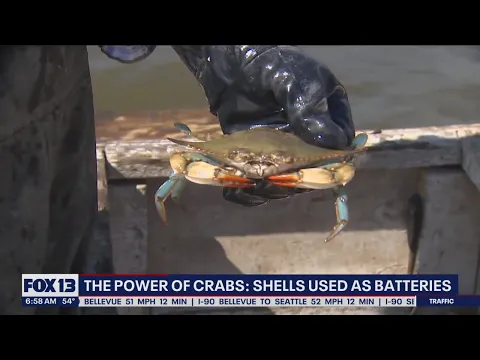
The world is rapidly transitioning to green energy, and batteries are at the center of this movement. Using the same technique, researchers from the University of Maryland have developed batteries that use a product found in crustacean shells to store energy.
The new batteries are more eco-friendly, energy-efficient, and affordable compared to traditional ones. Scientists are now pushing for the product to be adopted in commercial battery production. They say the use of this product is necessary due to the increasing movement toward electric cars and green energy in general.
“We believe that both the biodegradability of the material, or the environmental impact, as well as the performance of the batteries, are important for a product that has the potential to be marketed,” said Liangbing Hu, director of the Materials Innovation Center at the University of Maryland and lead author of the study. Watch the video below and check it out!
-
Giant Batteries Take Center Stage in Chile Auction as Company Offers 960 GWh of Solar Energy for Nighttime Use, Aiming to Stabilize Solar Power Supply

-
After a Year of Success in Switzerland, Solar Railway Attracts Italy’s Interest for Clean Energy Transformation
-
Robots Clean Solar Panels in Desert Power Plants Without Water, Preventing Energy Losses
-
Brazil’s Offshore Wind Energy Potential Worth $1 Trillion Stalled by Long-Delayed Agreement





Lithium Used in Batteries Can Stay in the Environment for Hundreds or Thousands of Years
You don’t need to be a chemist to know that traditional batteries can be quite harmful to the environment. For example, products like lithium used in batteries can stay in the environment for hundreds or thousands of years.
As we know, the popularity of electric cars is continuously gaining momentum. In such circumstances, using batteries that are not environmentally friendly would be an injustice to our environment. For that same reason, researchers have intensified efforts to develop this cutting-edge technology.
New Eco-Friendly Batteries are Inexpensive and Have High Discharge Capacity
It should be noted that the experiment has only been conducted in the lab so far, and the results are very encouraging. The findings reveal that even after 400 hours of use, the electrolyte in the battery remains effective and capable of delivering more ions, which promote the generation of electricity.
This shows that it is recyclable and sustainable, as evidenced by the fact that after five months of use, the substance in the electrolyte can be automatically decomposed. However, the remaining zinc will be reused in the processing of such batteries along with chitin.
“The design of new eco-friendly batteries, which are inexpensive and produce high discharge capacity, is one of the most important items that need to be developed in the coming years,” said Antonio J. Fernández Romero, professor of materials science for energy production at the University of Cartagena, in Spain.







