





 Portuguese
  English
  Spanish
  4 min of reading
  0 comments


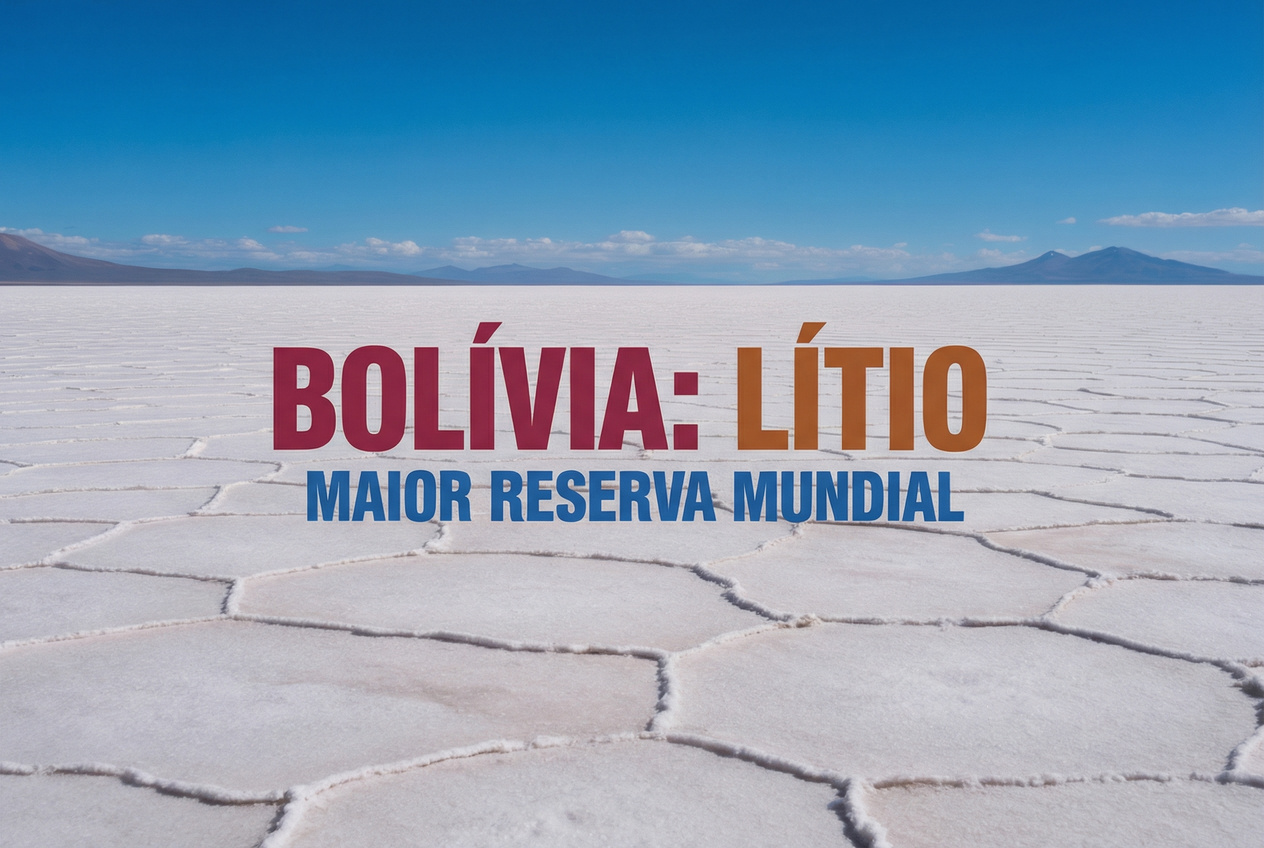
Bolivia Concentrates Enormous Lithium Reserves in the Salar de Uyuni, but Faces Technical, Political, and Industrial Barriers That Keep It Behind Chile and Argentina.
Few countries symbolize so well the contrast between mineral wealth and the difficulty of economic transformation as Bolivia. In the heart of the Andean highlands, the Salar de Uyuni hosts one of the largest known concentrations of lithium on the planet, a resource that has become central to the contemporary global economy. Yet, more than a decade after plans for industrialization began, the country remains far from the productive leadership occupied by its neighbors in the so-called “lithium triangle.”
This discrepancy does not stem from a lack of natural resources, but from a complex combination of technical, political, geological, and strategic factors that have turned Bolivian lithium into one of the most ambitious—and most frustrating—projects in South America.
The Salar de Uyuni and the Promise of Historic Wealth
The Salar de Uyuni is the largest continuous salt desert in the world. Beneath its white and seemingly inert surface lie brines rich in lithium, potassium, boron, and other strategic minerals. Widely circulated estimates indicate that Bolivia holds about one-fifth of the world’s known lithium reserves, a volume sufficient to supply the growing global demand for batteries for decades.
-
After China, it’s now the turn of the USA to ‘secure’ a share of Brazil’s natural resources: the country buys critical rare earths for R$ 3 billion and enters the center of the global technology dispute.
-
Rare earths are in everything, from cell phones to bullet trains, and what almost no one realizes is why they have become the target of such a delicate global war.
-
Brazil extracts 26.3 million tons of ore from what was previously treated as waste, transforming residues into wealth, producing over 3 million tons of sand, and demonstrating how national mining is relearning to generate value.
-
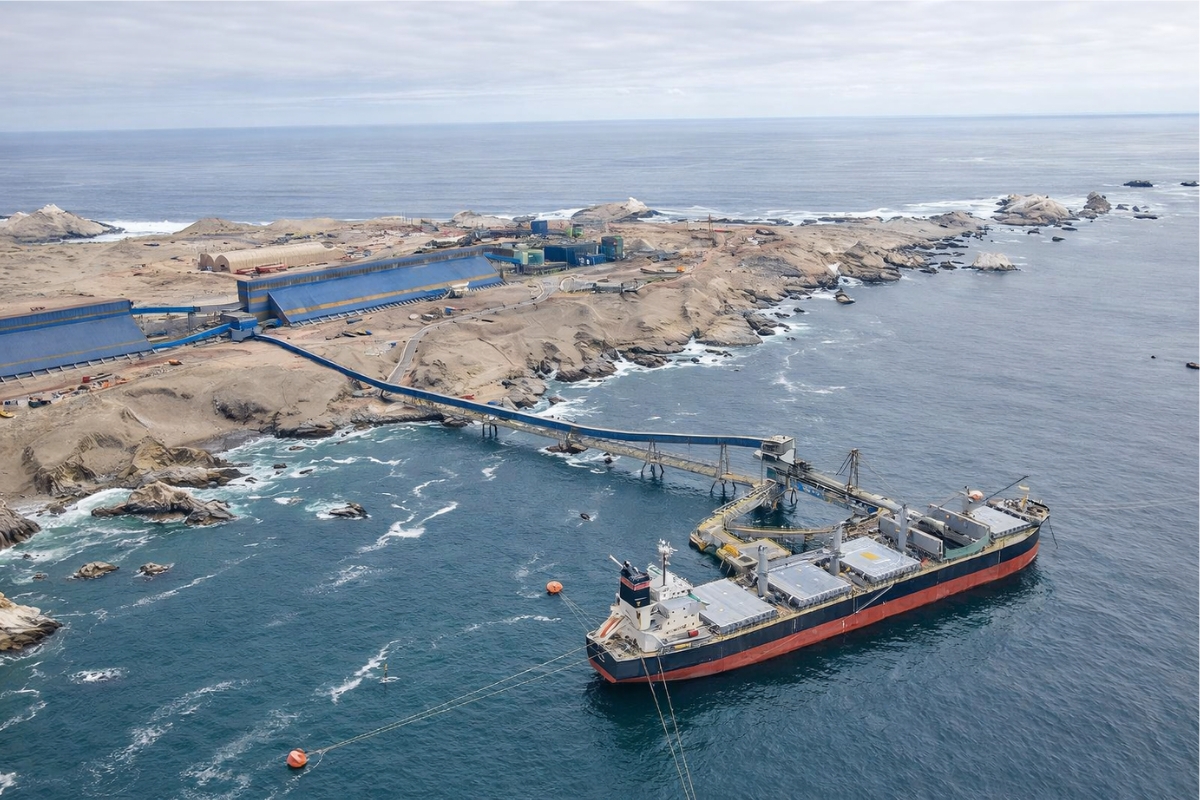
A $3.5 billion megaproject in Latin America pumps desalinated seawater at 1,050 liters per second over 194 km to keep a copper supermine in the Andes operational for another 20 years.

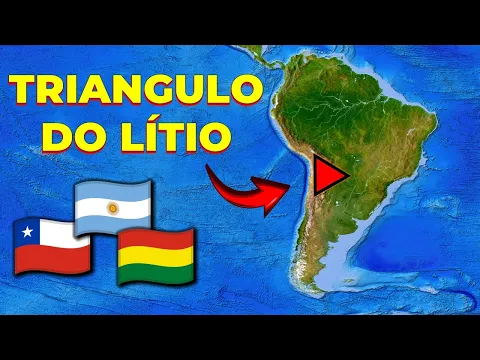

When lithium began to gain status as the “new oil” of energy transition, the country saw it as a historic opportunity: to use the resource not only for export but as the basis for a sovereign industrialization project capable of generating jobs, technology, and economic autonomy.
The Choice for a State and Sovereign Model
Unlike Chile and Argentina, which widely opened the sector to international private initiative, Bolivia opted for a distinct path. The state took control of lithium through the public company Yacimientos de Litio Bolivianos (YLB), with the mission of leading the entire production chain.
The logic was clear: to avoid the “resource curse,” in which countries rich in raw materials remain trapped in raw export, while the added value is captured abroad. In practice, however, this model required technical, financial, and logistical capabilities that the country took longer than expected to develop.
Geological Barriers Complicating Extraction
One of the main obstacles to Bolivia’s advancement lies in the very composition of the brines in the Salar de Uyuni. Unlike other salt flats in the region, such as Atacama in Chile, Bolivian lithium has high concentrations of magnesium, an element that complicates traditional separation and refining processes.
This means that established solar evaporation techniques, widely used by its neighbors, are less efficient in Uyuni. The alternative involves more sophisticated methods, such as direct lithium extraction, which require advanced technology, greater investment, and a longer industrial maturation period.
Slow Industrialization and Production Below Potential
Despite frequent announcements, Bolivia’s commercial lithium production remains modest compared to Chilean and Argentine volumes. The country has made progress in pilot plants, experimental projects, and international partnerships, but has not yet reached sufficient scale to become a global market player.
Meanwhile, Chile and Argentina have consolidated production chains, attracted billion-dollar investments, and positioned themselves as reliable suppliers for battery manufacturers, automakers, and governments concerned about supply security.
This difference in pace has reinforced the perception that Bolivia has enormous potential but faces structural difficulties in turning it into concrete leadership.
Politics, Instability, and Regulatory Uncertainty
Another decisive factor is the political environment. Frequent shifts in orientation, ideological debates over sovereignty, and internal tensions have created regulatory uncertainty, driving away some international investors who could accelerate sector development.

Announced partnerships with foreign companies, especially from China and Russia, have progressed unevenly, often stalled by internal disputes, environmental issues, or changes in government. This contrasts with the regulatory predictability offered by competing countries, which have managed to combine state control with openness to private capital.
The Impact of the Global Battery Race
While Bolivia seeks to resolve its barriers, the world does not wait. The demand for lithium is growing, driven by electric vehicles, energy storage systems, electronics, and sensitive strategic applications, including military ones. Countries and companies are racing to secure long-term contracts and diversify suppliers, reducing geopolitical risks.
In this context, Bolivia’s absence as a major producer represents not only a missed opportunity for the country but also a source of frustration for markets that would like to count on another relevant supply source.
A Potential That Still Weighs on the Regional Board
Despite the difficulties, Bolivian lithium remains a latent strategic asset. No serious analyst dismisses the possibility that, if technical and institutional challenges are overcome, the country may play a more significant role in the future. The reserves remain underground, and the global pressure for supplier diversification is expected to grow.
For now, however, the reality is clear: Bolivia possesses one of the planet’s greatest mineral wealths but has not yet managed to convert it into industrial power comparable to that of its neighbors. The contrast between abundance and performance has become one of the most emblematic cases of the geopolitics of critical minerals in South America.







-

-

-

-

9 pessoas reagiram a isso.