





 Portuguese
  English
  Spanish
  3 min of reading
  1 comment


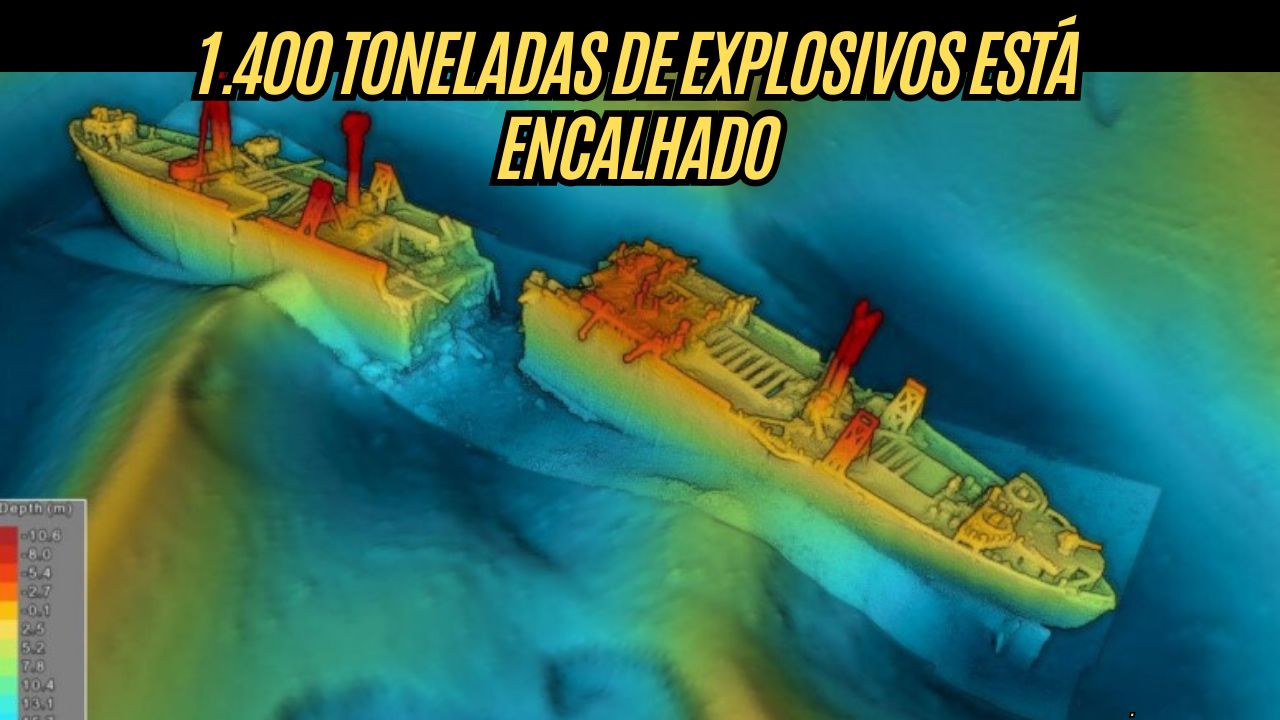


A Wreck In The Thames Estuary, Near The United Kingdom, With A World War II Explosive Cargo, Keeps Authorities On Alert For 80 Years.
Off the coast of the United Kingdom lies the SS Richard Montgomery, a sunken ship carrying a dangerous legacy from World War II: a real ticking bomb in the UK. With 1,400 tons of explosives still stored in its holds, the wreck represents a mix of fascination and apprehension, being closely monitored by authorities.
The Wreck That Became A Legend
The SS Richard Montgomery had a critical mission in 1944: to transport over 6,000 tons of munitions and explosives to support Allied forces in Europe. Built in the early 1940s in the United States, this Liberty-class ship had a short and troubled career. However, its last voyage made it part of one of the most curious stories of World War II and the United Kingdom.
After anchoring in the Thames Estuary, near Sheerness, United Kingdom, the ship ended up grounding on a sandbank due to unfavorable tide conditions and possible structural misfortune. Days later, operations to remove the cargo began but were interrupted when the SS Richard Montgomery broke in half. Although half of the cargo was removed, about 1,400 tons of explosives remained in the wreck, turning it into a dangerous submerged memory.
-
Sleeping at different times each day can be a bomb for your heart and even double your risk of having a heart attack.

-
Without help and without heavy machinery, a woman builds a house from scratch with stone, wood, and cement, erects a chimney, creates a complete leisure area, and transforms an empty lot into her dream home.

-
Couple transforms abandoned house after years of being closed; residence was overgrown with weeds, had a green pool, and a deteriorated structure in the interior of Rio de Janeiro.
-
Hidden marks on the walls of the site associated with the Last Supper of Jesus for centuries have been deciphered in Jerusalem, revealing medieval inscriptions left by pilgrims, European nobles, and travelers from the Middle East.

An Explosive Legacy In The United Kingdom
Since then, the wreck in the United Kingdom has become a delicate issue. Over the decades, the explosives kept in the fore holds of the SS Richard Montgomery remain intact, representing a remote but potentially devastating risk. British authorities constantly monitor the site, with 24-hour radar and regular inspections. Although the risk of explosion is considered low, the ship’s structure is rapidly deteriorating, raising concerns.
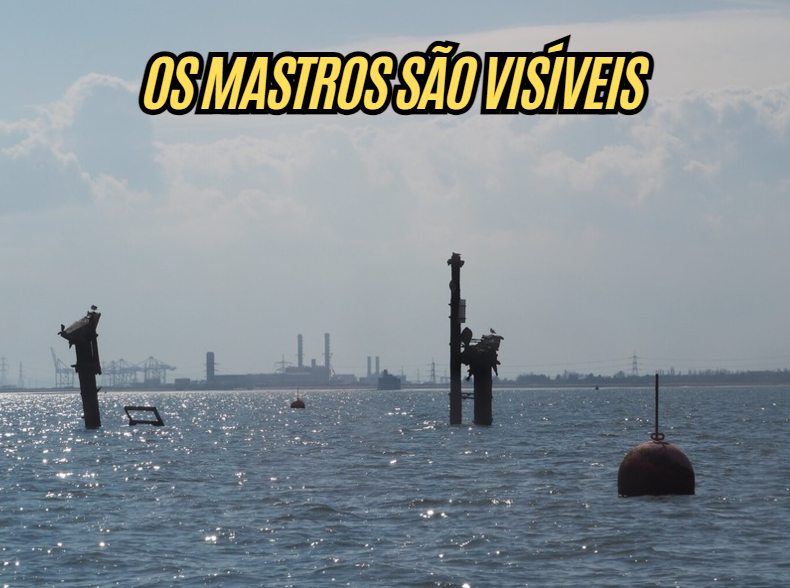
In 2023, reports indicated that the front section of the wreck is more unstable, with parts crumbling. The removal of the masts visible on the surface, intended to ensure the safety of the structure, has been postponed once again. Meanwhile, speculation about the damage of a possible explosion continues to arise in the United Kingdom.
Catastrophic Consequences?
Experts like Professor David Alexander from University College London advocate for the removal of the explosives, while recognizing the enormous challenges and costs involved. A report from 1972 had already estimated that an explosion could destroy windows in Sheerness and create a gigantic column of debris, mud, and explosive cargo. Some even describe the wreck as the potential “end of the world,” given the environmental and social implications of a possible accident.
The SS Richard Montgomery is now a vivid example of how legacies of war can persist over time, challenging technologies and authorities. This ticking bomb in the United Kingdom, with its 1,400 tons of explosives, continues to evoke curiosity and fear, keeping history alive in a submerged danger that seems far from resolved.









Trabalhei na empresa que fabricou os braços para o corte dos mastros.
Corte com jacto de agua.
Morei nessa povoação “Sheerness on sea” .
O problema de momento é de que os mastros estão a causar desiquilibrio o o navio parece querer adornar, dai o possivel corte dos mastros.
As centenas de navios que ali passam sempre continuarão a navegar, sem que entrem diretamente na area, ainda que se cortem os mastros.
Já a noticia parece um pouco superficial e mal elaborada pois refere de que foi retirada metade das 1 400 toneladas e depois refere no fim as mesmas 1.400 tn, em que ficamos??
São 1 400 ou so metade 700 tn ???