





 Portuguese
  English
  Spanish
 6 min of reading
  0 comments


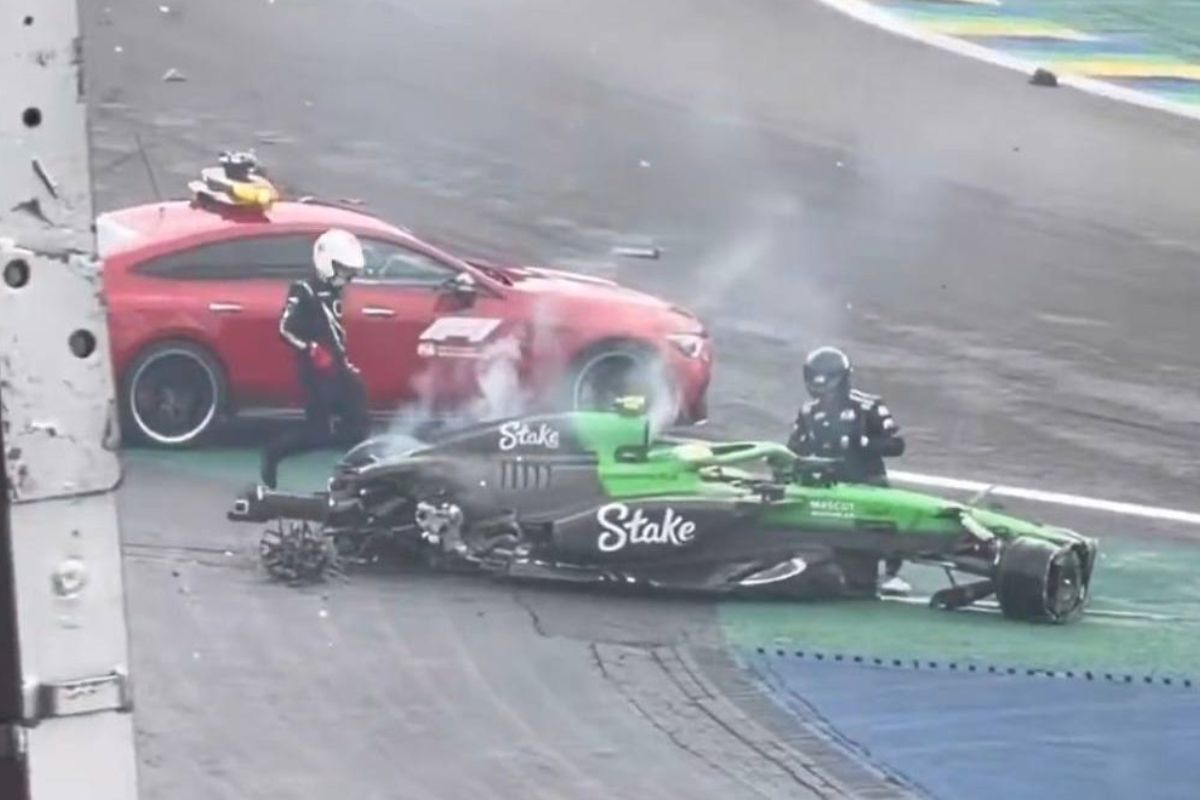
Bortoleto Crashes At High Speed In The Sprint And Abandons The São Paulo GP, But Emerges Unscathed
The strong crash of Gabriel Bortoleto on the last lap of the sprint race at the São Paulo GP abruptly interrupted the Brazilian’s debut at Interlagos in Formula 1, after the car hit 339 km/h just moments before impact. Even with severe damage to the Sauber and forces of up to 57G recorded in the telemetry, the driver exited the car conscious, walking, and went through the mandatory medical protocols at the circuit.
The incident adds tension to an already crucial weekend. Besides the visibility of debuting at home, Bortoleto directly depends on Saturday’s qualifying session to secure a spot on the grid for the main race of the São Paulo GP. According to the regulations, only those who have their car qualified on Saturday compete in Sunday’s race, which makes the team’s ability to rebuild the equipment in time a central aspect of the event’s sports and technical narrative.
How The Accident Happened In The Sprint At Interlagos
The accident occurred on the last lap of the sprint when Bortoleto, then in 11th place, was trying to close in on Alexander Albon on the main straight of Interlagos.
-
Attracting around 250,000 people a year, a lighthouse 200 meters from the sea, on a 60-meter high cliff, on the North Sea coast in Denmark, becomes one of the most impressive examples of how nature can threaten historical buildings.

-
The narrowest house in the world is only 63 centimeters wide, but inside it can accommodate a bathroom, kitchen, bedroom, office, and even two staircases.

-
In the middle of the sea, these enormous concrete and steel structures, built by the British Navy to protect strategic maritime routes, look like they came straight out of a Star Wars movie.

-
For years, no one could cross a neighborhood in Tokyo because of the tracks, but an impressive solution changed mobility and completely transformed the local routine.


In an effort to reduce the gap and fight for a position in the top 10, the Brazilian positioned the Sauber on the inside as he approached the finish line, in a section where cars reach the highest speeds of the weekend at the São Paulo GP. It was at this moment that he lost control of the car while still on the straight.
The first impact occurred on the left side of the track, against the wall lining the pit straight.
With the impact, the car was catapulted to the opposite side, crossing the track and hitting the barrier again at the entrance of the Senna S.
The telemetry data indicated 339 km/h at the moment of the crash and forces of 34G in the first impact and 57G in the second, numbers consistent with high-energy accidents in Formula 1.
The sequence of impacts destroyed much of the external structure of the Sauber, but the monocoque and safety systems absorbed most of the energy.
Chronology Of The Sprint Race Until The Crash
Bortoleto started in 14th place in the sprint of the São Paulo GP and had a more conservative start to the race, even losing a position to Franco Colapinto in the early laps.
However, the race was soon affected by incidents ahead: crashes involving Colapinto, Oscar Piastri, and Nico Hulkenberg, Bortoleto’s teammate, at the Curva do Sol reshaped the pack and opened up opportunities for recovery.
With these events, the rookie jumped from 15th to 12th place, taking full advantage of the opportunities created by others’ mistakes.
After the restart, Bortoleto managed an important overtake on Isack Hadjar, taking the 11th position.
From then on, he remained stuck behind Albon, finding no sufficient gaps to advance in the tight midfield pack that was circulating at a very similar pace.
This combination of competitive pressure, high speed, and the quest for every available point formed the backdrop that preceded the crash on the final lap.
Drivers Health Status And Damages To The Sauber
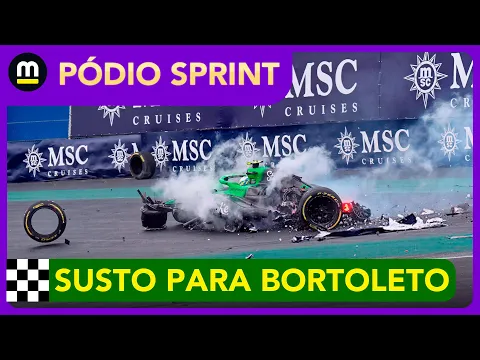

Shortly after the crash, images showed the Sauber heavily damaged at both ends, with parts of the bodywork and suspension structures compromised.
Nonetheless, Bortoleto communicated over the radio to the team that he was fine, which was the first positive indication amid the strong images captured on the straight.
He then exited the car on his own, walking to the escape area while the marshals began the procedure to remove the car.
The car was towed away after the sprint concluded, which was won by Lando Norris, and taken back to the pits for damage assessment.
As per Formula 1’s safety protocol, Bortoleto was taken to the circuit’s medical center as a precaution, undergoing exams and standard checks after a high-energy impact.
The information relayed by the family and the team is that the driver is fine, with no apparent serious injuries, which reinforces the importance of the current safety package in the series in the face of accidents of this magnitude.
What Is At Stake For The Remainder Of The São Paulo GP
From a sporting perspective, the focus now shifts to the qualifying session of the São Paulo GP, scheduled for Saturday afternoon.
Bortoleto’s participation directly depends on the Sauber’s ability to repair the car within the available window between the sprint and qualifying, requiring intense work from mechanics and engineers to reconstruct suspension, bodywork, and any damaged internal components.
Bortoleto’s father, Lincoln Oliveira, reported that the team believes it is possible to get the car ready to return to the track in time for qualifying, stressing that the priority is to ensure that all safety checks are completed.
The pressure is significant because the Formula 1 regulations dictate that a driver can only line up on the grid for Sunday’s race if they participated in the qualifying session, making qualifying a crucial operational cut-off for the remainder of the weekend.
If the car is not ready, Bortoleto’s debut at home in the GP will, in practice, have ended with the sprint crash.
Bortoleto’s Debut And The Symbolic Weight Of Racing At Home
Aside from the technical aspects, the incident carries a significant symbolic weight.
The sprint at the São Paulo GP marks Gabriel Bortoleto’s first participation in an official Formula 1 weekend at Interlagos, in front of an audience that has watched the presence of Brazilian drivers in the category for decades.
Racing at home increases both pressure and visibility, especially in a calendar where opportunities for rookies are rare.
His performance up until the crash, with position gains amid incidents and a restart, reinforces the learning aspect in a real competition environment.
At the same time, the accident serves as a concrete reminder of the inherent risk limits in modern F1, even with high safety levels.
For the Brazilian audience, the immediate takeaway is relief that the driver emerged unscathed and anticipation regarding the possibility of seeing him back on the track during this weekend’s São Paulo GP.
Interlagos, Sprint, And The Dynamics Of The F1 Weekend
The sprint race format adds an extra layer of complexity to the Formula 1 weekend at the São Paulo GP.
Instead of just practice and qualifying before the main race, drivers compete in a short race that awards points and directly impacts tire usage, equipment management, and strategic preparation for Sunday.
This means more time in real racing rhythm and more risk situations, especially on challenging circuits like Interlagos.
For Bortoleto, the sprint would serve as a practical laboratory under competitive conditions, offering relevant mileage before the main race.
The crash on the final lap, however, turns this opportunity into an additional challenge for the team, which will need to balance the need to rebuild the car with the limit of components and the tight schedule between the sessions.
The incident illustrates how the weekend format with the sprint can quickly alter the plans of drivers and teams at the São Paulo GP, increasing both exposure potential and operational risk.






Seja o primeiro a reagir!