





 Portuguese
  English
  Spanish
  4 min of reading
  0 comments


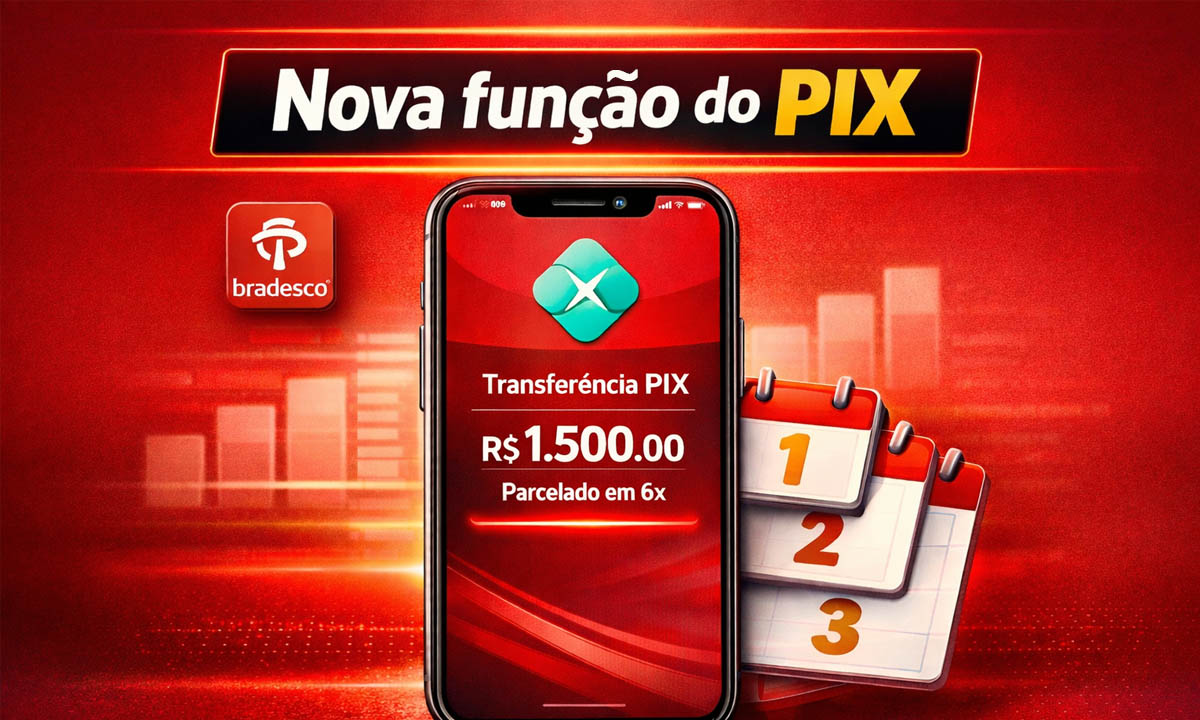
New Way to Install Payments via Pix Starts to Gain Space in Banking Apps, with Credit Outside the Card and Immediate Transfer to the Recipient.
Bradesco has started offering a new way to install transfers via Pix without using the credit card limit.
Named “Pix with Credit”, this option allows the customer to send a Pix normally while paying the amount in monthly installments debited from the checking account.
For the recipient, the money is transferred in full immediately, just like in a traditional transfer.
-
Airfare prices may rise with increasing fuel costs, and the government is considering urgent measures to avoid a direct impact on the wallets of Brazilians.

-
Chocolate prices soar nearly 15% and become a luxury item for Easter 2026, with increases surpassing inflation and changes in Brazilian consumption habits.

-
The Federal Revenue issues a good alert for Brazilian taxpayers: 60.9% are already using the pre-filled tax return, automatic refunds via Pix reach millions, and the government plans for a fully automated income tax in the coming years.
-
India announces a plan of $3.06 billion to bring aviation to forgotten regions: 100 new airports, $1.07 billion in subsidies, and regional routes guaranteed for 10 years, from 2026 to 2036, away from the centers.


Pix with Credit from Bradesco: How It Works and Installment Promise
The bank describes the feature as a pre-approved credit, released gradually within the app, with contracting occurring within the Pix flow.
In practice, the operation creates an alternative for installment payments outside of the credit card bill, at a time when institutions are competing for space with new formats of credit and instant payments.
What Changes in Pix When Installment is Not from the Card
The main difference with Pix with Credit lies in the source of money for the payer.
Instead of relying on the credit card limit, the customer uses a line of credit associated with their account, with installments that are charged month by month.
This model maintains the Pix experience for the recipient, who does not need to accept conditions, sign anything, or have a relationship with the bank of the sender.
The format also aims to address a common behavior when using Pix: when there are insufficient funds to complete the transfer, the payment simply does not happen.
On promotional pages for services, Bradesco had been promoting the idea of “completing the Pix” with credit when the customer does not have available funds in their account, reinforcing the strategy of keeping the transaction within the app.
Still, the commercial rules — such as interest rates, available limits, and eligibility conditions — vary from customer to customer and do not appear, in a standardized way, in the public descriptions consulted.
In reports about the launch, there is no indication of a single interest rate table disclosed for all users.
Installment Pix in Brazil: Why Most Depend on the Credit Card Limit
The installment Pix has existed in the market for some time, but in many offers, the installment occurs like a purchase on the card: the bank or fintech transforms the Pix into an operation that consumes the limit, enters the bill, and follows the card rules.
This setup tends to be familiar to consumers, but has an obvious bottleneck: without available limits, there is no installment option.
Bradesco itself had already offered a model linked to the card, in which the customer could choose to pay either upfront or in installments on the bill.
The shift now is to move the installment outside the card, expanding the use of Pix in situations where the limit is compromised or when the user prefers not to use the card.
This type of difference typically has a direct impact on the final cost and budget control, as it alters the way charges are made and the credit product used behind the operation.
Even so, without the public disclosure of uniform conditions, it is not possible to confidently state how the cost of Pix with Credit compares to traditional card installments for all profiles.
Instant Money for the Recipient, Installments for the Payer
A central point of Pix with Credit is to maintain the logic that has made Pix dominant in retail and transfers between individuals: immediate settlement for the recipient.
In the model presented, the merchant, service provider, or individual receives the full amount instantly, while the payer takes on the installments from their own account.
This separation is what makes the feature feel like an “invisible” installment for those on the other side.
For the recipient, there is no operational difference compared to a regular Pix.
For the payer, the novelty lies in having the approval and contracting of credit integrated into the transaction, without the step of “swiping the card” — neither in the literal sense nor as a consumed limit.
Central Bank and Installment Pix: The Regulatory Scenario and Market Expectation
The launch by Bradesco comes after months of anticipation surrounding the so-called Installment Pix in the Central Bank’s arrangement.
In 2025, the Central Bank even postponed the project timeline, citing the need to reinforce security measures amid concerns about fraud and vulnerabilities in the ecosystem.
More recently, however, the scenario changed: on December 4, 2025, Agência Brasil reported that the Central Bank decided to abandon the creation of specific rules for Installment Pix, after successive delays, announcing the decision in a meeting of the Pix Forum.
In practice, this means that instead of having its own regulatory standard for installments via Pix, the market continues with solutions designed by banks and payment institutions, each with its own credit model, criteria, and pricing.
It is in this space that products like Pix with Credit gain relevance, as they offer a standardized experience within the bank’s app — even though with variable conditions depending on the customer’s profile.








-

-

-

-

-

12 pessoas reagiram a isso.