





 Portuguese
  English
  Spanish
  3 min of reading
  0 comments


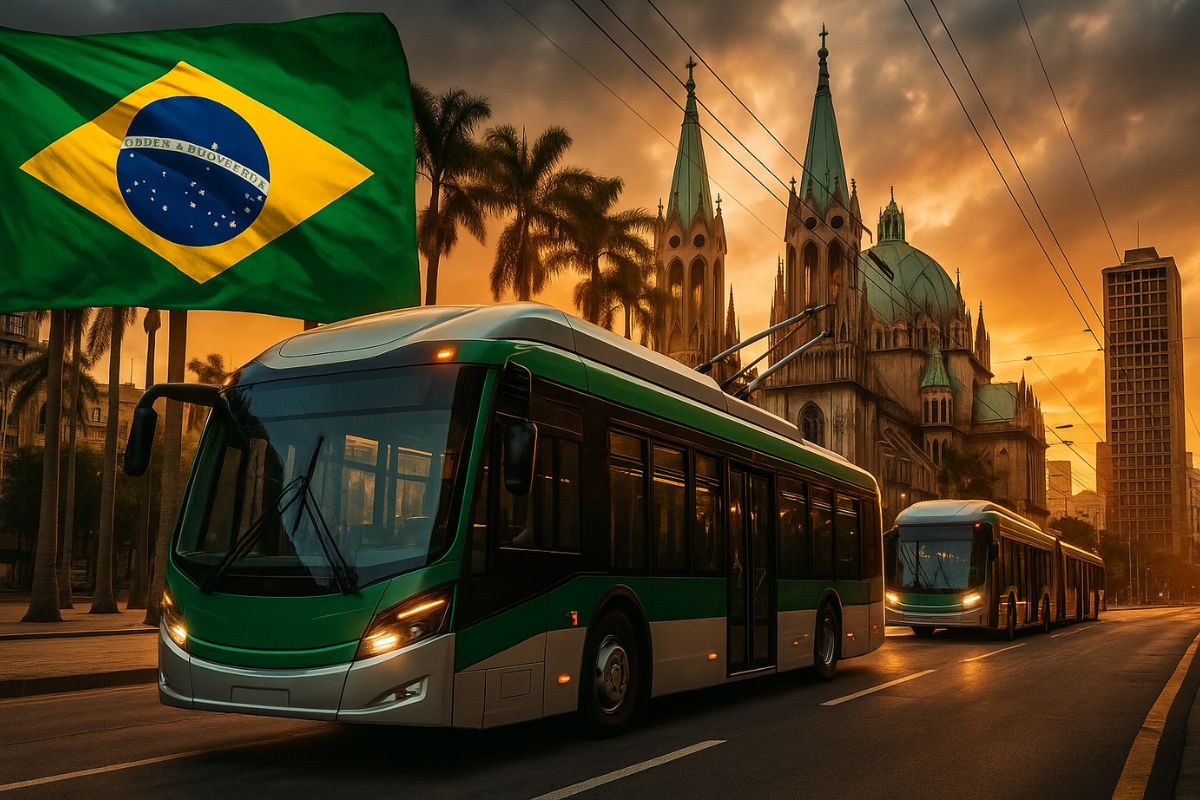
Cities Accelerate The Fleet Transition And Project Thousands Of New Vehicles By 2028
Brazil has just surpassed the mark of 1,000 electric buses in operation in public transport, mainly driven by the city of São Paulo. This data was confirmed by the director of ITDP Brazil, Clarisse Cunha Linke, during the event Paths of Brazil, which brought together authorities and urban mobility experts.
The new phase of electrification of the fleet represents an important advancement, although still modest compared to neighboring Chile (2,600 electric buses) and Colombia (1,700). Even with the accelerated growth rate, electric buses are still a minority compared to the national diesel fleet. However, the trend is for sustained growth, with investments expected from the federal government and increasing adherence from municipalities.
São Paulo Leads, But Other Cities Advance
According to the Brazilian Electric Vehicle Association (ABVE), Brazil recorded 306 new registrations of electric buses in the first half of 2025, an increase of 141% compared to the same period in 2024. Of this total, 841 are in São Paulo, which already has 6.3% of its fleet electrified and intends to reach 20% by 2028.
-
São Paulo surprises the world with a colossal railway network project that promises over 1,000 km of tracks, R$ 194 billion in investments, and 40 projects connecting the capital to the interior with fast and sustainable trains.
-
The world’s largest escalator, measuring 905 meters in China, reduces urban travel time from 1 hour to about 20 minutes and transforms mobility in mountainous regions with an engineering solution adapted to the terrain.
-
A R$ 300 million logistics giant is taking shape in Serra with over 100,000 m² and raises a question: how can this transform e-commerce and distribution in the state?
-
Could Uber Rides Lose Minimum Fare? Understand What’s Happening!

Curitiba has also begun its electrification process, with 54 buses acquired last year and R$ 380 million invested in electromobility infrastructure. Other municipalities like Campinas (250 vehicles), Florianópolis, Palmas, Niterói, and 13 cities in the metropolitan region of Salvador are also participating in the transition, with federal resources through PAC.
Changes Go Beyond Vehicle Purchase
The adoption of electric buses requires more than just fleet replacement. According to Clarisse Linke, it is necessary to rethink regulatory frameworks, create decarbonization goals, and adapt garages and electric charging infrastructure. “The location of the garages becomes a new logistical challenge,” says the ITDP director.
Furthermore, the technology requires new energy solutions. Energy concessionaires need to prepare for the increased demand for simultaneous charging at strategic times, which requires investments and planning.
Electric Buses Are Still Expensive, But Operation Pays Off
The high initial cost remains a barrier. An electric bus costs up to three times more than a conventional one, not to mention the low appreciation in the resale market. However, experts say that operational costs are significantly lower, which can make up for it in the medium term.
“The operation is cheaper, cleaner, and quieter. But a well-structured transition plan is necessary. It is not enough to just replace vehicles; the system as a whole needs to change,” says Clarisse Linke.
Rio de Janeiro Tests New Model On Intermunicipal Line
In the state of Rio, the intermunicipal line 417T, which connects Xerém to Barra da Tijuca, has been testing a 100% electric bus model since June. The evaluation includes autonomy, comfort, refueling, and viability for long trips. The idea is for the experience to serve as a basis for adoption in other lines in the Metropolitan Region.
According to the Ministry of Cities, 2,200 new electric buses are in the acquisition process for 92 municipalities. Available resources for 2025 total R$ 4 billion, with selection currently underway. In 2023, investments already totaled R$ 7 billion, covering projects in capitals and medium-sized cities.
Do you believe that electric buses will become a reality in the streets of your city? Do you think Brazil is on the right track? Leave your opinion in the comments — we want to hear from those who live this transition day by day.






Seja o primeiro a reagir!