





 Portuguese
  English
  Spanish
  6 min of reading
  0 comments


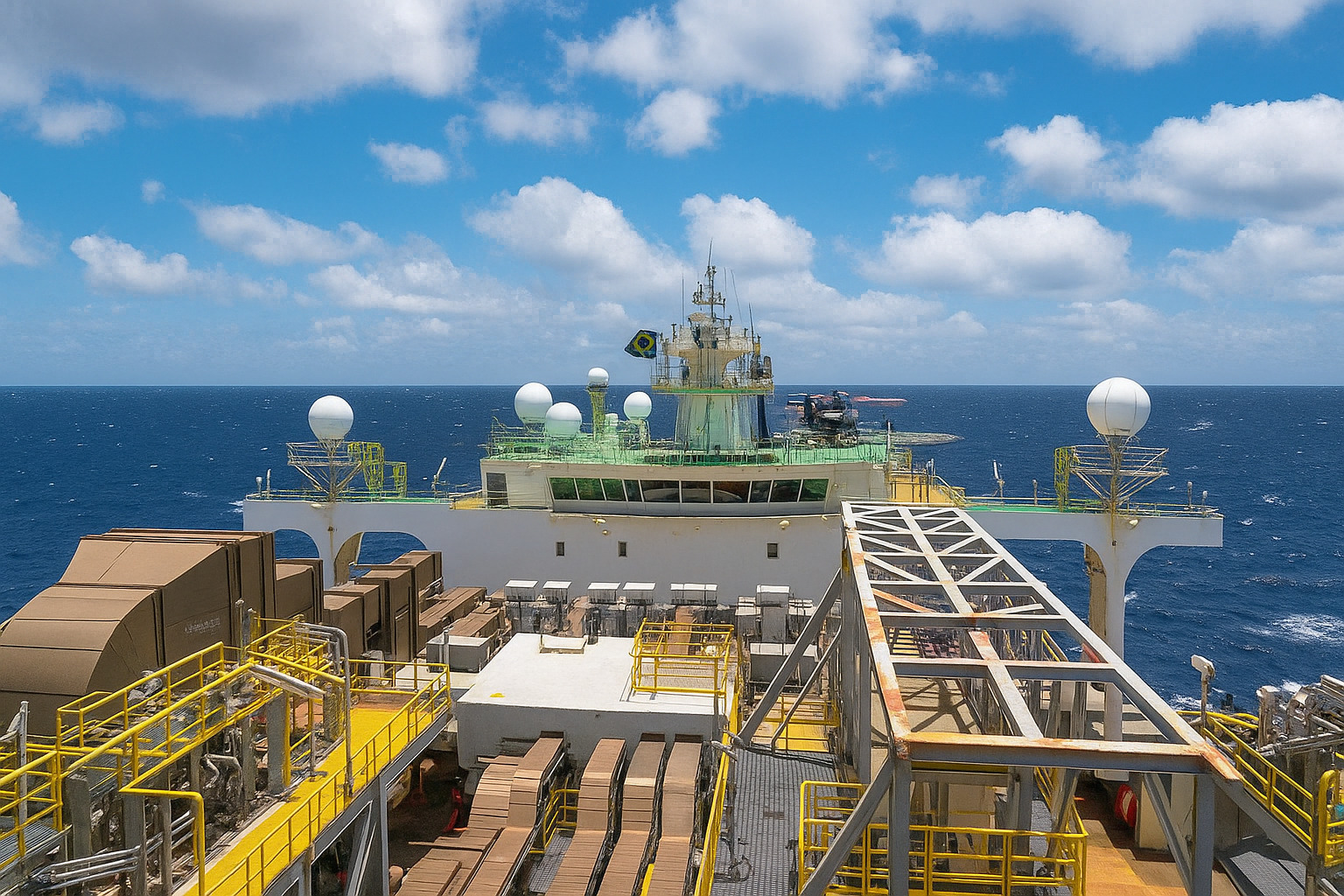
Brazil Registers Historic Record of Oil and Gas Exploration Blocks, with 420 Active Contracts in 2024, Showing Growth and Strategic Potential of the Brazilian Energy Sector.
In 2024, Brazil achieved a historic milestone in the energy sector by recording the highest number of oil and gas exploration blocks under contract since the creation of the National Agency of Petroleum, Natural Gas and Biofuels (ANP).
Moreover, according to the agency’s official report, the country had 420 active exploration blocks. A number that not only highlights growth but also the maturity of the Brazilian energy sector.
Therefore, this advancement reflects both the economic attractiveness of national reserves and the confidence of domestic and international companies in the regulatory stability and the potentials of Brazilian territory.
-
Petrobras evaluates suspension of sales to distributors and considers canceling the cooking gas auction following guidelines from the Federal Government.
-
Lula reveals a masterstroke by Petrobras to undo a deal made by Bolsonaro, which involves the return of an important refinery that currently produces less than half of what was expected and makes Brazil dependent on international diesel.
-
A study confirms that the natural gas sector will reduce greenhouse gas emissions in Brazil by 0.5% and accelerate the energy transition by 2026.

-
Petrobras implements a severe adjustment and confirms a 55% increase in the price of aviation kerosene with a proposal for installment payments for the companies.


The concept of oil and gas exploration blocks involves geographical areas where specialized companies conduct research and geological studies to identify oil and natural gas reservoirs.
Historic Growth of Oil and Gas Exploration Blocks
Historically, Brazil began its exploratory journey in a more modest manner, focusing efforts on land areas, primarily in the Potiguar Basin and the Recôncavo Baiano region.
However, over the decades, technological development and experience gained by domestic companies, especially Petrobras, enabled the country to advance to offshore exploration in marine basins.
As a result, Brazil became one of the largest oil producers in the world.
The growth recorded in 2024 was the result of two important auction cycles promoted by the ANP.
On one hand, the 4th Cycle of Permanent Offering of Concession led to the signing of 181 new contracts. On the other hand, the 2nd Cycle of Permanent Offering of Production Sharing added one more significant contract.
Thus, this volume of contracts significantly surpassed the previous record, set in 2018, when companies signed only 67 contracts.
Therefore, this increase reflects not only the expansion of exploration capacity but also the growing attractiveness of the Brazilian oil and gas market. Which remains competitive in a global scenario marked by fluctuations in international prices.
The 2024 record also highlights the regulatory maturity of the country.
Since the 1990s, when Brazil began to open its oil sector to private initiative, the government continuously improved the bidding, inspection, and technical oversight processes.
Thus, these advancements provided legal security for investors and encouraged the diversity of exploration companies.
As a result, international players were able to participate in projects in different regions of the country.
Exploration and Return Phases of Blocks
The exploration and production contracts follow two distinct phases.
Firstly, in the exploration phase, companies conduct detailed geological studies to identify oil or natural gas reservoirs.
If they do not find economically viable volumes, they can return the area to the ANP, which then relaunches the area in future auctions.
On the other hand, if promising discoveries occur, the company assesses the viability of commercial exploration, ensuring that only blocks with significant economic potential move on to production.
In 2024, the onshore blocks led the statistics with 278 areas under contract, while offshore blocks totaled 142.
Although less numerous, offshore blocks concentrated 60% of the total contracted area, approximately 107,000 km².
This underscores that, in terms of extent, Brazilian offshore remains the strategic focus of the sector.
Among the marine basins, the Pelotas Basin stood out with 44 contracted blocks, and the Santos Basin was responsible for the largest contracted area in the marine environment.
Onshore, the Potiguar Basin stood out with 151 blocks, 104 of which were signed in 2024.
The basins of the Recôncavo da Bahia, Sergipe-Alagoas, and Espírito Santo followed.
Additionally, the diversity of basins and types of blocks demonstrates Brazil’s geological potential.
Onshore, exploratory areas face challenges related to infrastructure and logistics.
In the marine environment, particularly in deep waters, exploration requires advanced technology, high investments, and longer study times before production.
This dynamic makes the Brazilian sector particularly strategic in the global oil and gas landscape.
Exploration Companies and Their Strategic Role in the Sector
Exploration companies play a crucial role in this scenario.
In the marine environment, Petrobras leads with 61 blocks in operation, followed by Shell and Chevron.
On land, the leadership belongs to Elysian Petroleum, with 122 blocks under contract, followed by Petro-Victory and Imetame.
This way, the participation of multiple companies, both domestic and international, demonstrates the diversity of investments and confidence in the country’s production potential.
According to the ANP, 92% of the blocks were active in 2024, while the small inactive portion resulted mainly from delays in environmental licensing, especially in the Equatorial Margin.
Between 2016 and 2024, companies registered 54 “Declarations of Commerciality”, when they inform the ANP that technical exploration indicates economic viability for production.
These historical indicators show how the sector has evolved from an initial exploration phase to large-scale production, especially in deep-water marine areas.
Furthermore, the growth of the sector has fostered technological and academic partnerships.
Brazilian universities and research centers participate in the development of exploration techniques and environmental monitoring.
This integration between the private sector and science makes oil and gas exploration safer and more efficient.
Thus, the investments made become sustainable in the long term.
Investments and Future Perspectives
The oil and gas sector also attracts significant investments.
The ANP projects that between 2025 and 2028, companies will invest around US$ 2.33 billion in the exploration phase.
Of this total, approximately US$ 2.20 billion, or 94%, will go to offshore blocks, while onshore blocks will receive about US$ 130 million.
Therefore, these numbers show that Brazil continues to invest heavily in technological development and the infrastructure necessary to explore complex reserves.
This way, the country ensures competitiveness and sustainability in the sector.
Historically, the expansion of oil and gas exploration blocks in Brazil has occurred in cycles of discoveries and investments.
These cycles reflect both the technological evolution and the strategic planning capacity of the country.
From the first discoveries on land to offshore complex projects, Brazil has built a growth trajectory that places the country among the global leaders in fossil energy production.
At the same time, the country invests in sustainability and technological innovation.
In addition, the development of infrastructure associated with exploration, such as ports, roads, and industrial facilities, strengthens the sector.
These investments not only facilitate the logistics of exploration and transport of oil and gas but also promote the economic development of the involved regions.
This way, they create jobs and train specialized labor.
Consolidation of the Brazilian Market
The historic record achieved in 2024 highlights the maturity of the oil and gas exploration blocks market in Brazil and points to a promising future.
The continuous expansion of contracted areas, the involvement of companies of various sizes, and the consolidation of robust regulatory processes indicate that the country is ready to face global challenges.
Moreover, Brazil maintains its prominent position in the energy sector and ensures that the reserves of oil and gas advance efficiently and sustainably.
In summary, the numbers from 2024 reinforce Brazil’s strategic role in the international energy landscape.
Thus, the combination of geological potential, robust investments, stable regulation, and technological innovation creates a favorable environment for the country to continue advancing in the exploration of oil and gas exploration blocks.
Therefore, Brazil consolidates a success story and contributes to national and global energy security.
Thus, this historic milestone shows that the Brazilian oil and gas sector has immediate economic relevance and potential for generating positive long-term impacts on society and sustainable development.








Seja o primeiro a reagir!