





 Portuguese
  English
  Spanish
  4 min of reading
  0 comments


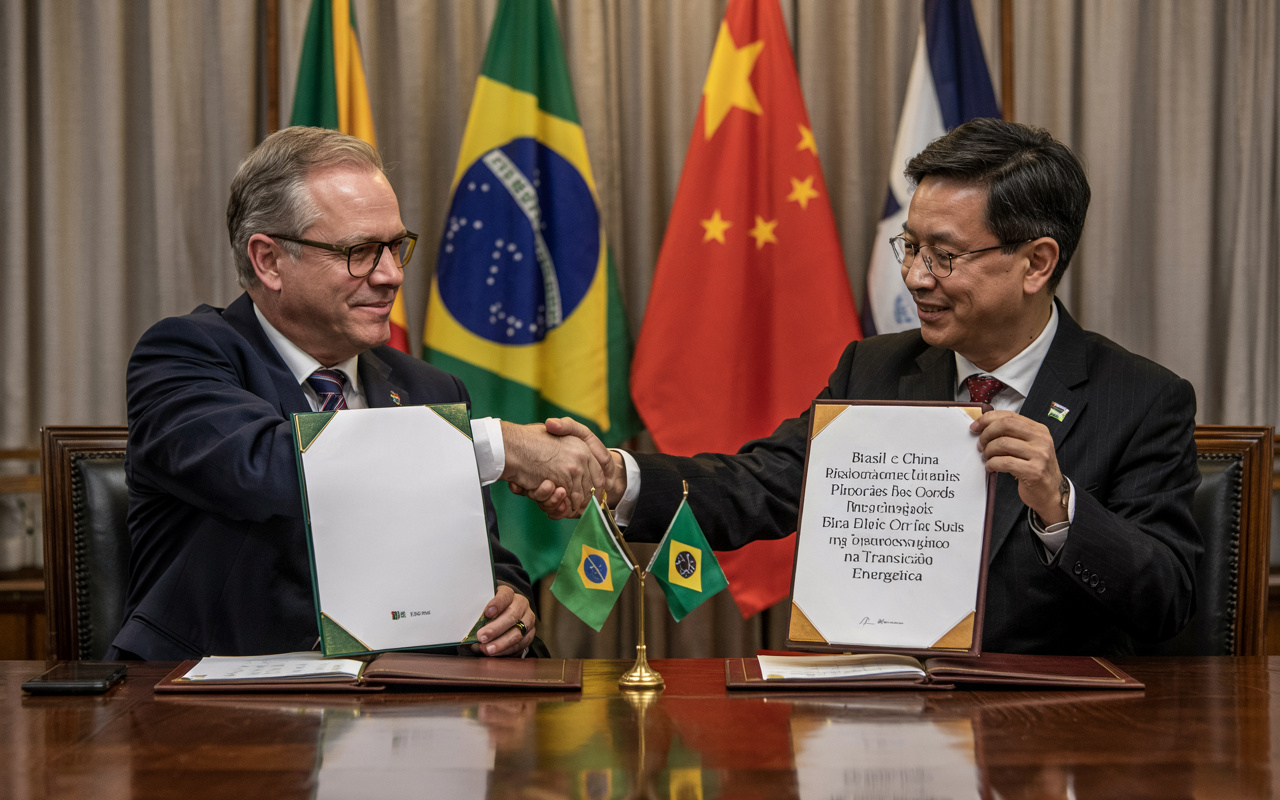
Brazil And China Sign Billion-Dollar Agreements To Explore Lithium And Rare Earths In South America, Aiming For Leadership In Energy Transition And Challenging The USA.
While the world competes for control of the minerals that will sustain the next energy revolution, Brazil has just taken a step that could redefine the geopolitical landscape of batteries, electric vehicles, and clean technologies. In billion-dollar agreements signed with China, the country opens the doors for massive investments in lithium, rare earths, and other strategic minerals, creating a partnership that promises to accelerate the energy transition while also challenging the historic dominance of the United States over critical supply chains.
These understandings, which involve everything from mining and processing projects to industrial development, place Brazil in a leading role in the geopolitics of green resources. More than just commercial contracts, they represent the convergence of two economic giants that share interests in reducing dependence on traditional suppliers and creating new production hubs outside the Western orbit.
A Billion-Dollar Market In Dispute For Critical Minerals
Lithium, nicknamed the “white gold” of the new economy, is essential for the manufacturing of lithium-ion batteries used in electric vehicles, smartphones, and energy storage systems.
-
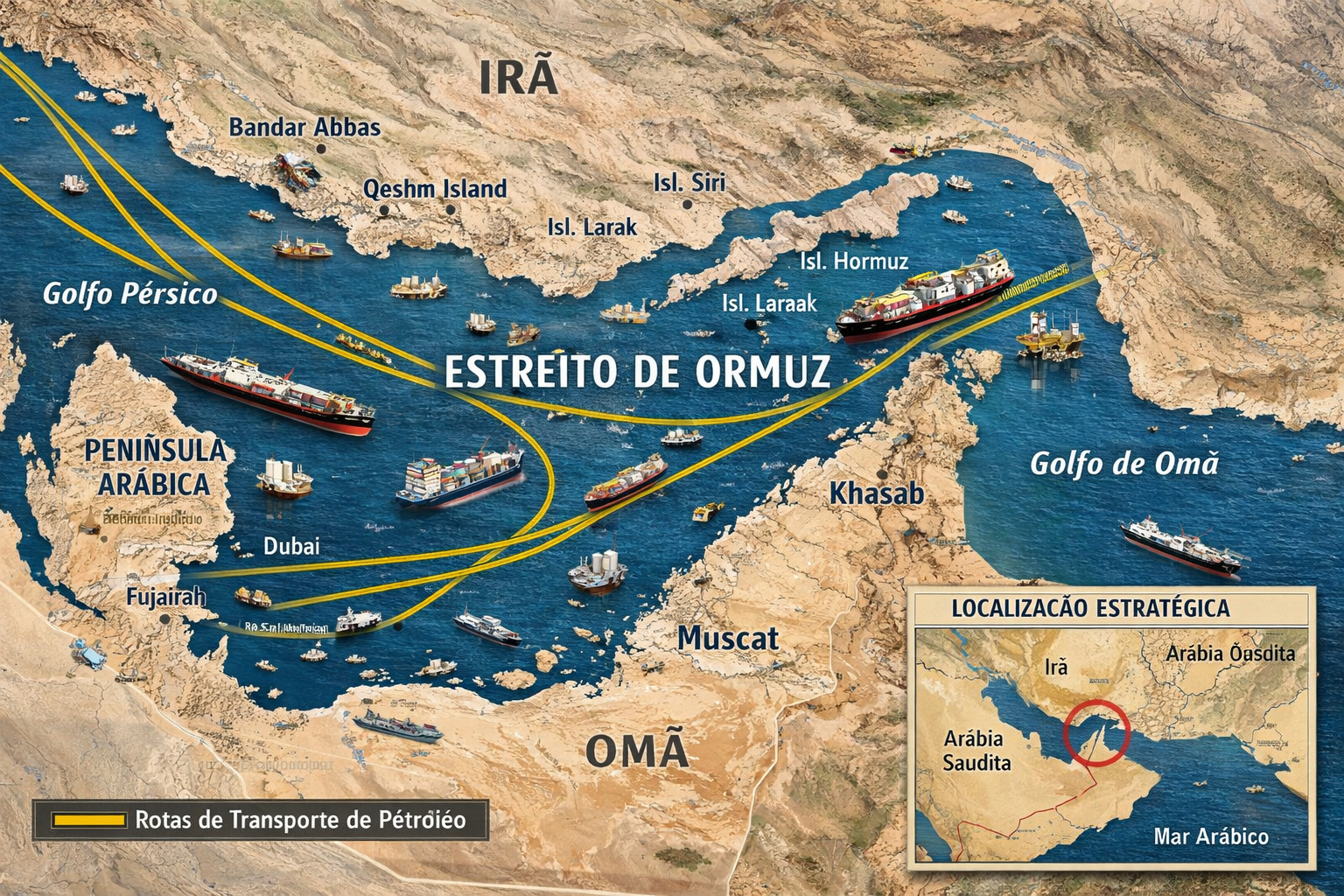
Global summit with over 40 countries pressures Iran for a blockade in the Strait of Hormuz and warns of direct impact on oil, food, and the global economy.
-
Russia has broken the U.S. maritime blockade to send oil to Cuba and is now loading a second ship while Trump says that “Cuba is next” in a possible military action against the island.

-
Spain challenges the USA and closes its airspace for operations against Iran, raising global tension and provoking the threat of a trade rupture.

-
While no other country manufactures tanks in Latin America, Argentina activates the TAM 2C-A2 and raises a curiosity about the technological lag in the region.

Rare earths—a group of 17 chemical elements like neodymium and praseodymium—are crucial inputs for high-performance motors, wind turbines, solar panels, and military components.


According to projections from the International Energy Agency (IEA), lithium demand is expected to grow by more than 400% by 2035, while rare earth demand could double in the same period. Control over these supply chains is not just an economic issue but also a strategic and military one.
Currently, China dominates the global processing of these minerals, accounting for around 60% to 70% of lithium refining and over 80% of rare earth refining. Brazil, with its still underexplored reserves and competitive production costs, emerges as a natural partner for Beijing to diversify suppliers and expand its supply base.
The Agreements And Investments
Among the most relevant announcements is the acquisition by the Chinese company BYD of mining rights in the so-called “Lithium Valley” in Minas Gerais, one of the most promising regions in the world for the exploration of this metal. The investment is not limited to extraction; the plan includes setting up processing plants and possibly battery factories in Brazilian territory.
Other Chinese companies have already shown interest in joint ventures for rare earth exploration in Brazil and Bolivia, taking advantage of integrated logistics and regional trade agreements. This integration could transform Brazil into a Latin American hub for supplying these minerals to the global industry.
The agreed model foresees that a significant part of the added value remains in the country, with technology transfer and local training. This means creating a domestic production chain, reducing dependence on primary exports, and adding value to the economy.
Geopolitical Impact Of The Partnership Between China And Brazil
For the United States and the European Union, these agreements sound like a warning. The West seeks to reduce dependence on China for critical inputs but sees Beijing expanding its influence precisely in one of the most strategic regions on the planet: South America.

Brazil, in turn, seeks to balance its partnerships. The government signals that it is open to investments from multiple sources, but, in practice, Chinese investments arrive more quickly and with a larger volume of capital. This movement reinforces the country’s role in BRICS as a strategic supplier of essential commodities for the green economy.
Analysts point out that the advancement of this partnership may influence trade negotiations, environmental treaties, and even diplomatic alignments, especially in international forums discussing energy transition and climate change.
Challenges And Criticisms
Despite the optimism, the project is not free of controversies. Environmentalists warn about the risks of large-scale mining, especially in sensitive areas like the Cerrado and the Legal Amazon. Processing minerals like lithium and rare earths involves chemical substances that, if poorly managed, can lead to soil and water contamination.
There is also the challenge of ensuring that benefits are distributed internally, preventing the exploitation from being limited to the export of raw materials. For Brazil to reap long-term benefits, it will be necessary to invest in technology, skilled labor, and industrial policies that encourage local manufacturing of components and equipment.
Another point of attention is the reaction of the USA, which may intensify the search for bilateral agreements with neighboring countries and adopt trade measures to protect its interests in the region.
A New Chapter In The Energy Transition
If successful, the Brazil–China partnership in the critical minerals sector could create a new axis of power in the global clean energy market. More than just supplying inputs, Brazil will have the opportunity to insert itself competitively into one of the most dynamic and strategic value chains of the coming decades.
This is a contest that goes far beyond mining contracts. It is about defining who will control the keys to the green economy—and, by all indications, Brazil has decided it wants to be one of the owners of that door.










Seja o primeiro a reagir!