





 Portuguese
  English
  Spanish
  3 min of reading
  0 comments



Learn How Biofuels, Ethanol, and Technical Cooperation Can Transform Sustainable Mobility and Drive Decarbonization in Brazil and Japan.
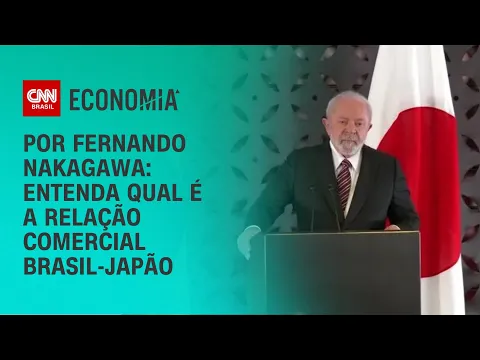
Brazil, through a strategic mission from the sugar-energy and bioenergy sector, intensifies its relations with Japan. This initiative occurs simultaneously with President Luiz Inácio Lula da Silva’s official visit to Tokyo, between March 24 and 27, 2025.
Additionally, the occasion celebrates 130 years of diplomatic ties between the two countries.
The mission, therefore, highlights Brazilian technology in biofuels, especially ethanol, which presents high efficiency in renewable energy and a significant impact on emission reduction.
-
“No one will make us change the Pix,” says Lula after the US report.

-
Lula responds directly to Trump and says that Pix is from Brazil and will not change under pressure from anyone, after a report from the United States pointed out the Brazilian payment system as an American trade barrier.

-
Amazon has just announced a new fee on all deliveries, and your online purchases will become more expensive starting April 17, including for those buying from the United States here in Brazil.

-
He sold his share for R$ 4 thousand, saw the company become a giant worth R$ 19 trillion, and missed the opportunity of a lifetime.



According to data from the Union of Sugarcane Industry (UNICA), Brazil produced about 32 billion liters of ethanol in the 2024/2025 harvest.
Thus, it consolidated its position as the second largest global producer.
According to the UNICA website, this production reflects the continuous growth of the Brazilian sugar-energy chain, which stands as one of the most advanced in the world.
Importance of Brazilian Ethanol for Emission Reduction
Evandro Gussi, president of UNICA, will participate in the panel “Decarbonization and Energy Strategies,” scheduled for March 26, 2025.
During the event, he will highlight the prominence of Brazilian ethanol, which has one of the lowest carbon intensities in the world.
This fuel, in fact, reduces emissions by 75% to 80% compared to gasoline, according to the National Agency of Petroleum, Natural Gas and Biofuels (ANP).
Derived from sugarcane and second-crop corn, bioethanol combines environmental efficiency with economic viability.
Furthermore, Gussi will present solutions to advance sustainable mobility, such as the use of biomethane instead of diesel in agricultural machinery.
According to the Ministry of Mines and Energy (MME), the country’s agricultural sector will achieve emission neutrality by 2040.
Therefore, these initiatives place Brazil in a global prominence position.
Workshop Brazil-Japan: The Future of Sustainable Mobility and Decarbonization
On March 27, 2025, the Brazilian mission will participate in the workshop “Brazil-Japan – Biofuels to Decarbonize Transportation”.
UNICA organizes the event in partnership with the Institute of Energy Economics of Japan (IEEJ).
Thus, the meeting will gather authorities, business leaders, and experts from the automotive and energy sectors of both countries.
The meeting, consequently, will discuss the use of carbon-neutral renewable fuels, the application of ethanol in maritime and land transportation, as well as logistical solutions for its distribution.
According to the Japanese government website, the country intends to increase the ethanol blend in gasoline to 10% by 2030, which represents an estimated demand of 4.45 billion liters per year.
Potential of Ethanol in Sustainable Aviation
Japan is also accelerating the creation of a regulatory framework for Sustainable Aviation Fuel (SAF), considering ethanol as a promising solution.
According to the International Air Transport Association (IATA), the global SAF market will reach 15 billion liters annually by 2030.
Brazil, in turn, shares its experience of five decades in large-scale ethanol use as part of the energy matrix.
Role of Public Policies in Technical Cooperation and Sustainability
Brazil promotes this technical cooperation through structured public policies.
The RenovaBio, for example, foresees cutting about 600 million tons of carbon by 2030, according to information from the Ministry of Mines and Energy website.
The Fuel of the Future program, launched in 2024, enhances the prominence of biofuels in the energy transition.
Thus, by reinforcing this partnership with Japan, the country strengthens clean mobility and expands its positive impact on greenhouse gas reduction.
Source: UNICA, Ministry of Mines and Energy (MME), ANP, IEEJ, IATA, Government of Japan.









-

Uma pessoa reagiu a isso.