





 Portuguese
  English
  Spanish
  3 min of reading
  0 comments


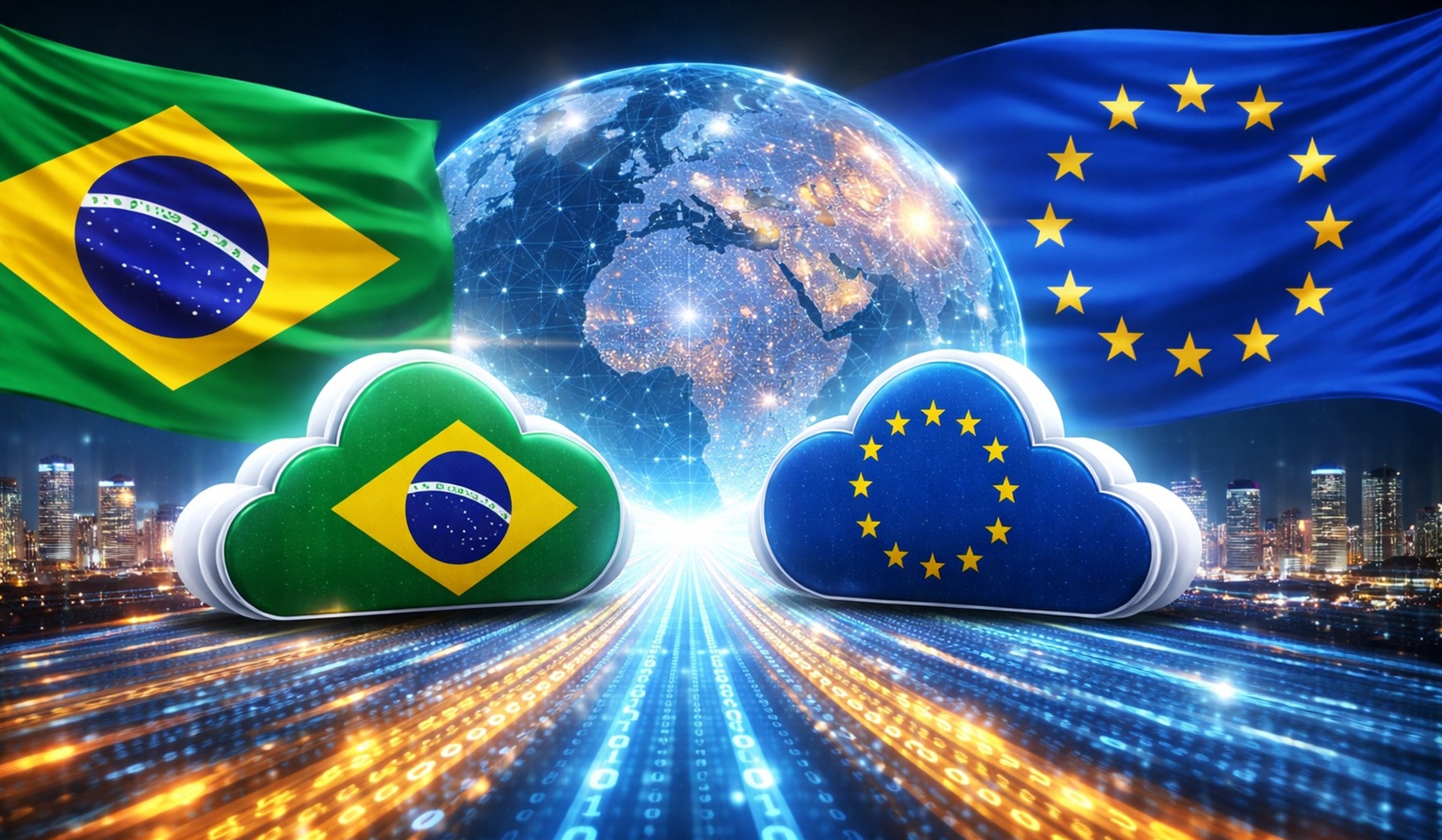
Established in the context of the economic agreements signed in January, the new understanding between Brazil and the European Union recognizes the equivalence in data protection standards, allows the secure flow of personal information, reduces regulatory costs, and creates an integrated digital area that reaches 670 million consumers
The European Commission and Brazil adopted mutual adequacy decisions that confirm comparable levels of data protection, allowing the free flow of personal data between the European Union and Brazil, with a direct impact on digital trade, legal security, and companies operating between the two jurisdictions.
Decisions Confirm Equivalence in Data Protection Levels
The decisions recognize the high standards of data protection that safeguard consumers and citizens of the EU and Brazil. As a result, companies, public authorities, and researchers can exchange data freely between the two jurisdictions, with no additional requirements, ensuring secure flow of personal information.
By ensuring the free flow of personal data between the EU and Brazil, the decisions reduce operational costs and increase regulatory predictability. The measure benefits European companies already invested in Brazil and Brazilian companies expanding in the European market, strengthening bilateral economic relations.
-
“No one will make us change the Pix,” says Lula after the US report.

-
Lula responds directly to Trump and says that Pix is from Brazil and will not change under pressure from anyone, after a report from the United States pointed out the Brazilian payment system as an American trade barrier.

-
Amazon has just announced a new fee on all deliveries, and your online purchases will become more expensive starting April 17, including for those buying from the United States here in Brazil.

-
He sold his share for R$ 4 thousand, saw the company become a giant worth R$ 19 trillion, and missed the opportunity of a lifetime.


Economic Impact and Creation of the World’s Largest Data Flow Area
With the adoption of the decisions, the world’s largest area of free and secure data flow is created. The arrangement encompasses a total of 670 million consumers in the EU and Brazil, expanding the reach of digital services and data-driven economic activities.
The boost to digital trade occurs through the elimination of additional regulatory barriers, facilitating cross-border operations. The initiative also contributes to legal stability, a factor considered strategic for long-term investments and planning by companies on both sides.
Relation with EU-Mercosur Agreements and Geopolitical Signal
The mutual adequacy decisions occur in the context of the Economic Partnership Agreement and the Economic Cooperation Agreement and the Interim Trade Agreement, signed on January 17 between the EU and Mercosur. They serve as a foundation for strengthening trade between the EU and Brazil.
In addition to the economic impact, the decisions send a relevant geopolitical signal. This move demonstrates the shared commitment to multilateralism and to an international rule-based order, reinforcing institutional cooperation between the parties involved.
Adoption Process, Review, and Legal Foundations
The adoption followed the opinion of the European Data Protection Board and the approval of EU Member States in the comitology procedure. The European Commission will review the functioning of the adequacy decision after a period of four years, assessing its practical effects.
In Brazil, the Constitution protects privacy as a fundamental right. In 2018, the General Data Protection Law was adopted, considered equivalent to the European General Data Protection Regulation, with a high degree of convergence in rights, obligations, and enforcement mechanisms, strengthening the regulatory framework.
The European Commission has the authority to recognize countries outside the EU as adequate in data protection, allowing the free flow of personal information. So far, several jurisdictions and international organizations have already received this recognition in different scopes, expanding the global reach of this model.








-

4 pessoas reagiram a isso.