





 Portuguese
  English
  Spanish
  4 min of reading
  0 comments


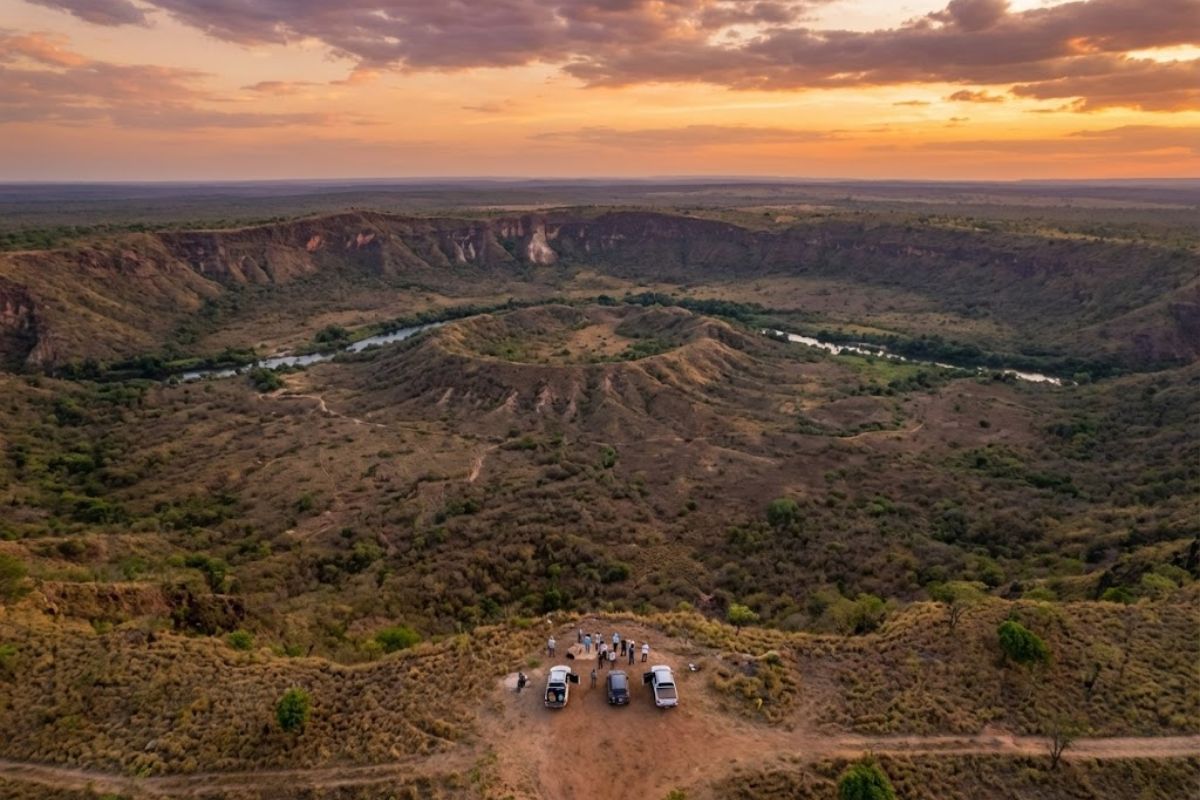
Formed About 254 Million Years Ago By A 4 Km Asteroid, The Araguainha Dome Houses The Largest Meteor Crater In South America, Spread Over Farms In MT And GO And Today Coveted To Become A Geological Park Open To Visitors From Brazil And The World.
Few people know, but Brazil houses, at the border between Mato Grosso and Goiás, the largest meteor crater in South America. It is the Araguainha Dome, a circular structure about 40 km in diameter, formed about 254 million years ago by an impact capable of completely reshaping the landscape of the region.
Since 1973, when NASA researchers published the first hints that a cosmic impact had occurred there, until the detailed confirmation made in 1978 by geologist Álvaro Crósta from Unicamp, the area emerged from scientific anonymity and is now rated to become an officially recognized geological park, combining preservation, research, and educational tourism.
Giant Crater Larger Than The City Of Rio De Janeiro

The crater that gave rise to the Araguainha Dome is about 40 km in diameter and has an approximate area of 1,300 km², larger than the area of the city of Rio de Janeiro.
-
A gigantic dam project in the Himalayas could solve one crisis but silently create another for millions of people.
-
Nikola Tesla said that intelligent people tend to have fewer friends, and now science partially confirms this: a study with over 15,000 people showed that for the more intelligent, socializing too much can even reduce life satisfaction.

-
A superyacht worth US$ 17 million is delivered in impeccable condition, sets out to sail, and hits a bridge in the Bahamas just two hours later.

-
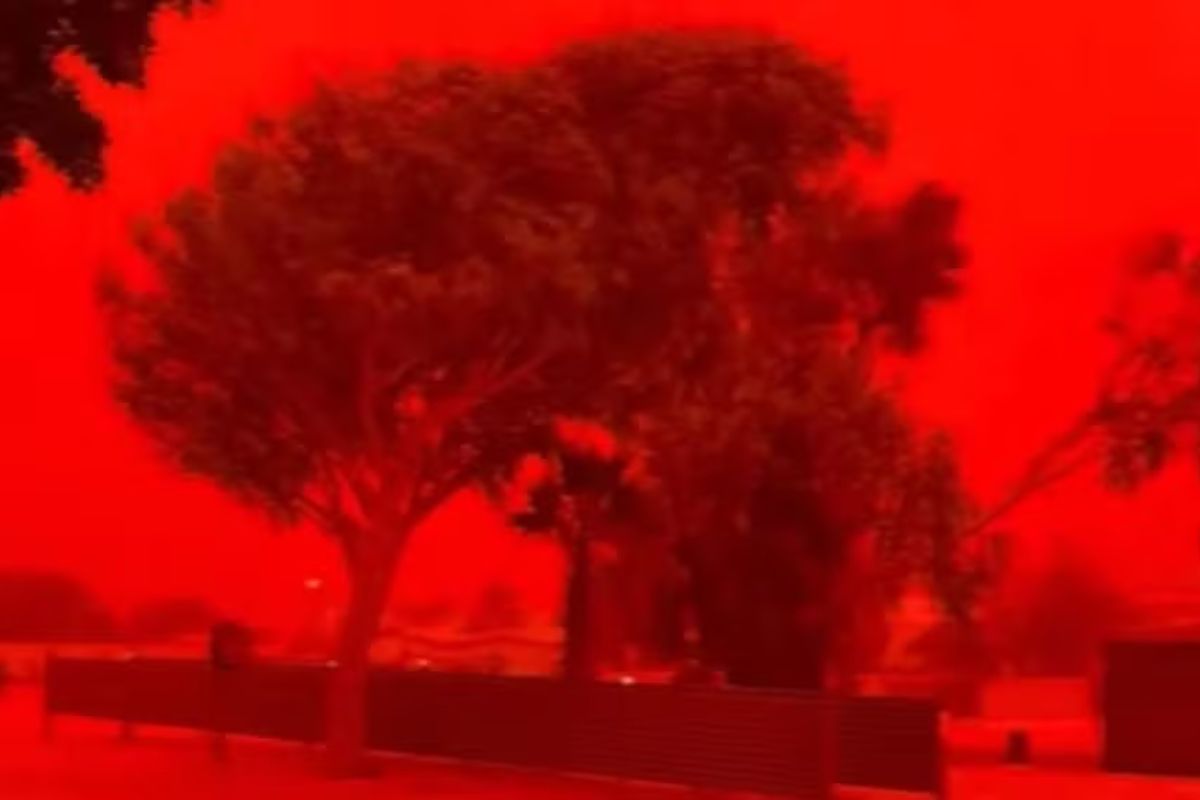
Residents of Australia woke up to a sky completely red like blood before the arrival of Cyclone Narelle, which hit the coast with winds of 250 km/h, tearing off roofs and lifting iron dust in a scene they described as apocalyptic.

It extends across the municipalities of Araguainha and Ponte Branca in Mato Grosso, also reaching Alto Araguaia (MT) and Mineiros (GO), always in inland areas.
Despite its monumental scale, today’s landscape mixes gentle hills, valleys, and pastures.
The region is predominantly rural, with an economy based on agriculture, especially in <strong;cattle ranching and the cultivation of soybeans, corn, and other grains, where many families work without imagining that they walk daily on a scar left by an ancient asteroid.
Shallow Sea Impact Caused Earthquakes And Giant Tsunamis

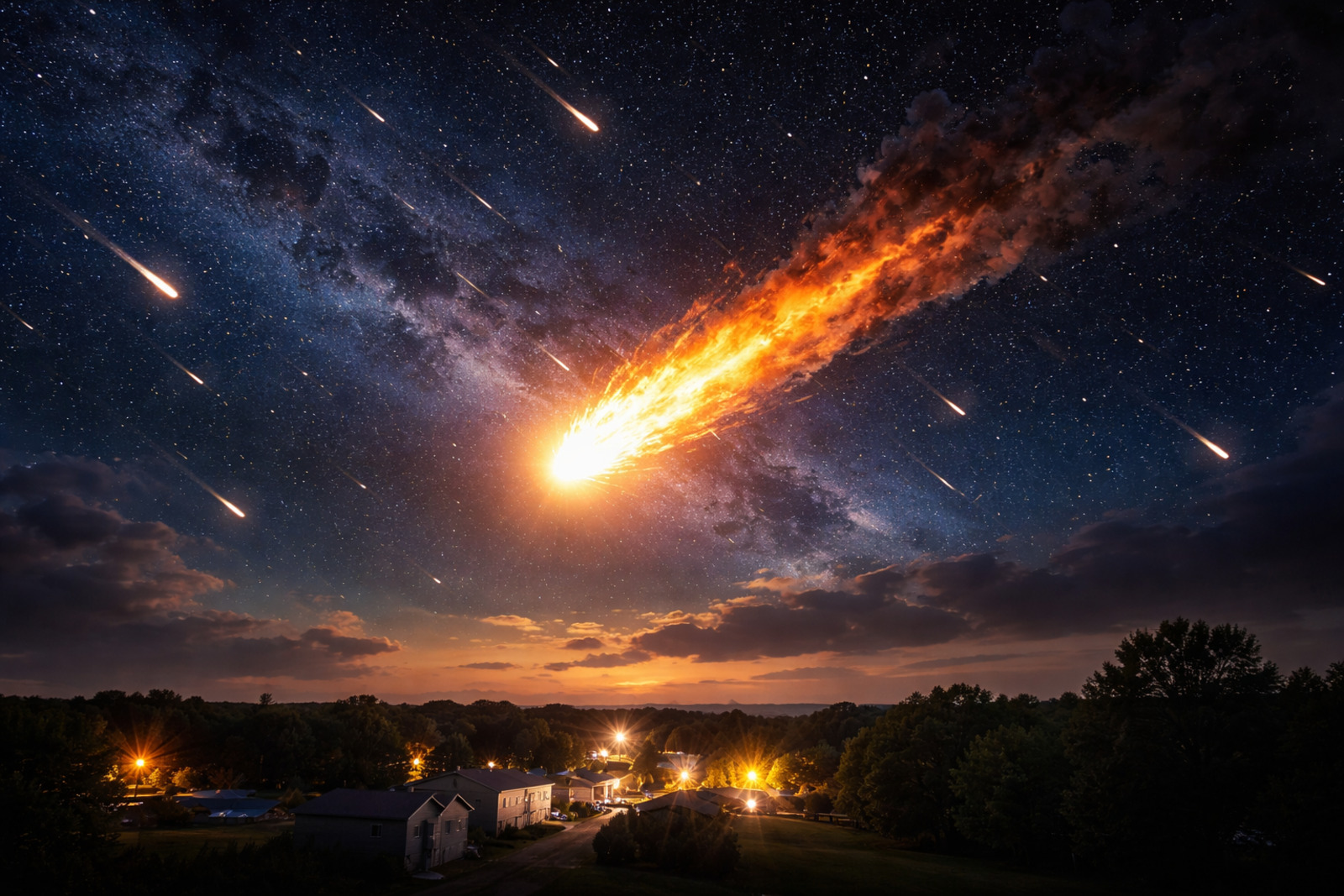
Studies indicate that the formation of the crater occurred at the beginning of the Mesozoic Era, about 254 million years ago, when an asteroid approximately 4 km in diameter hit the region at an estimated speed between 14 and 16 km per second.
At that time, the area now occupied by farms was a shallow sea.
The shock generated intense earthquakes, tsunamis, and destruction of life within a radius of up to 500 km, especially affecting reptiles and amphibians that inhabited the environment.
In the center of the dome, there is now an uplift of older rocks, pushed up by the force of the impact, revealing deep layers of the crystalline basement that would normally remain hidden underground.
From Geological Enigma To International Science Showcase
The confirmation that it was an impact structure did not come immediately. Field research identified typical shock metamorphism marks, a phenomenon that transforms minerals under extreme pressure and temperature, characteristic of meteorite impacts.
Among the evidence, deformed minerals such as zircon were found, considered a clear signature of the cosmic origin of the crater.
Thanks to this work, the Araguainha Dome has gained international recognition. Today, the site is included on the list of the 100 Most Important Geological Sites in the World, compiled by the International Union of Geological Sciences, linked to UNESCO.
Of the 11 known impact craters in South America, 8 are in Brazilian territory, and the Araguainha Dome ranks among the five largest ever mapped, reinforcing the country’s prominence in this type of geological record.
Connection With Oil, Natural Gas, And Ancient Global Warming
Researchers are still investigating how the impact may have interfered with the global climate of the past. There is evidence that the shock hit sedimentary layers of the Paraná Basin, releasing large volumes of oil and natural gas stored underground around the structure.
This massive release of fossil fuels may have exacerbated the global warming of the time, adding to other natural processes occurring during that geological period.
Even so, scientists emphasize that the event was not of the same magnitude as the collision that, millions of years later, would mark the mass extinction of the dinosaurs.
Cerrado Covers The Scar, Tourism Begins To Reveal The Dome
After hundreds of millions of years of erosion, the crater is partially worn down and covered by typical Cerrado vegetation.
Its circular shapes, however, can still be identified in satellite images, revealing the discreet outline of the impact amid rural properties and small towns.
Currently, the Araguainha Dome receives visits from students, scientists, and curious individuals interested in understanding up close how an impact structure of this scale forms.
There are initiatives to turn the region into an official geological park, focusing on preservation and education, which could boost scientific and rural tourism at the border between Mato Grosso and Goiás and attract travelers seeking experiences related to nature and the history of the Earth.
Geological Treasure Still Little Known By Brazilians
Hidden behind rural roads and landscapes dominated by cattle and crops, the region holds a unique geological heritage: the largest meteor crater in South America, larger than Rio de Janeiro itself in area and still little known by most of the population, despite the scientific and tourist weight it represents.
Would you visit a geological park within this giant crater, or do you think the largest meteor crater in South America should remain almost secret in the interior of Brazil?






-

-

-

6 pessoas reagiram a isso.