





 Portuguese
  English
  Spanish
  5 min of reading
  0 comments


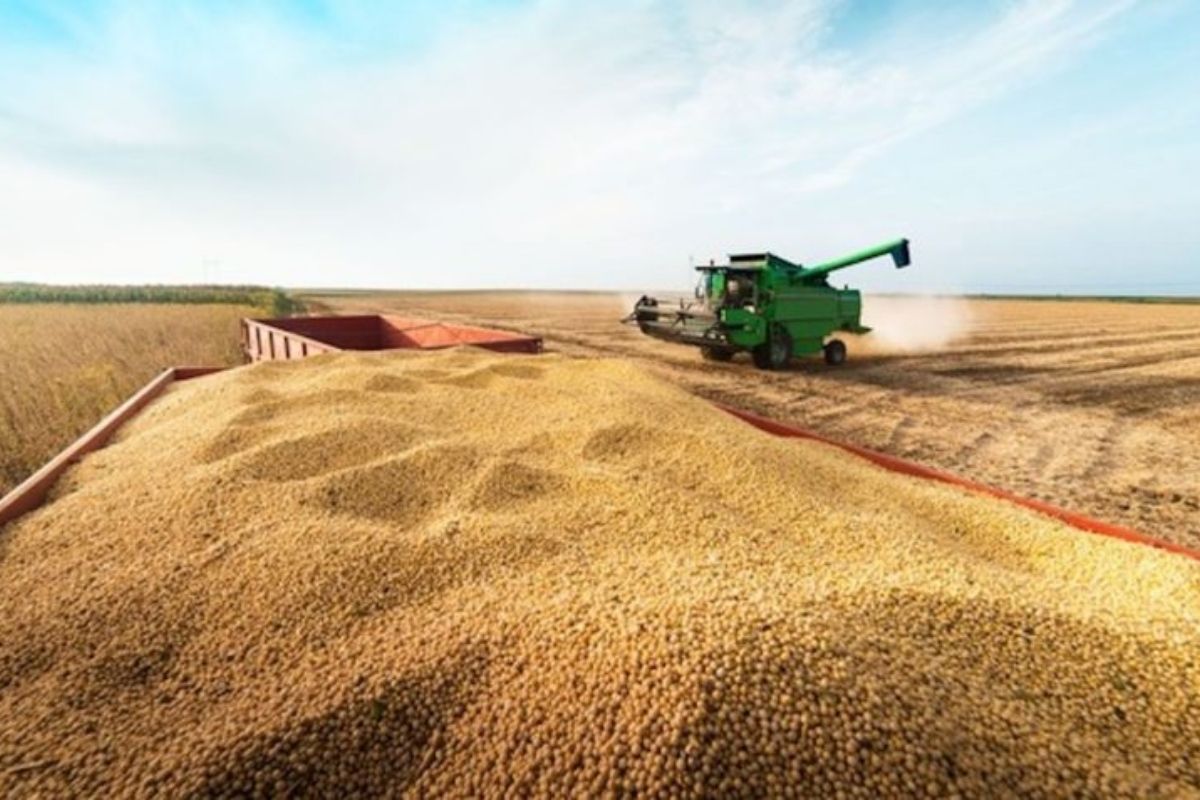
In Brazil, Grain Production Soared From 162 Million Tons in 2012 to 346.1 Million in 2025, With Harvested Area Growing 66.8%. IBGE Points to Productivity Gains, Records in Soy and Corn, and Projects 339.8 Million in 2026, While Conab Still Estimates New Record for the Brazilian Field.
Grain production in Brazil reached a historic level in 2025 and once again placed the country at the center of agribusiness attention: IBGE reported that the harvest reached 346.1 million tons, more than double the volume recorded in 2012, when it was 162 million tons.
The advance, however, comes with an important warning for 2026: grain production itself may retreat to 339.8 million tons, a projected drop of 1.8% compared to the record, in a scenario where harvested area, planting window, weather, and profit margins come into play.
Historic Jump in 13 Years and the Record of 2025
The milestone of 2025 relies on a direct comparison that helps to size the pace of recent transformation in the Brazilian countryside.
-
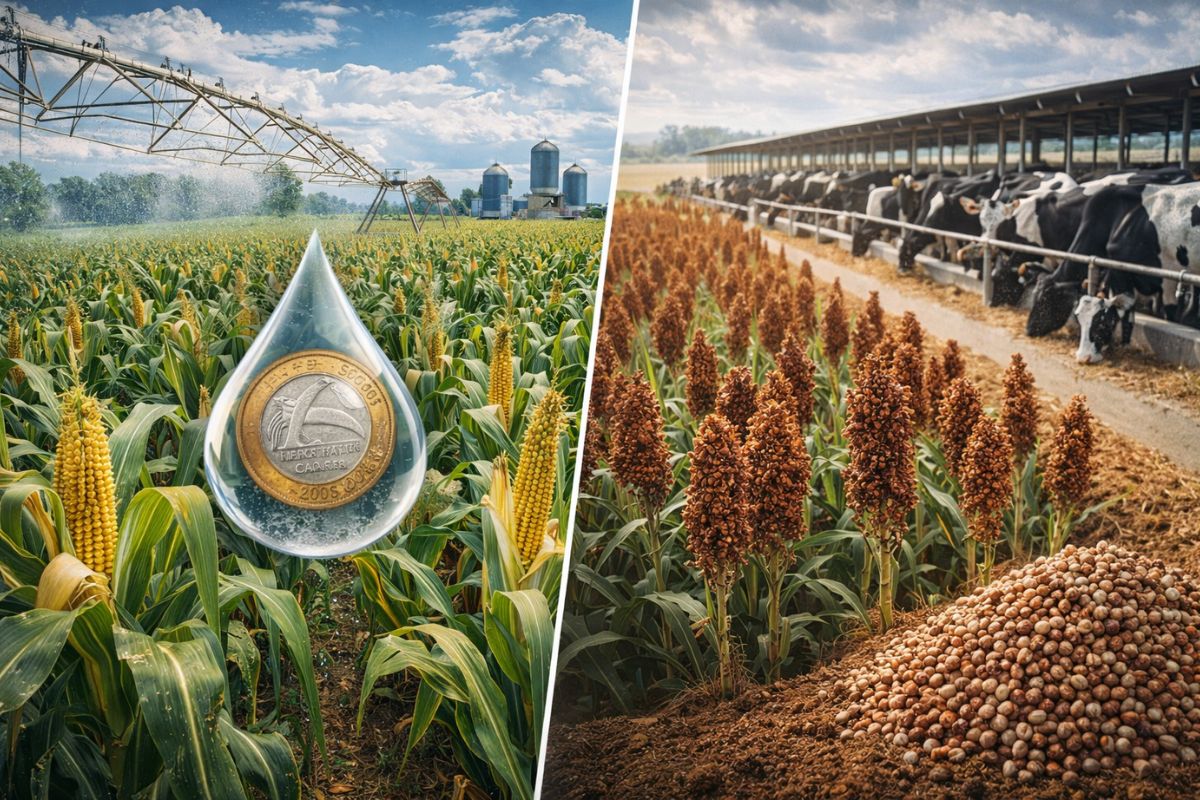
While corn requires rain and is expensive, sorghum produces almost the same volume per hectare at a cost up to 80% lower and uses less water, and it is revolutionizing dairy farming in the Triângulo Mineiro, where producers save hundreds of reais per hectare.
-
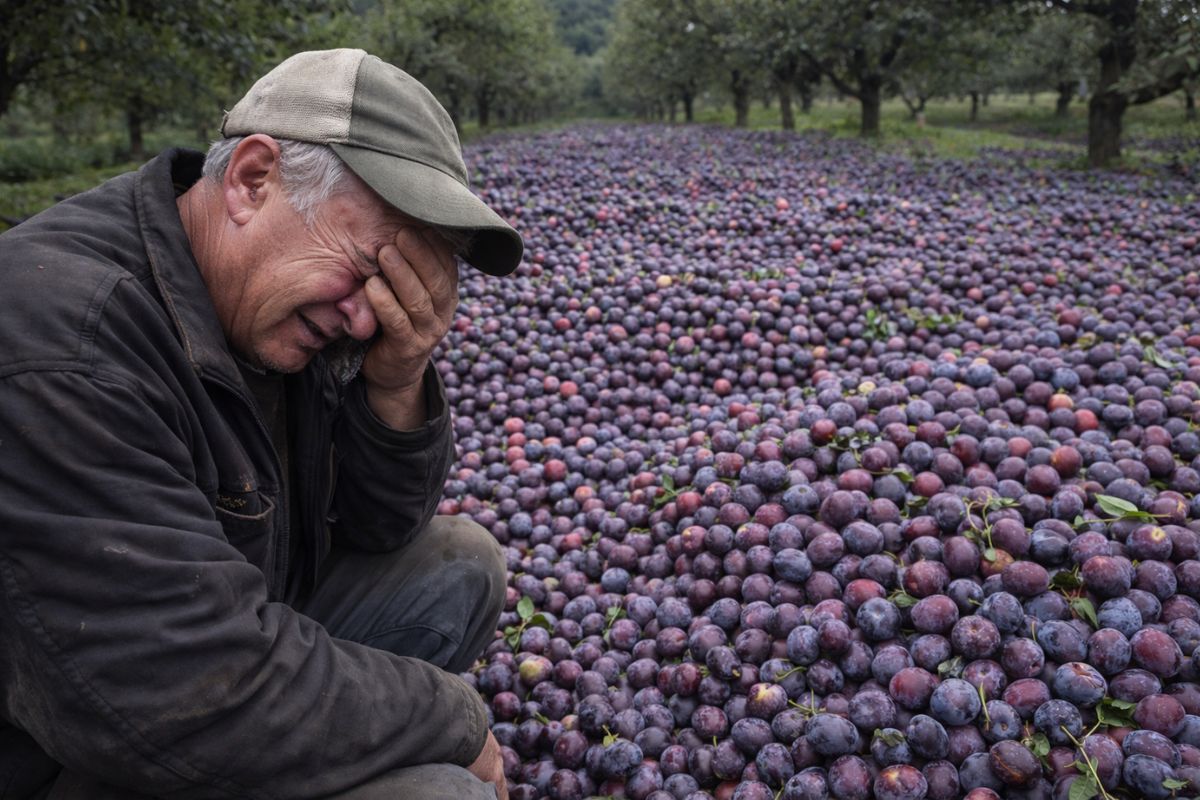
A rural producer from Urubici cries as he shows 50 tons of plums thrown on the ground because no one wanted to buy them, and in desperation, he records a video asking anyone to come to the property to pick the fruits before they rot.
-
Unable to pass through Hormuz, Brazil activated a plan B that uses Turkey as a gateway to the Middle East: the route through Gibraltar and the Mediterranean is longer and more expensive but ensures that chicken, beef, and corn continue to reach Arab markets.

-
You grew up hearing that the good coffee from Brazil goes all abroad and the bad coffee stays for Brazilians, but this story has completely changed, and the numbers show that in the 1980s, thirty percent of the coffee sold here was adulterated with corn and barley.

In 2012, the country produced 162 million tons. In 2025, IBGE points to 346.1 million tons, establishing the highest level in the institute’s historical series, which has data starting from 1975.
This result was released within the Systematic Survey of Agricultural Production, updated monthly, and reinforces a point that has changed the perception of the sector: the growth has not come only from planting more but from producing more per hectare.
Harvested Area Grows Less Than Production and Exposes Efficiency Gain
The harvested area kept pace with the advance, but at a much slower rate than the jump in grain production.
IBGE indicates that between 2012 and 2025, the harvested area increased by 66.8%, rising from 48.9 million hectares to 81.6 million hectares.
This difference between production and harvested area is key to understanding why the record of 2025 is treated as a portrait of productivity.
If production more than doubled and the area grew less, the result suggests a consistent gain in average yields of crops over the years, with a direct impact on the country’s ability to harvest larger volumes without relying on territorial expansion in the same proportion.
Technology, Research, and Producer Decisions at the Center of Productivity
IBGE relates productivity gains to a set of factors accumulated over time. One of them is research and development work, particularly for varieties adapted to the country’s biomes.
Another is the behavior of rural producers, who have been increasing their level of investment in advanced technologies to seek the maximum productive potential of crops.
This movement, in practice, translates into a more technical and efficiency-oriented agriculture, where productivity becomes the main driver of grain production, and not just the increase in harvested area.
Which Crops Broke Records in 2025
The record of grain production in 2025 was not uniform only in the national aggregate.
IBGE also pointed out highs in specific crops that sustain Brazil’s weight in the agricultural market:
- Soy: 166.1 million tons
- Corn: 141.7 million tons
- cotton: 9.9 million tons
- Sorghum: 5.4 million tons
- Robusta coffee: 1.3 million tons
The institute also recorded that climatic conditions in producing regions helped the performance of 2025, reinforcing that part of the result is linked to the harvest environment and not just structural factors.
Forecast of Decline in 2026 and Why IBGE Sees Retreat After the Record
Even after the record, IBGE projects that grain production in 2026 may fall to 339.8 million tons.
The estimated retrenchment is 1.8% compared to 2025, and the institute associates this movement primarily with the crops of corn, sorghum, and rice.
There are two central points in this reading. The first is the “high comparison level”: when the previous harvest is very strong, the statistical reference becomes higher, and any normalization tends to seem like a decline.
The second is the calendar: some crops still depend on the implementation of a second harvest, which makes the result sensitive to the planting window and climatic conditions that may occur during the cycle.
Furthermore, IBGE emphasizes that profit margins are being squeezed by low prices, which discourages the increase of area and investments in crops, a factor that can directly influence the harvested area and, consequently, grain production.
A relevant detail is that the institute has already revised its outlook for 2026 upward: a month ago, the estimate was for a decline of 3%. Now, the projected retrenchment has been adjusted to 1.8%, indicating a less pessimistic adjustment as new information was incorporated.
Midwest Exceeds Half of Total and Defines the Map of Production
The regional portrait of the record shows the concentration of grain production in 2025. The Midwest accounted for 178.7 million tons, equivalent to 51.6% of the national total, confirming the region as the country’s main hub.
Next, the South shows up with 86.3 million tons, representing 24.9% of production. The other regions complete the picture with smaller shares: Southeast with 9%, Northeast with 8%, and North with 6.5%.
This layout helps to understand why climatic variations and planting decisions in these areas have a disproportionate impact on national grain production.
When the Midwest and South fluctuate, all of Brazil feels it.
Conab Continues to Bet on New Record and Increases the Contrast With IBGE
While IBGE projects a decline, Conab released a different reading for 2026 and maintained the projection of a new record.
According to Conab’s estimate, Brazil could produce 353.1 million tons of grains, which would mean a growth of 0.3% in the company’s series.
Conab notes that the numbers are preliminary because the first crop is just beginning to be harvested and depends on climatic conditions.
Additionally, the planting calendar for second and third crops, as well as winter crops, continues until June, which keeps the scenario open.
In practice, the contrast between IBGE and Conab reinforces that, even with a recent record, grain production enters 2026 under strong influence of short-term variables, especially climate, planting pace, and investment decisions.
What the Record Signals and What Is the Main Alert for the Next Cycle
The record of 346.1 million tons in 2025 highlights the strength of productivity and the country’s ability to raise grain production in proportion greater than the expansion of harvested area.
At the same time, the very debate about 2026 shows that records do not eliminate risks: squeezed margins, low prices, dependence on planting windows and climate can quickly alter the trajectory.
The most symbolic data is that Brazil reached the top with efficiency, but staying at the top requires predictability and continued investment, exactly what can be affected when profitability decreases and producers become more cautious.
In your assessment, will Brazil confirm the decline pointed out by IBGE or will the record projected by Conab prevail in grain production in 2026?









-

-

3 pessoas reagiram a isso.