





 Portuguese
  English
  Spanish
 5 min of reading
  0 comments


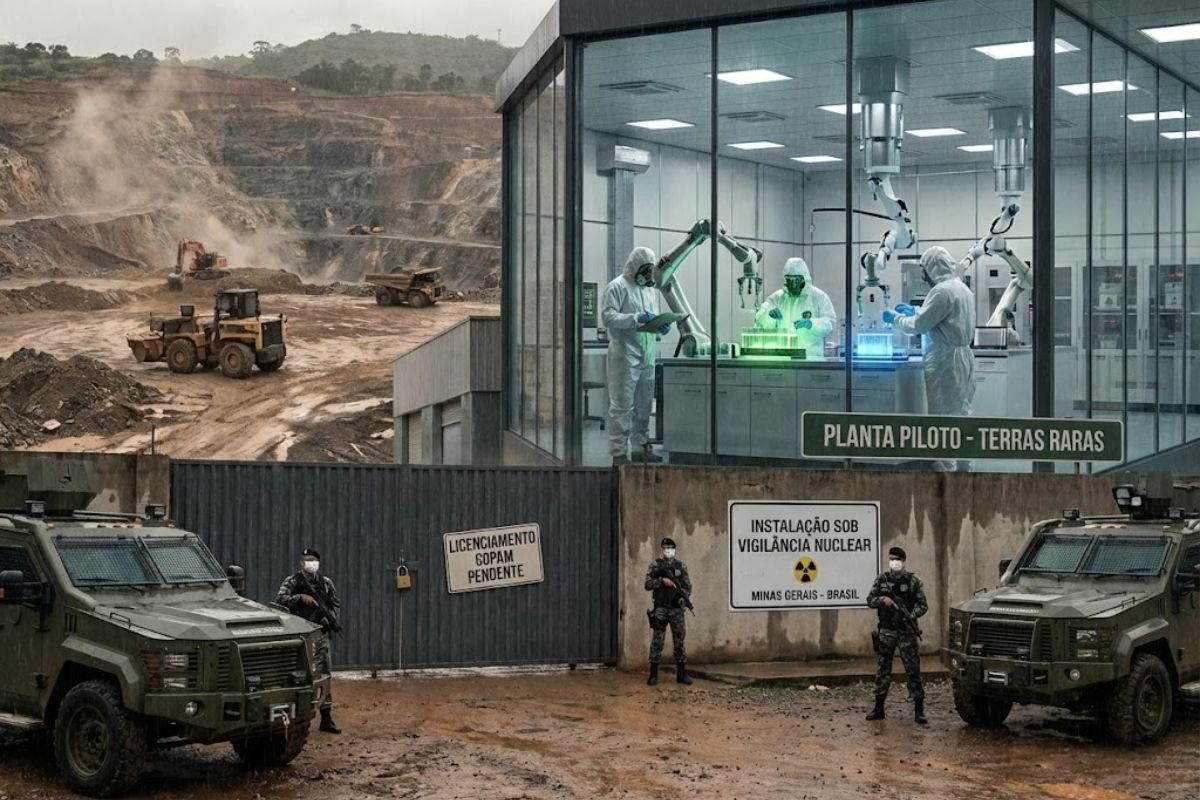
On 12/12/2025, Meteoric Inaugurated in Poços de Caldas a Rare Earth Laboratory, Pilot Plant of the Caldeira Project. The investment was US$ 1.5 million and the annual capacity is 500 kg of mixed carbonate. The mine in Caldas remains without a license in Copam after two consecutive postponements
On 13/12/2025, after the official inauguration held on 12/12/2025, Poços de Caldas (MG) began operating the first rare earth extraction laboratory in the country, according to the mining company Meteoric. The structure operates as a pilot plant of the Caldeira Project, aimed at testing process routes and verifying the quality of the material before a larger-scale operation.
The industrial advancement occurs while the environmental licensing of the Project Caldeira mine in Caldas (MG) remains undecided in the State Council for Environmental Policy of Minas Gerais (Copam). The review, initially scheduled for October, has been postponed twice, increasing the pressure for technical responses regarding risks, controls, and impacts of the venture.
What Started Operating in Poços de Caldas

The laboratory inaugurated in Poços de Caldas is described by Meteoric as the first rare earth refining initiative in the national territory.
-
Brazil extracts 26.3 million tons of ore from what was previously treated as waste, transforming residues into wealth, producing over 3 million tons of sand, and demonstrating how national mining is relearning to generate value.

-
A $3.5 billion megaproject in Latin America pumps desalinated seawater at 1,050 liters per second over 194 km to keep a copper supermine in the Andes operational for another 20 years.
-
A hidden mine in the Andes valued at nearly R$ 1 trillion is starting to attract global attention, containing copper, gold, and silver, and raises an intriguing question: why do Argentina and Chile need to act together to exploit this gigantic wealth?
-
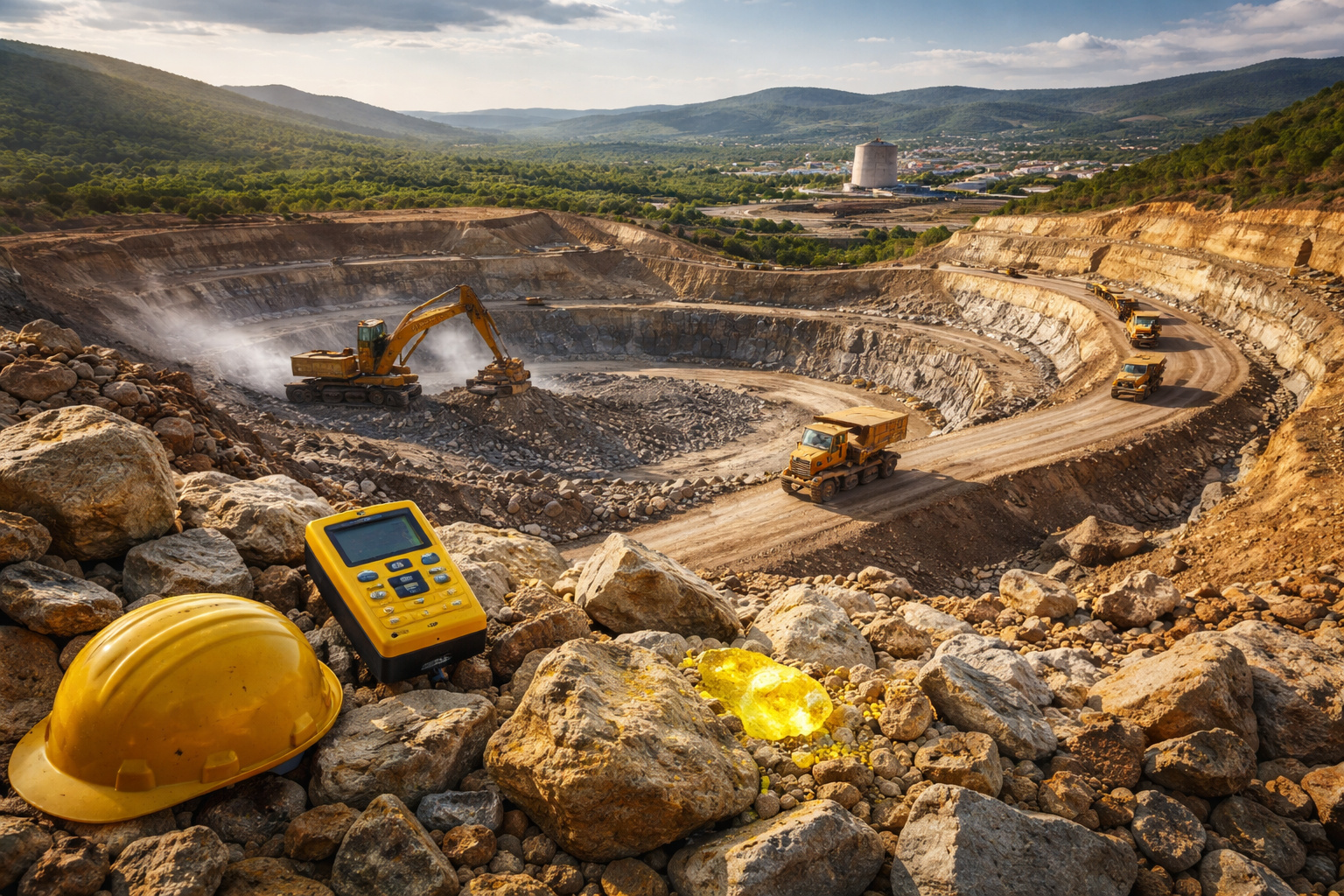
A silent discovery in the interior of Bahia could change the future of energy in Brazil: a uranium reserve in Lagoa Real has an estimated capacity to produce 400 tons per year and is already attracting the attention of energy sector specialists.

In practice, the unit was designed to perform continuous testing, adjust parameters, and consolidate industrial procedures based on samples already collected during the mineral research phase.
The company states that the laboratory is part of the Caldeira Project, which foresees mineral exploration in an area of 193 km² in the municipality of Caldas.
The pilot plant received specific environmental licenses for installation and operation in Minas Gerais, presented as the first authorization of its kind for a pilot structure dedicated to rare earth extraction in the state.
Annual Capacity and Difference to Mine Scale
The structure in Poços de Caldas has the capacity to process 500 kg per year of mixed rare earth carbonate, an initial concentrate obtained from the ore that combines rare earth elements.
This is classified as a small volume when compared to the production plan of the Project Caldeira mine.
According to the project’s own description, the mine anticipates 18 thousand tons annually of extraction, a figure that highlights the role of the laboratory as a stage for development and process validation, not as a full-scale commercial operation.
Daily Processing Routine and Product Composition
The laboratory’s operational plan anticipates processing 600 kg of clay per day, with an estimated generation of 2 kg of mixed carbonate at the end of the cycle.
The company asserts that 53% of the composition of this mixed carbonate is made up of rare earth oxides, an indicator used to demonstrate the grade and quality of the material produced in the pilot plant.
The declared focus is to calibrate the operation before the construction of a definitive plant in Caldas.
The executive director of Meteoric, Marcelo Juliano de Carvalho, described the pilot plant as an optimization environment, with attention to efficiency and environmental control, mentioning adjustments in the recovery of reagents and water in a closed circuit.
Nuclear Surveillance and Radioactivity Control
The processes for extracting rare earths can involve radioactivity because these ores often contain elements such as uranium and thorium.
For this reason, the activities of the new laboratory will be monitored by the National Authority for Nuclear Security (ANSN), as informed by the company.
Meteoric stated that it presented to ANSN the results of pilot tests conducted in Australia, analyzing the phases of the process, and that the agency issued a negative radioactivity certificate.
Nevertheless, the laboratory in Poços de Caldas will continue to be under continuous monitoring to verify the levels, described by the company as low.
Licensing of the Caldeira Mine and Postponements in Copam
While the laboratory progresses, the licensing for rare earth exploration in Caldas, involving Meteoric, and in Poços de Caldas, involving Viridis, remains delayed.
The vote in Copam, initially expected for October, has been postponed twice.
The first postponement occurred due to a request for review by councilors, amidst public and political pressure for more information.
The second postponement came after a recommendation from the Federal Public Ministry (MPF), with questions regarding the safety of the projects for nearby communities and the environment.
Meteoric asserts that it has technically responded to the inquiries with reports and that the process should return to the Copam agenda.
Why the Crater of Poços de Caldas Is Strategic
The region known as the Poços de Caldas Plateau, also called the Poços de Caldas Crater, is identified as one of the largest rare earth deposits in the world.
Covering about 800 km², the area encompasses Poços de Caldas, Andradas, and Caldas in Minas Gerais, as well as Águas da Prata in São Paulo.
Geologist Álvaro Fochi, cited as responsible for locating the deposit in the early 2010s, attributes to the site the capacity to generate 300 million tons of rare earths and the potential to supply 20% of global demand for these minerals.
In 2023 and 2024, the National Mining Agency (ANM) received over a hundred research requests in the crater and surrounding areas, equivalent to about one-third of the authorizations for Minas Gerais during this period.
What This Laboratory Changes in the Short Term
The commencement of operations at the laboratory creates an industrial milestone because it shifts part of the process development within the country, with refining tests linked to a mining project already in an advanced licensing phase.
The pilot plant, however, does not eliminate the bottleneck at Copam, as mineral exploration in Caldas still depends on the voting of the environmental license.
In practice, the laboratory is likely to produce technical evidence regarding process routes, water and reagent controls, and radioactivity monitoring, points that could weigh in the debate over risks and mitigation.
The definition of a schedule for a definitive plant and for larger-scale production remains conditioned to the environmental licensing and to regulatory requirements.
What is your assessment: does the rare earth laboratory in Poços de Caldas accelerate the Copam decision or increase the pressure for more conditions before the Caldeira mine license?






Seja o primeiro a reagir!