





 Portuguese
  English
  Spanish
 4 min of reading


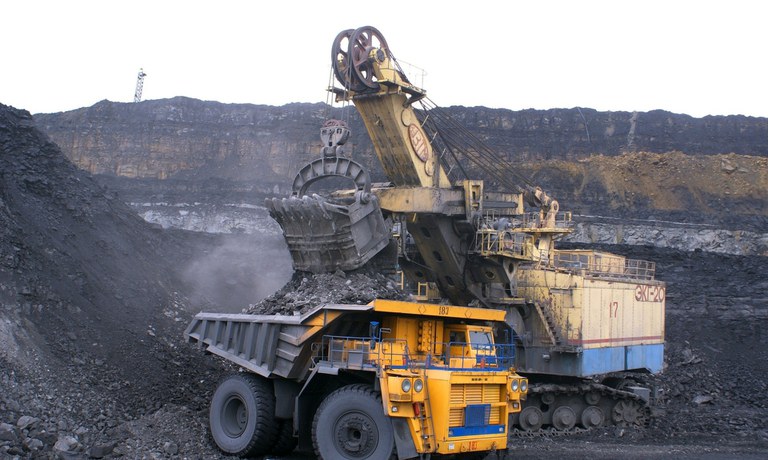
Country’s Dependence on Fertilizer Imports, Such as Potassium, However, Highlighted the Lack of Investment in Science and Technology for Mineral Extraction in the Country
One of the largest exporters of iron ore in the world, Brazil currently finds itself in a situation of external dependence on another critical mineral for food production: potassium, used as a fertilizer in agribusiness, and imported from Russia. The Ukraine War and the new global geopolitical scenario have highlighted the country’s vulnerability regarding the extraction of strategic minerals. Currently, mining is already an important part of Brazil’s GDP, with revenues of R$ 339 billion/year.
Although it has a good diversity of mineral reserves, the lack of adequate investment in science and technology has been the major obstacle to the development of sustainable mineral extraction in the country, just as technical training and a clear regulatory policy.

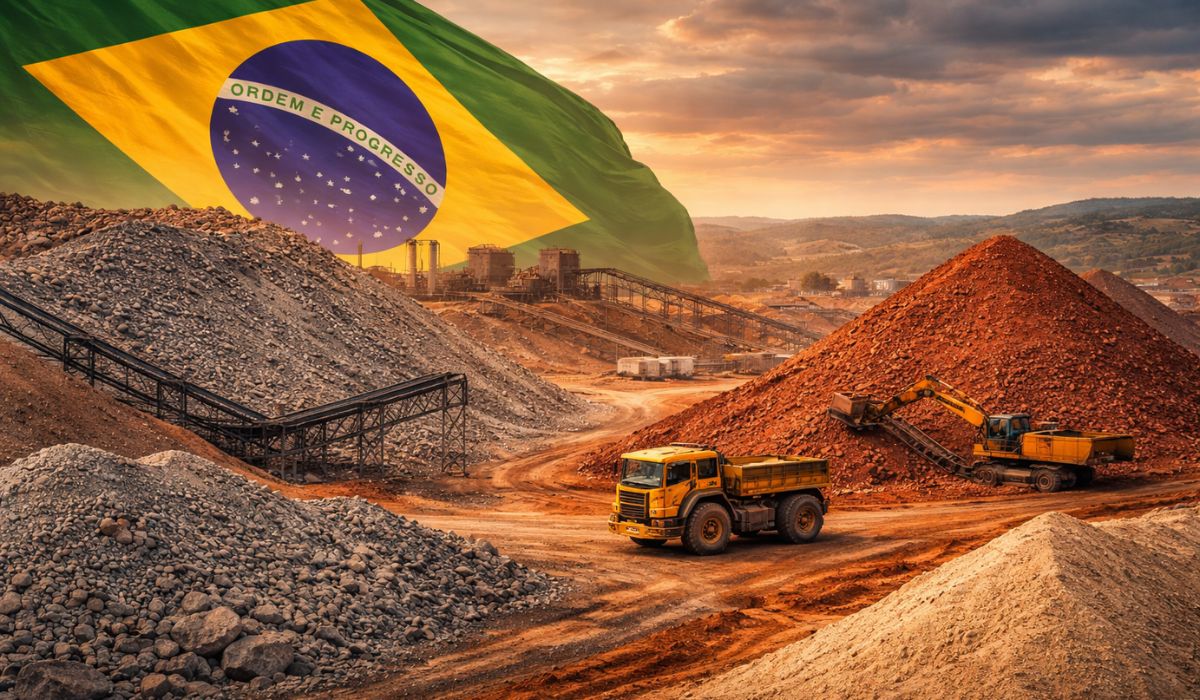
Iron ore accounts for 70% of Brazil’s mineral extraction, but there are also reserves of lithium, copper, potassium, graphite, among others, in national territory, which could be mapped and explored by the public sector in partnership with the private sector.
-
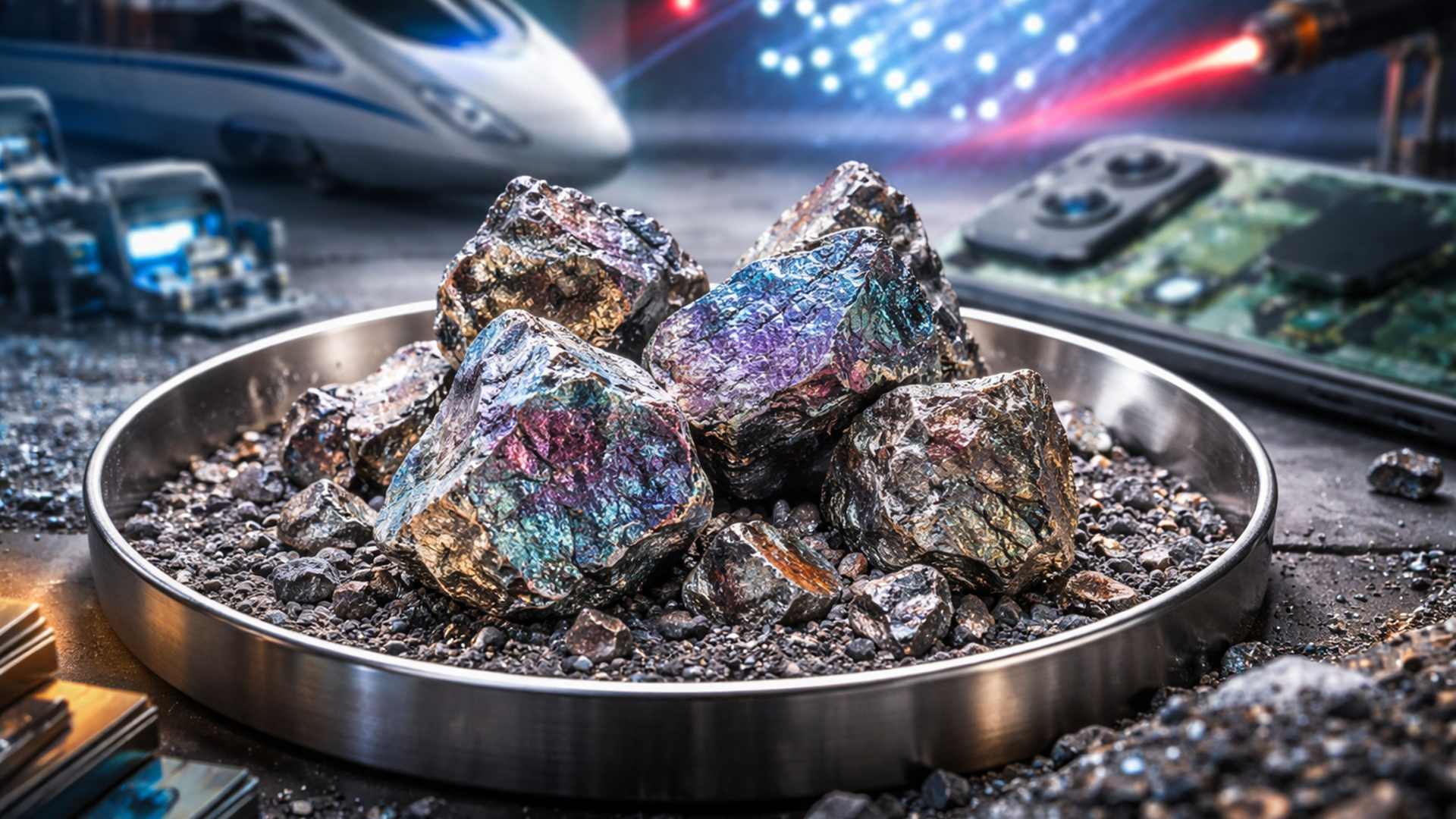
Rare earths are in everything, from cell phones to bullet trains, and what almost no one realizes is why they have become the target of such a delicate global war.
-
Historic bankruptcy of Centauro shocks the market, and the century-old company puts more than 500,000 products, machines, and complete infrastructure up for online auction.

-
Brazil extracts 26.3 million tons of ore from what was previously treated as waste, transforming residues into wealth, producing over 3 million tons of sand, and demonstrating how national mining is relearning to generate value.
-
A $3.5 billion megaproject in Latin America pumps desalinated seawater at 1,050 liters per second over 194 km to keep a copper supermine in the Andes operational for another 20 years.

There Are 24 Strategic Minerals for Brazil
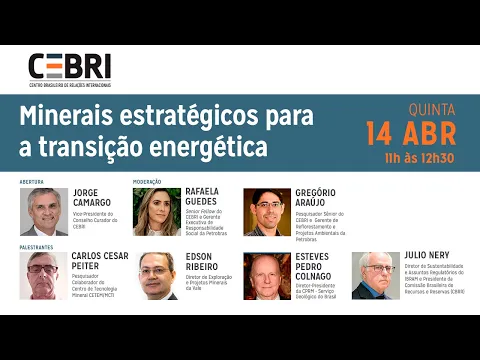
In the webinar Strategic Minerals and the Energy Transition, held by the Energy Nucleus of the Brazilian Center for International Relations (CEBRI), experts warned that strategic minerals are important assets in the new geopolitical configuration of value chains. According to official surveys, there are currently 24 minerals listed as strategic for the country. Some of them are important for low-carbon technologies, which will cause exponential demand growth until 2050.
“A window of opportunity for the energy transition is open, and Brazil, although not a geopolitical power, is an environmental power. We have a good diversity of minerals. Brazil could be a leader in sustainable mineral extraction in a scenario of energy transition,” emphasized the Vice President of the CEBRI Board, Jorge Camargo.
An electric car, for example, requires six times more mineral inputs than a conventional car. According to estimates from the International Energy Agency (IEA), the demand for lithium is expected to grow 40 times by 2040, and demand for cobalt, graphite, and nickel between 20 and 25 times. The presence of these minerals in Brazilian lands means that the country has enormous potential in this area.
Esteves Pedro Colnago, President of the Geological Service of Brazil, emphasized during the webinar the difficulties in mapping Brazil’s geological reserves. “It is the responsibility of the geological service of Brazil to know, store, and disseminate Brazil’s mineral heritage. We are getting closer to companies that are interested in contributing. There are difficulties, and private sector investments are needed,” he pointed out. Colnago stressed that the size of the Brazilian territory requires a focus plan on already discovered reserves that have proven potential.
According to Julio Nery, Director of Sustainability and Regulatory Affairs at IBRAM and President of the Brazilian Commission of Resources and Reserves (CBRR), there are enormous challenges for mineral extraction in Brazil, and only 0.06% of the territory is explored, although the potential for wealth generation from mineral extraction is great. “The risk for research in mineral extraction is high, so it should be shared between the public and private sectors,” he reflected.
Investments in Mineral Exploration Technologies
Edson Ribeiro, Director of Exploration and Mineral Projects at Vale, pointed out that countries in the European Union, Canada, and China are well ahead of Brazil in science and technology investments for sustainable mapping and exploration of strategic minerals. According to him, mineral extraction cannot be dissociated from good environmental practices.
According to Carlos Cesar Peiter from the Mineral Technology Center of the Federal University of Rio de Janeiro (UFRJ), Brazil has lost state research centers in Bahia, Minas Gerais, and Rio Grande do Sul that were important for the research and development of mineral extraction in the country. The researcher mentioned the National Fertilizers Plan and the National Mining Program 2050, which is being developed, as important initiatives for Brazil to not miss opportunities in the energy transition.
According to the participants, it is also necessary to combat misinformation and prejudice against mineral extraction in the country. “IBRAM believes that it is possible to develop responsible mining, even on indigenous land; this already occurs in other countries sustainably. It cannot be done without the community’s consent. There is a proposal in parliament, and this is provided for in the Constitution. Mineral extraction should be carried out in any part of the territory in a sustainable and organized manner, with the dissemination of good practices. It is important to increase society’s trust in the sector,” said Julio Nery.
Author Source – CEBRI










Seja o primeiro a reagir!