





 Portuguese
  English
  Spanish
  5 min of reading
  0 comments


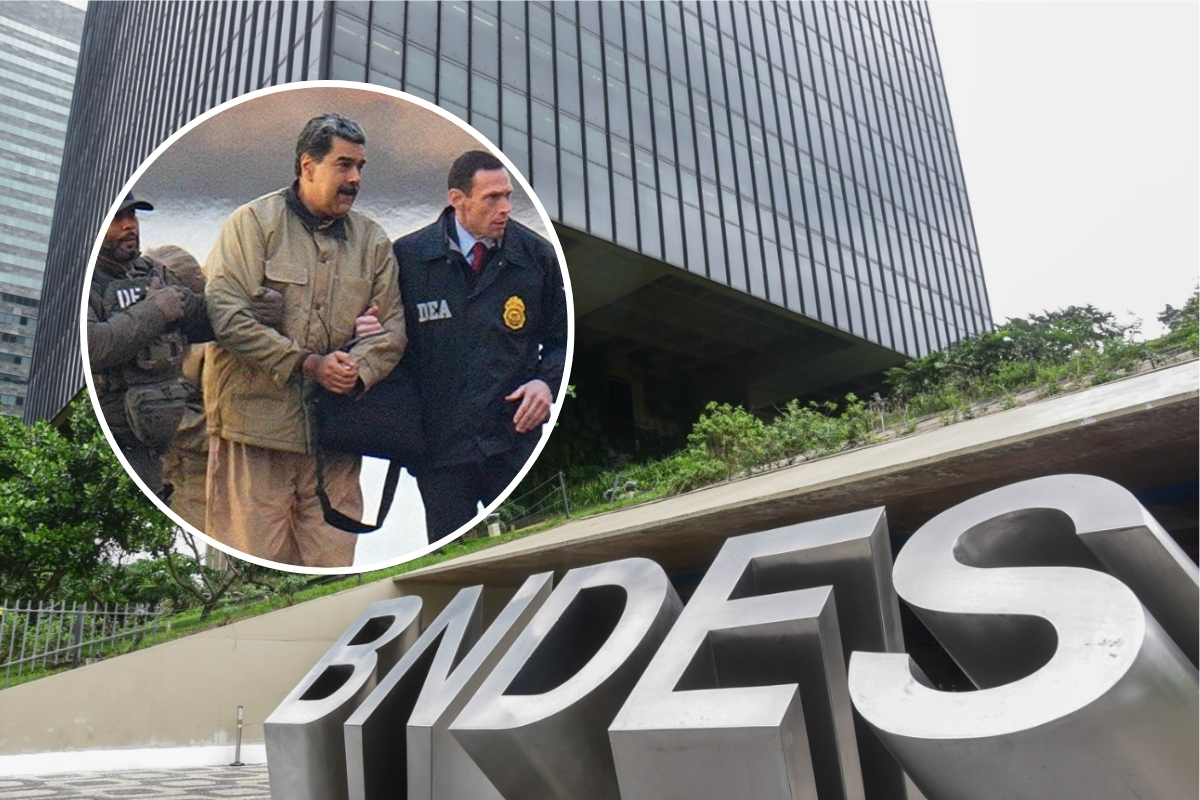
It’s Not Just a Story of Venezuela That Didn’t Pay: There Is an Insurance System and a Government Fund Behind Exports That Can Cover Late Payments, and This Is Reflected in Official Numbers Published by BNDES
The financing linked to infrastructure projects carried out by Brazilian companies in Venezuela has returned to the center of public debate in recent months. Projects such as the expansions of the Caracas and Los Teques subway systems, as well as industrial enterprises and engineering contracts, were carried out by Brazilian companies with the support of financing lines aimed at exporting Brazilian goods and services.
The discussion gained new dimensions after the arrest of Nicolás Maduro by the United States on January 3, 2026, when the Venezuelan leader was taken to New York to respond to federal charges. The episode reignited questions about the liabilities associated with these operations and the chances of recovering the outstanding amounts.
The question that began to circulate in public debate is straightforward: Does the debt disappear with the arrest of the Venezuelan president? The technical answer is no. The obligations are linked to the Venezuelan State (or to the entities that contracted the exports), and not to Maduro as an individual. What may change is the political and diplomatic environment for potential future negotiations.
-
“No one will make us change the Pix,” says Lula after the US report.

-
Lula responds directly to Trump and says that Pix is from Brazil and will not change under pressure from anyone, after a report from the United States pointed out the Brazilian payment system as an American trade barrier.

-
Amazon has just announced a new fee on all deliveries, and your online purchases will become more expensive starting April 17, including for those buying from the United States here in Brazil.

-
He sold his share for R$ 4 thousand, saw the company become a giant worth R$ 19 trillion, and missed the opportunity of a lifetime.



What Was Financed in Operations with Venezuela
Between the years 2000 and the mid-2010s, Brazilian companies participated in various infrastructure projects in Venezuela. Among the frequently cited enterprises in public debate are expansion works for the subway system in Caracas and Los Teques, in addition to industrial projects and contracts related to the engineering sector.
These operations occurred within export support programs, a model used by several countries to encourage national companies to compete in international projects.
BNDES Clarification: No Resources Were Sent to Venezuela
After public questioning about the subject, the National Bank for Economic and Social Development (BNDES) clarified that, in the export support modalities used in these contracts, there is no direct remittance of resources abroad.
According to the bank, disbursements occur in Brazil, in reais, and are made directly to the Brazilian exporter as exports or contractual stages are verified.
In practice, the financing supports the export of services and goods produced in Brazil, and not a direct transfer of money to the foreign government.

How the Guarantees of These Operations Work (SCE and FGE)
Another point highlighted by BNDES is that the operations have financial protection mechanisms.
In the engineering services export contracts, the Export Credit Insurance (SCE) was used, an instrument regulated by Law No. 6,704/1979. This type of insurance is common in several countries and is part of the system of export credit agencies used internationally.
Like any insurance, the SCE involves charging premiums from the debtor, whether there is a claim or not. In the event of default, the financier (BNDES) is compensated. The instrument is backed by the Export Guarantee Fund (FGE), an accounting fund of the Union created by Law No. 9,818/1999, which guarantees export financing operations for public and private financial institutions, both national and international. BNDES emphasizes that the FGE is surplus and has assets exceeding R$ 50 billion, formed by the collection of premiums and the financial returns from the fund itself.
Who Defines the Financing Conditions (It’s Not Just BNDES)
BNDES also clarified that the financing conditions and the guarantees required in these operations are not defined exclusively by the bank.
Decisions about these rules are made by interministerial collegiates of the federal government, such as the Foreign Trade Chamber (Camex) and the Export Financing and Guarantee Committee (Cofig). In these instances, according to the bank itself, BNDES has no voting rights or decision-making power, as established by Decree No. 4,993/2004.
Delinquency Since 2018 and the Size of the Liability
Venezuela stopped making payments related to some of these operations starting in 2018, in the context of the economic and financial crisis that hit the country.
To address the issue based on official data, the BNDES transparency portal provides a consolidated table of “disbursed amounts, debtor balances, and outstanding balances by country” concerning export financing from 1998 until 09/30/2025, with amounts expressed in US$ millions. In this database, Venezuela appears with US$ 1,507 million in disbursements and US$ 813 million in “installments indemnified by the FGE.”
In the same table, the line of “debtor balance due” for Venezuela appears as zero, just as the field of “installments in arrears to be indemnified by the FGE,” which reinforces, in the reading of the model described by the bank itself, that a significant part of the risk was addressed within the scope of insurance and indemnities of the fund.
These numbers do not exhaust public debate about “how much it cost” or “how much can still be recovered,” as different approaches may incorporate different components, such as contract cuts, currency conversion methodologies, contractual charges, and discussions about deadlines and value recognition. Still, using the bank’s own database as a reference helps to more clearly separate what is official data from what is estimation or interpretation.
BNDES maintains on its transparency portal detailed information about disbursements, receipts, debtor balances, and contracts related to the financing of exports of goods and engineering services for works abroad.

Maduro’s Arrest Adds Political Uncertainty to the Scenario
The arrest of Nicolás Maduro does not legally alter the existence of the obligations associated with the Venezuelan State. However, the episode may influence the political and diplomatic scenario concerning the debt.
Analysts point out that a potential political change in Venezuela could open up space for international renegotiations or long-term payment agreements. At the same time, the continuation of institutional instability in the country may hinder negotiations and prolong the delinquency for years, keeping the debt issue in a diplomatic and financial limbo.
In broader scenarios, there is also discussion about the possibility of multilateral negotiations involving international creditors, depending on the evolution of the Venezuelan political framework.
Transparency and Official Data
In order to increase transparency, BNDES provides public information on its portal about export financing operations. This data includes disbursed amounts, received payments, debtor balances, and contracts or amendments related to operations carried out for works abroad.
Public consultation (BNDES portal):
https://www.bndes.gov.br/wps/portal/site/home/transparencia/consulta-operacoes-bndes/contratos-exportacao-bens-servicos-engenharia









Seja o primeiro a reagir!