





 Portuguese
  English
  Spanish
 3 min of reading


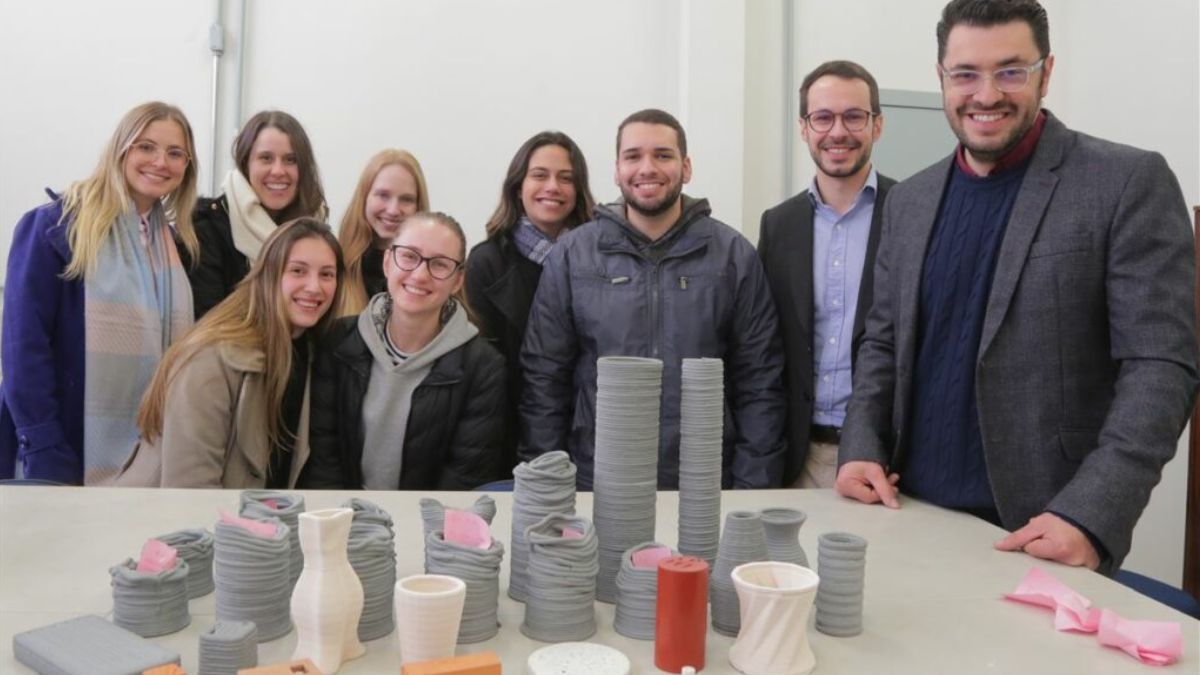
University Students of Santa Maria (UFSM) Managed to Create a Sustainable Concrete with Impressive Results in the First Tests
And Brazil stands out once again with science! Students from the Federal University of Santa Maria (UFSM) created a new way to produce sustainable concrete using 3D printing. This technology will be studied in depth and promises to bring excellent results for the industry and construction sectors in the coming years.
However, the students discovered that by using 3D printing, it is possible to produce a type of concrete that saves on waste. Thus, it becomes more sustainable. In addition, the precise dispensing by the 3D printer makes the material superior to what is used today in terms of quality. After all, preliminary results indicated a much higher performance of this new concrete compared to commercial ones. Want to know more about this incredible innovation? Then keep reading.
Understand More About This New Type of Concrete with the Video Below
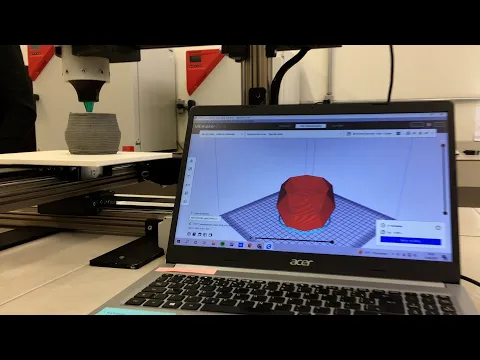

So, How Does the Process of Producing the Created Sustainable Concrete Work?
The Group for Teaching Sustainable Materials in Construction (Gemasc) is responsible for the study at the Federal University of Santa Maria. The students point to 3D printing as an alternative to develop materials in the construction sector.
-
They were brilliant! Scientists discover that our ancestors in China were already making super advanced tools 160,000 years ago, changing everything we knew.

-
Scientists unveil 3 million years of climate secrets hidden in the ice of Antarctica.

-
Ancient farmers created “aggressive plants” that changed nature forever.

-
Astronomers find a “backward” solar system that ignores all the rules of space and leaves scientists scratching their heads!


During the tests conducted in the laboratory, the research team models objects on the computer that will be made in layers of sustainable concrete. Based on this modeling, they test exact proportions of the materials that constitute the concrete. The dosage testing is allowing the students to create a new type of concrete with minimal waste, reducing environmental impact.
“Only after all this process do we test 3D printing to see if it will be viable as a material used. Because each case is quite unique, and we need to pay attention to many details to make it all work.”
PhD Student in Civil Engineering, Tuani Zat, in an interview with Jornal Diário (2022)
High-Tech Project is Seeking Funding for Maintenance
The researchers claim that this technology is new in Brazil, aiming for sustainable concrete. However, in other countries, entire buildings have been constructed using large 3D printers, but without environmental concern. For now, the project is only being conducted on a laboratory scale due to a lack of infrastructure and sufficient materials for large-scale projects.
Thus, the group from the Federal University of Santa Maria is seeking new partnerships to make this a viable process in the industry and construction sectors in Brazil. After all, the technology is promising and the results are impressive regarding the material’s strength and durability.
Paulo Matos, the project coordinator, points out that funding is necessary mainly for the development of the robotics sector involved in the project. After all, many parts need to be imported, and if a company from the field formed a partnership, it could produce and reduce the study’s costs.
There are many possibilities open, as all the companies in this field are foreign, which would bring the appeal of having a Brazilian brand while also reducing equipment and process costs.
Paulo Matos, project coordinator, in an interview with Portal Diário (2022).
Potential Applications of the New Concrete in Industry and Construction are Multiple and Offer Many Benefits and Few Disadvantages
The use of this new sustainable concrete promises a series of benefits to the construction and industry sector. Firstly, it can reduce the time required for construction, reduce waste produced, and also labor, considering the use of 3D printing on a large scale. In addition, the use of the printer allows for the shaping of new designs for buildings, contributing to the modern architecture of cities.
However, not everything is perfect. The adoption of this new technique has only one significant disadvantage: costs. This involves both the construction and acquisition of equipment as well as maintenance. However, in the long term, the investment is well worth it.




Seja o primeiro a reagir!