





 English
  Francês
  Alemão
  Italiano
  Japonês
  Norueguês
  Portuguese
  Spanish
  5 min of reading
  0 comments


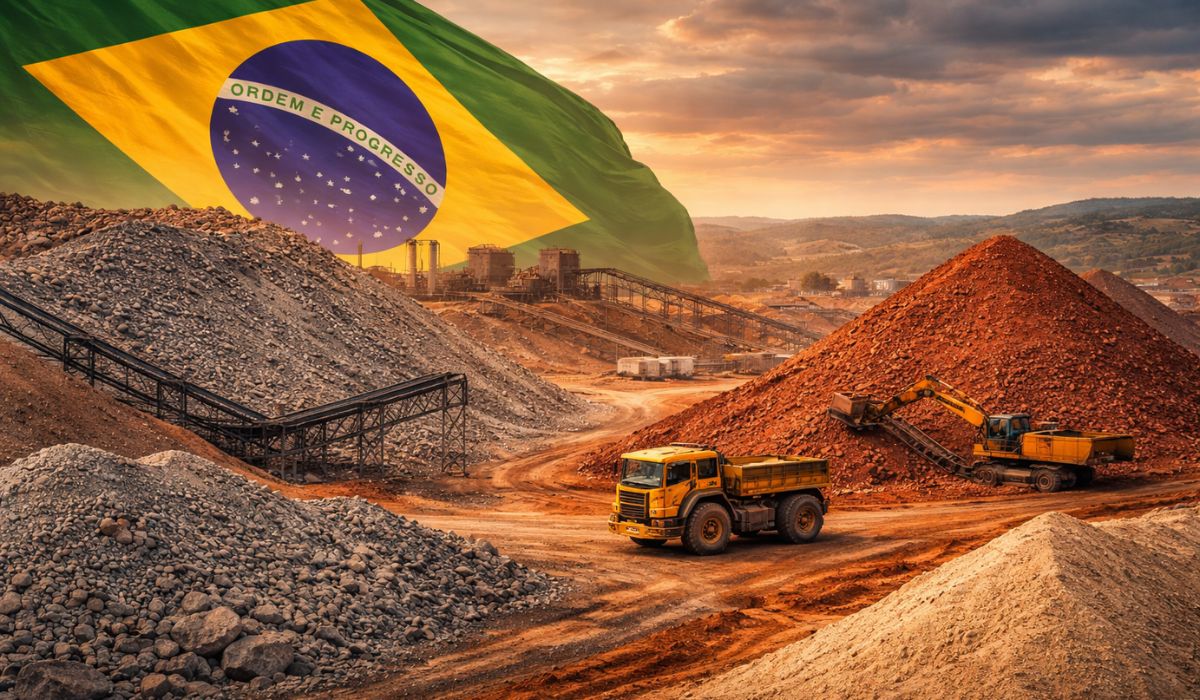
A silent change in Brazilian mining begins to reposition materials previously discarded and expands interest around a strategy that combines production, reuse, and waste management on an industrial scale.
According to a report by Reuters published on March 12, 2026, Vale reported that it produced 26.3 million tons of iron ore in 2025 from materials previously classified as sterile or waste.
The volume more than doubled compared to 2024, when this total was 12.7 million tons, and exceeded the company’s initial forecast, estimated at around 20 million tons for the period.
The data was presented by the mining company as part of the advancement of its circular mining strategy.
-
A $3.5 billion megaproject in Latin America pumps desalinated seawater at 1,050 liters per second over 194 km to keep a copper supermine in the Andes operational for another 20 years.
-
A hidden mine in the Andes valued at nearly R$ 1 trillion is starting to attract global attention, containing copper, gold, and silver, and raises an intriguing question: why do Argentina and Chile need to act together to exploit this gigantic wealth?
-
A silent discovery in the interior of Bahia could change the future of energy in Brazil: a uranium reserve in Lagoa Real has an estimated capacity to produce 400 tons per year and is already attracting the attention of energy sector specialists.
-
Gold Miners Descend Into Narrow Holes Up to 48 Meters Deep in the Mauritanian Desert and Spend Up to Two Days Living Inside Tunnels in an Underground City with Over a Thousand Mines

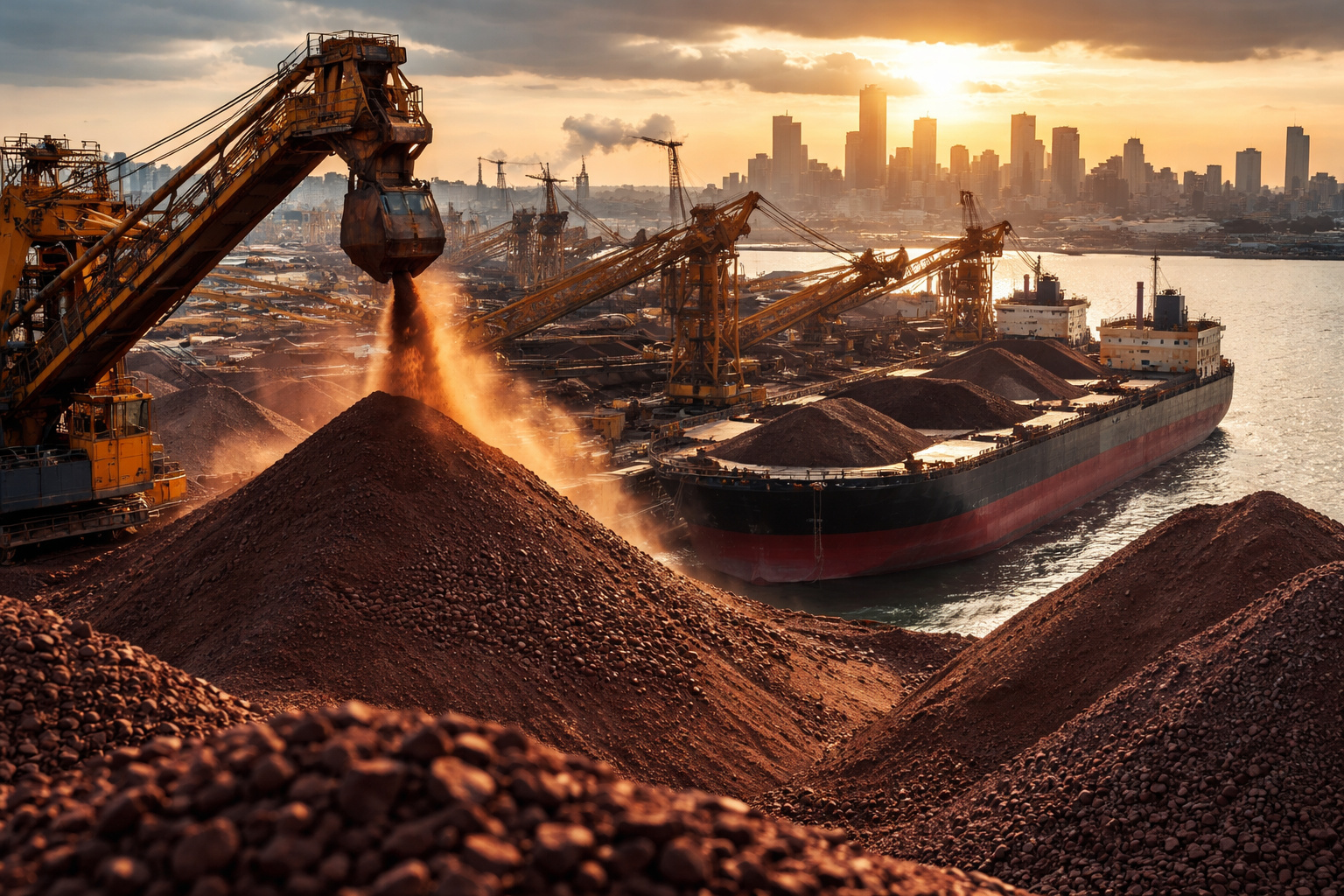
In this model, the company reuses materials already moved in the extraction process to generate a new volume of ore.
According to Vale, this measure reduces the need for areas for waste disposal and also integrates the company’s decarbonization goals.
Circular mining gains scale in Vale’s operation
According to Vale, circular mining has ceased to be a pilot initiative and has begun operating on an industrial scale throughout 2025.
In practice, this means that reuse has begun to play a broader role in production, waste management, and the use of structures related to mineral activity.
Historically, mining concentrated production on primary extraction, with less use of materials already deposited in piles or dams.

Now, the company claims that part of this content can return to the production process and increase the utilization of already extracted resources.
In disclosing the results, the mining company also linked this advancement to the goal of making operations more efficient and reducing pressure on areas designated for waste disposal.
According to the company, the goal is for 10% of its annual iron ore production in Brazil to come from circular sources by 2030.
Ore production from waste grows in 2025
The total of 26.3 million tons indicates that the reuse of sterile and waste materials has gained scale within Vale’s operation.
According to the company, this is not an isolated action, but an initiative integrated into the company’s industrial and environmental planning.
In addition to the volume produced, the mining company has begun to present circularity as part of its operational strategy.
This framework includes the use of waste to obtain iron ore and the development of products derived from these materials.
As a result, materials previously destined for disposal have begun to be reincorporated into the production cycle.
The change was presented by the company as a way to increase the use of resources already available in mined areas.
Reuse of waste includes sustainable sand and projects in Minas
Vale’s program encompasses different initiatives.
One of them is the reuse of materials previously classified as sterile and waste for the production of iron ore.
Another front involves transforming these waste materials into products with applications outside the traditional mining chain.
Among the examples cited by the company is Sustainable Sand Vale, whose accumulated production has surpassed 3 million tons since 2023.
According to the company, this material can be used in construction activities.
The mining company also mentions projects in Minas Gerais to illustrate the advancement of the strategy.
In Capanema, for example, the operation uses material deposited in sterile piles to generate iron ore.
In Vargem Grande, the reuse of waste also integrates actions aimed at reducing liabilities and increasing the utilization of extracted material.
Mariana, Brumadinho, and the debate about dams in Brazil
The expansion of this type of measure occurs in a context of greater public and regulatory attention to waste, dams, and operational safety.
In Brazil, the topic gained new weight after the collapses in Mariana, in November 2015, and in Brumadinho, in January 2019.

Both tragedies led the mineral sector to face greater pressure for changes in waste management processes and disposal structures.
In this context, initiatives aimed at the reuse of materials have begun to receive more attention from authorities, investors, and communities affected by mining activities.
Although the reuse of waste does not, by itself, solve the challenges related to mining safety, the measure fits into a broader agenda of reducing the need for new structures for waste disposal and increasing the use of already extracted materials.
Environmental goals and operational efficiency enter the strategy
Vale associates the expansion of circular mining with the decarbonization goals announced by the company.
According to the company, the reuse of materials helps reduce emissions by decreasing the need for movement, disposal, and disposal of new volumes of waste.
In the balance sheet released by the mining company, the program avoided in 2025 the occupation of volume for waste disposal equivalent to more than 300 loaded train cars of iron ore.
This data was used by the company to quantify the space that was no longer designated for material disposal.
In addition to the environmental dimension, the company relates the initiative to operational efficiency and better economic utilization of materials previously discarded.
The strategy has also begun to be observed in the market as part of the mining company’s effort to integrate production, waste management, and environmental goals.
Minas Gerais concentrates examples of the company’s circular mining
Some of the examples presented by Vale to showcase the advancement of circular mining are in Minas Gerais, a state that concentrates relevant operations of the company.
There, the company has been associating the reuse of materials with waste reduction and the creation of new uses for mineral by-products.
As a result, the discussion about circular mining has begun to occupy a larger space in the sector’s news.
In addition to production numbers, the strategy draws attention for indicating how materials previously discarded have begun to be more broadly incorporated into the mining company’s production process.






Seja o primeiro a reagir!