






 Portuguese
 Spanish


A federal government study points to a sharp decline in Bolivian gas supplies by the end of the decade. With capacity to transport 30 million cubic meters a day, Gasbol may increasingly depend on new gas sources.
By 2030, Brazil could be receiving 62% less natural gas from Bolivia through the Bolivia-Brazil Gas Pipeline (Gasbol). The change appears in projections in the 2036 Decennial Energy Expansion Plan (PDE 2036), which assumes that Bolivian supplies will fall from 13 million to just 5 million cubic meters a day.
The figure takes on added significance when compared with the size of the existing infrastructure. Gasbol can transport approximately 30 million cubic meters a day and crosses five Brazilian states, serving industrial regions that are important to the country’s economy.
With less gas coming from Bolivia, the need to find new sources of supply to make use of that infrastructure grows.
-
Brazil’s ANP challenges Petrobras over Sergipe gas megaproject, seeks explanations and insists approved plan doesn’t include exports

-
Petrobras has US$42 billion planned for new fields, but study warns up to 86% may fail to deliver expected returns
-
Oil and Gas Generated R$9.66 Billion in Special Participation Payments, with R$3.86 Billion for States and Funds for Only 24 Municipalities
-
Argentine gas reaches Brazil’s CSN under 12-month deal with supplier authorized to import up to 15 million cubic meters a day


The outlook was presented by Brazil’s Ministry of Mines and Energy (MME) and Energy Research Office (EPE) on November 17, 2026. The estimates are part of national energy planning and do not represent a decision already made to reduce imports.
Bolivian gas supplies could fall from 13 million to 5 million cubic meters a day
The projected change does not happen all at once. Under the Natural Gas Report in PDE 2036, the planning scenario keeps Bolivian supplies at 13 million cubic meters a day in 2026 and 2027.
Over the following two years, that volume falls to 10 million cubic meters a day.
The steepest drop comes in 2030, when the estimate falls to 5 million cubic meters a day, a level maintained through 2036 in the study’s projections.
Compared with the initial volume, that is 8 million fewer cubic meters a day, a decline of approximately 61.5%.
The EPE links this outlook to uncertainty about Bolivia’s future supply capacity and greater flexibility in natural gas delivery and receipt commitments established by a contract amendment.
That does not mean, however, that imports will necessarily follow these figures. The PDE uses potential supply assumptions to assess Brazil’s future gas supply. Volumes actually traded will depend on production conditions, contracts and decisions by the companies involved.
Gasbol runs 3,150 kilometers and may need new gas sources
The Bolivia-Brazil Gas Pipeline is one of South America’s main natural gas transportation systems. It stretches approximately 3,150 kilometers, of which 2,593 are in Brazilian territory.
In Brazil, the system is operated by Transportadora Brasileira Gasoduto Bolívia-Brasil (TBG) and crosses the states of Mato Grosso do Sul, São Paulo, Paraná, Santa Catarina and Rio Grande do Sul.
Its infrastructure includes 15 compression stations, which maintain the pressure needed to move the fuel along the route.
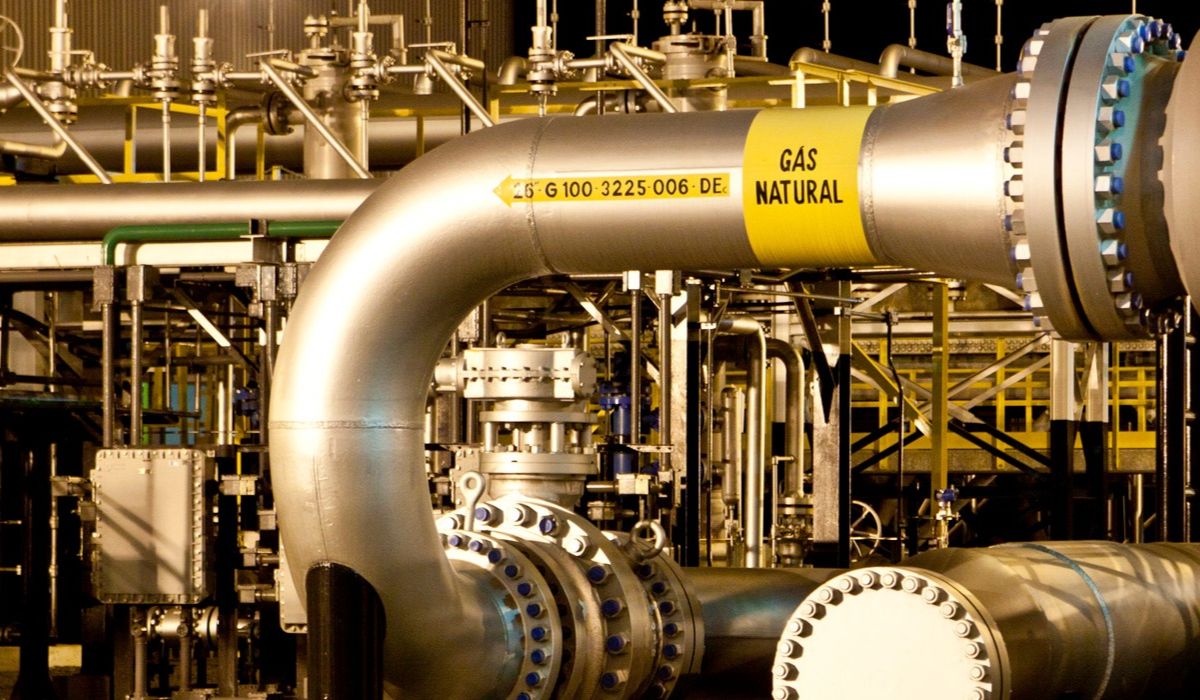
The scale of this infrastructure helps explain concerns about declining Bolivian supplies.
In May 2026, TBG reported that it transported an average of 18.2 million cubic meters of gas per day in 2025. That volume includes gas from various sources, not just imports from Bolivia.
For that reason, the projection of 5 million cubic meters per day in 2030 does not mean the rest of the Gasbol’s capacity will automatically sit idle.
The pipeline can also carry gas from other sources, depending on transport conditions, interconnections and gas availability. Even so, declining Bolivian supplies increase the importance of upgrades that can make better use of the existing network.
Argentine gas could gain ground in the Brazilian market
One way to offset declining Bolivian gas supplies could be to turn to Argentina, particularly the Vaca Muerta region, known for its vast unconventional gas reserves.
Brazil’s 2036 Ten-Year Energy Expansion Plan (PDE 2036) notes that the Gasbol could be used more intensively if infrastructure is expanded and additional supplies of Argentine or Bolivian gas become available.
Using Bolivia as a transit route for gas produced in Argentina is already part of energy discussions between the countries.
In November 2024, Brazil and Argentina signed a memorandum of understanding to study options for transporting and marketing Argentine gas. The agreement included an assessment of different routes and the investments needed to enable those supplies.
But the existence of pipelines alone does not resolve the issue.
Transporting larger volumes of Argentine gas to Brazilian consumers may require expansion projects, modifications to connections and commercially viable contracts.
Another option is to make better use of the Gasbol’s connections to domestic production and liquefied natural gas (LNG) terminals. TBG already has entry points connected to other parts of Brazil’s gas network, broadening supply options.


Brazilian production could grow by more than 80% and reshape the gas market
As supplies from Bolivia lose ground in projections, Brazilian production for the domestic market is expected to grow.
According to Brazil’s Ministry of Mines and Energy, the country’s potential natural gas supply could rise from 61 million to 112 million cubic meters per day between 2026 and 2036, an increase of more than 80%.
Growth is expected to be driven primarily by pre-salt production and new projects, including the Raia Project, scheduled for 2028 in the plan, and Sergipe Águas Profundas, included from 2030 onward.
The Northeast could also gain ground. The PDE estimates that the region’s share of the country’s potential supply will rise from 19% to 34% over the decade.
The challenge is not simply to produce more gas. It will be to deliver the fuel to consumers through pipelines, processing plants and connections capable of meeting expected demand growth.
The study projects that expected average natural gas consumption in Brazil will increase from 71 million to 104 million cubic meters per day by 2036.
To keep pace with this transformation, energy planning includes approximately R$15.9 billion in investment in natural gas infrastructure, including new pipelines, processing and transportation facilities.
The PDE 2036 identifies a need to reinforce infrastructure, including in areas connected to the Bolivia-Brazil Gas Pipeline. The solutions will be examined in greater depth in the National Integrated Natural Gas and Biomethane Infrastructure Plan, which is expected to guide the assessment of investments needed to ensure supplies in the coming years.


