






 Portuguese
 Spanish


Brazil’s oil regulator, the ANP, completed the transfers in November for production in the third quarter of 2026. The federal government received the largest share, while the amounts received by states and municipalities underscore how concentrated oil revenue is.
Oil and natural gas production in Brazil generated billions of reais in special participation payments in the third quarter of 2026. According to Brazil’s National Agency of Petroleum, Natural Gas and Biofuels (ANP), R$9.66 billion was allocated to the federal government, states and municipalities.
The size of the payout stands out, but another figure is just as striking: only 24 Brazilian municipalities received funds through this type of financial compensation.
The transfers were completed on November 13 and cover production recorded from July through September. States received R$3.86 billion, while municipalities shared R$966 million.
-
Argentine gas reaches Brazil’s CSN under 12-month deal with supplier authorized to import up to 15 million cubic meters a day

-
Petrobras could invest up to $125 billion in new plan, surprising with bold 2031 target: what’s the strategy with diesel and why investors are concerned

-
Petrobras readies historic investment plan of over US$120 billion through 2031, expanding pre-salt development and diesel self-sufficiency push
-
800 km from its support base, Petrobras faces a logistical challenge in Foz do Amazonas: Helicopters, ships, and a lack of ports expose the hidden costs of operating in an isolated region in Brazil’s far north


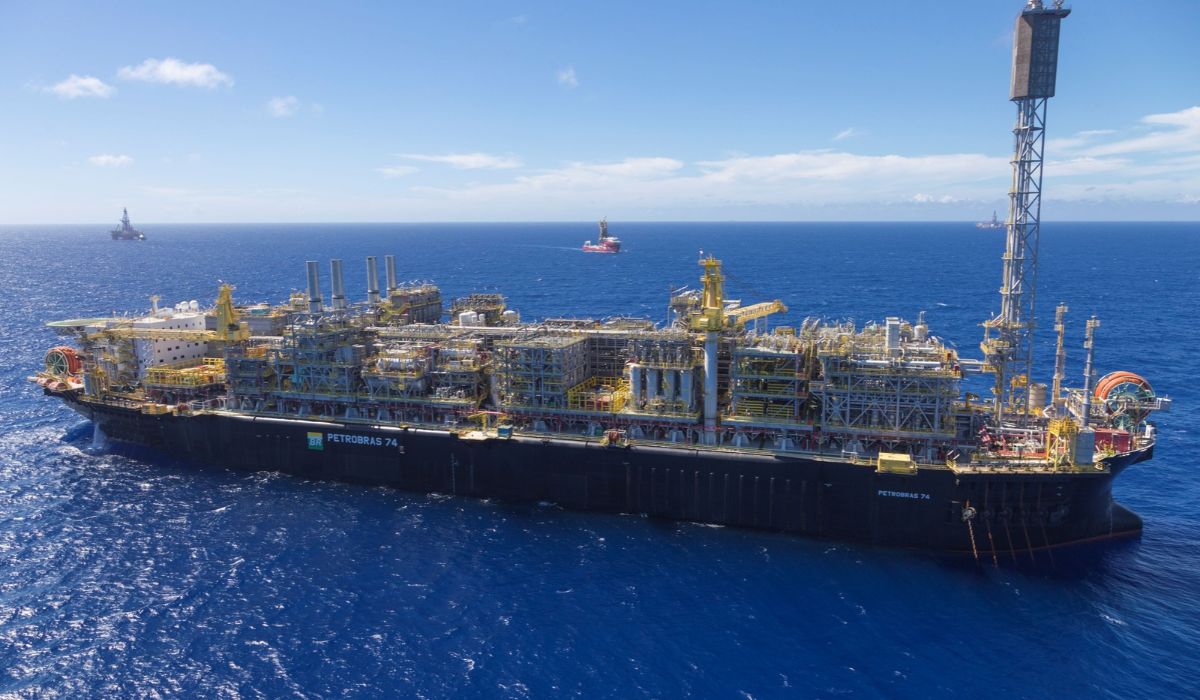
How the R$9.66 billion was distributed across Brazil
Most of the money went to the federal government. Under the rules for special participation payments, about 50% of the funds go to the federal government, equivalent to R$4.83 billion for the quarter.
Another 40% goes to eligible states and 10% to municipalities that meet the legal criteria. In the distribution for the third quarter, only five states and 24 cities received these payments directly.
The concentration is even more evident when looking at the municipalities that collect the most.
In a survey published by regional media, Maricá, in Rio de Janeiro state, received R$394.9 million, while Niterói received about R$332 million. Together, the two cities accounted for about 75% of the R$966 million allocated to municipalities during the period.
Other cities in Rio de Janeiro state also received funds, including Campos dos Goytacazes, Macaé and São João da Barra, though their amounts were considerably smaller.
This disparity helps explain why oil revenue carries such different weight in the public finances of Brazilian municipalities.
Why did only 24 municipalities receive special participation payments?
The figure may be surprising, especially in a country with thousands of municipalities. But there is an explanation: special participation payments are not distributed indiscriminately among all Brazilian cities.
They are an extraordinary charge levied on concession holders that produce large volumes of oil or natural gas from their fields.
The law determines who is entitled to the money. For offshore fields, for example, the distribution to local governments takes into account their territorial relationship to producing areas, under the rules applicable to each field.
As a result, municipalities linked to major offshore fields may receive far more than nearby communities.
There is also a fundamental distinction: special participation payments and royalties are not the same thing.
Royalties are payments collected monthly and calculated on the value of production. Special participation payments, by contrast, are calculated quarterly on the net revenue of fields subject to the charge, after deductions permitted by law.
Thus, the 24 municipalities cited by Brazil’s oil regulator, the ANP, are not the only ones in the country that receive oil-related funds. The figure refers exclusively to the recipients of this distribution of special participation payments.


Payment fell by R$2.17 billion from the previous quarter
Despite the substantial amount, the latest distribution was lower than the one recorded in the previous quarter.
In August, when payments were made for production from April through June 2026, special participation payments totaled R$11.83 billion.
The difference is about R$2.17 billion less, an 18.3% decline between the two periods.
States received R$4.73 billion in the previous distribution, compared with R$3.86 billion now. For municipalities, the amount fell from R$1.18 billion to R$966 million.
The shift draws attention for another reason: even as the amount distributed fell, the number of recipient municipalities rose from 20 to 24. The number of states increased from four to five.
This variation does not depend solely on the amount of oil extracted.
The calculation of special participation payments takes into account factors such as production revenue, operating costs, deductible investments, taxes, the field’s location and the length of time it has been in operation. Changes in these components can affect the amounts from one quarter to the next.
How to check oil payments received by states and municipalities
Those who want to check the amounts allocated to each locality can consult the tables published by the ANP.
The agency maintains a page dedicated to special participation payments, with quarterly records by recipient and data from earlier periods. The information makes it possible to track how the amounts change over time.
Deposits can also be checked through the Banco do Brasil system identified by the ANP, Brazil’s oil regulator. To find these financial compensation payments, users should select the fund labeled “PEA – ANP SPECIAL PARTICIPATION PAYMENTS”.
This lookup is especially useful for tracking municipal revenues from major producing fields, but it should be distinguished from royalty statements, which follow their own rules and schedules.


