





 Portuguese
  English
  Spanish
  4 min of reading
  0 comments


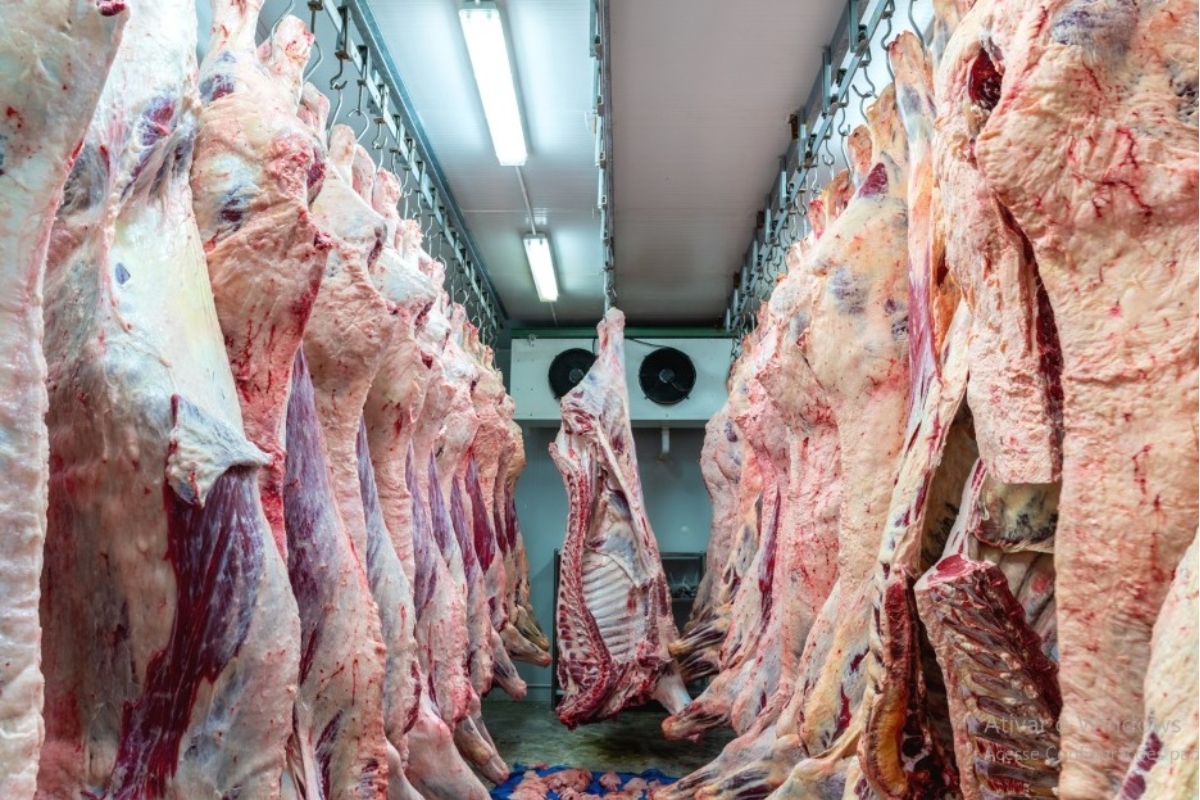
The entry of Brazilian products into Ethiopia highlights Brazil’s market opening policy and the strategic potential of the African country for agribusiness
The authorization granted to Brazil to export 17 agricultural products to Ethiopia, including beef, chicken, and pork, is significant not only for the immediate access to a new market but also for what it represents in terms of foreign strategy, diversification of destinations, and strengthening Brazilian agribusiness in Africa.
The measure was confirmed by the Secretary of Commerce and International Relations of the Ministry of Agriculture, Luis Rua, and comes at a time of intensified bilateral ties between the two countries.
The Ethiopian authorization for 17 Brazilian products marks a new commercial advance
The central point is clear: Ethiopia has authorized the entry of 17 Brazilian products, including high-value animal proteins such as beef, chicken, and pork. The news also coincides with the beginning of André de Paula’s management, who took over the Ministry of Agriculture on April 1, 2026.
-
The government wants to release FGTS to pay off debts and is preparing a credit package with Union guarantees, discounts of up to 80%, and a possible block on bets, says Durigan; the announcement may come in the next few days.

-
China reacts after BYD enters the dirty list of slave labor in Brazil, case exposes work in Bahia and increases pressure on the electric vehicle manufacturer.
-
Brazilian product exports to the U.S. plummet, accumulating 8 consecutive declines after Trump’s tariff hike, resulting in a deficit of $420 million, while China buys more and becomes the great savior of the Brazilian trade balance.

-
Boa Safra (SOJA3) targets Nigeria: $10 million JV brings corn technology to Africa and challenges expensive credit in 2026.
This movement is not isolated. It is part of a broader policy of the Brazilian state, articulated between MAPA and Itamaraty, aimed at the sanitary and commercial opening of new markets for agribusiness. This strategy had already led Brazil to surpass the mark of 500 market openings since the beginning of 2023, consolidating the country as one of the global protagonists in the expansion of agricultural exports.
The demographic and economic weight of Ethiopia reinforces Brazil’s strategic interest
Ethiopia is a particularly attractive market due to its size. With an estimated population of over 135 million inhabitants, the country ranks among the most populous in Africa and represents a strategic opportunity for exporters seeking to expand their presence on the continent.
From a Brazilian perspective, Ethiopia has already been treated as a priority country. The official profile of MAPA indicates interest in products such as meats, grains, vegetable oils, ethanol, and sugar, in addition to highlighting the importance of increasing Brazilian presence in a market with growth potential.
Moreover, the bilateral relationship had been deepening even before this authorization. In January 2026, Brazil and Ethiopia concluded bilateral negotiations for market access in the context of Ethiopia’s accession process to the World Trade Organization. Already in July 2025, President Lula and Ethiopian Prime Minister Abiy Ahmed had expressed interest in strengthening commercial cooperation and multilateral dialogue.
The current opening is the result of a bilateral approach that had already been built
The opening of the Ethiopian market did not come out of nowhere. Brazil had already been building space in this country through technical cooperation, commercial promotion, and participation in strategic events. In 2024, the Brazilian government reported progress on a memorandum of understanding in agricultural cooperation, and in 2025 it reinforced its presence at the Agrofood Ethiopia fair, an important showcase for business in the food and agribusiness sector.
This helps to better understand the current moment: it is not just about selling meat, but about consolidating Brazil as a supplier of food, beverages, and agricultural technology in an expanding African market.
The weaknesses of Ethiopian agriculture also help to explain the opportunity for Brazil
The opportunity for Brazil is also explained by the characteristics of the Ethiopian market itself. Ethiopia has the largest herd in Africa, with about 70 million cattle, as well as tens of millions of sheep, goats, camels, and poultry. Livestock accounts for a significant share of the country’s agricultural GDP.
At the same time, the sector faces structural limitations, such as low productivity, insufficient feed, limited veterinary services, and still underdeveloped processing infrastructure. This means that Ethiopia is not only a consumer market but also an economy that seeks to modernize its agricultural system, opening up space not only for final products but also for inputs, genetics, and technical cooperation.
Market diversification and regional presence expand Brazil’s potential gains
For Brazil, the most visible gain is the possibility of selling in a new market three central segments of the national agribusiness: cattle, poultry, and pigs. But the strategic value goes beyond that.
First, the opening reinforces the policy of market diversification, reducing dependence on a few destinations and increasing the resilience of Brazilian exports.
Second, Ethiopia can serve as a relevant platform in the Horn of Africa and East Africa, regions with great potential for demographic and economic growth.
Third, the announcement strengthens Brazil’s image as a competitive supplier not only in volume but also in sanitary quality, regulatory adaptation, and technical negotiation capacity.
The movement of other countries shows that Ethiopia has turned into a disputed market
The news becomes even more significant when compared to other recent movements. In December 2025, Ethiopia also authorized access for American products, such as live cattle, day-old chicks, and hatching eggs. This indicates that the country is reviewing its supply channels and expanding its international partnerships in the agricultural sector.
In this context, Brazil’s entry should be understood as part of a broader competition for commercial and technological presence in one of the African markets with the greatest potential.
The authorization is promising, but results will depend on commercial execution
Despite the positive nature of the news, it is important to avoid exaggerations. The sanitary authorization opens the possibility for export but does not, by itself, mean large immediate volumes of sales. The concrete result will depend on factors such as prices, logistics, plant qualification, local demand, financing, and international competition.
Still, the announcement is relevant because it shows a broader trend: Brazil is deepening its commercial presence in Africa, and Ethiopia is increasingly appearing as a strategic market for food, animal protein, agricultural cooperation, and the expansion of Brazilian agribusiness.









Seja o primeiro a reagir!