





 Portuguese
  English
  Spanish
  3 min of reading
  0 comments


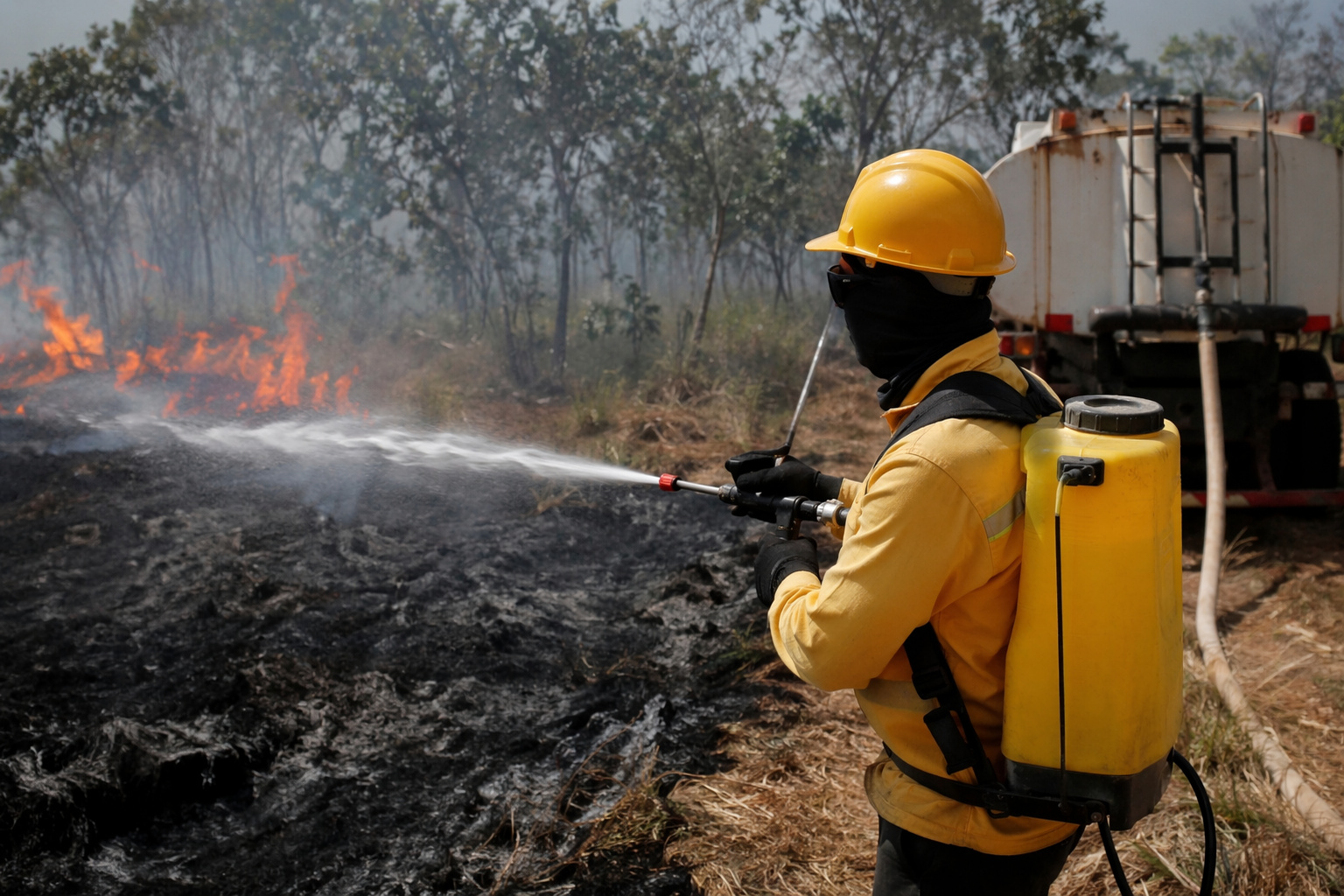
Technology created in Pernambuco reorganizes the combat to forest and agricultural fires by enhancing the action of water and drastically reducing the use of water resources
An innovative technology developed in Brazil has gained prominence when researcher and entrepreneur José Yago Rodrigues patented a biogel aimed at combating fires.
The product was designed to increase the efficiency of water in controlling flames while simultaneously reducing the volume needed in operations.
When mixed with water, the biogel forms a protective layer over vegetation.
This behavior helps to contain the spread of fire and accelerates the extinguishing process in affected areas.
Technological development increases efficiency in combating fire
The biogel was developed from studies conducted by Rodrigues, who graduated in industrial chemistry, in Pernambuco.
The central proposal has always been to create a solution capable of extinguishing fires more quickly using less water, as reported to the program Small Businesses & Big Business, from TV Globo.
-
Brazilian biogel reduces water usage by up to 85% in firefighting and could transform the way wildfires are contained in fields and forests.
-
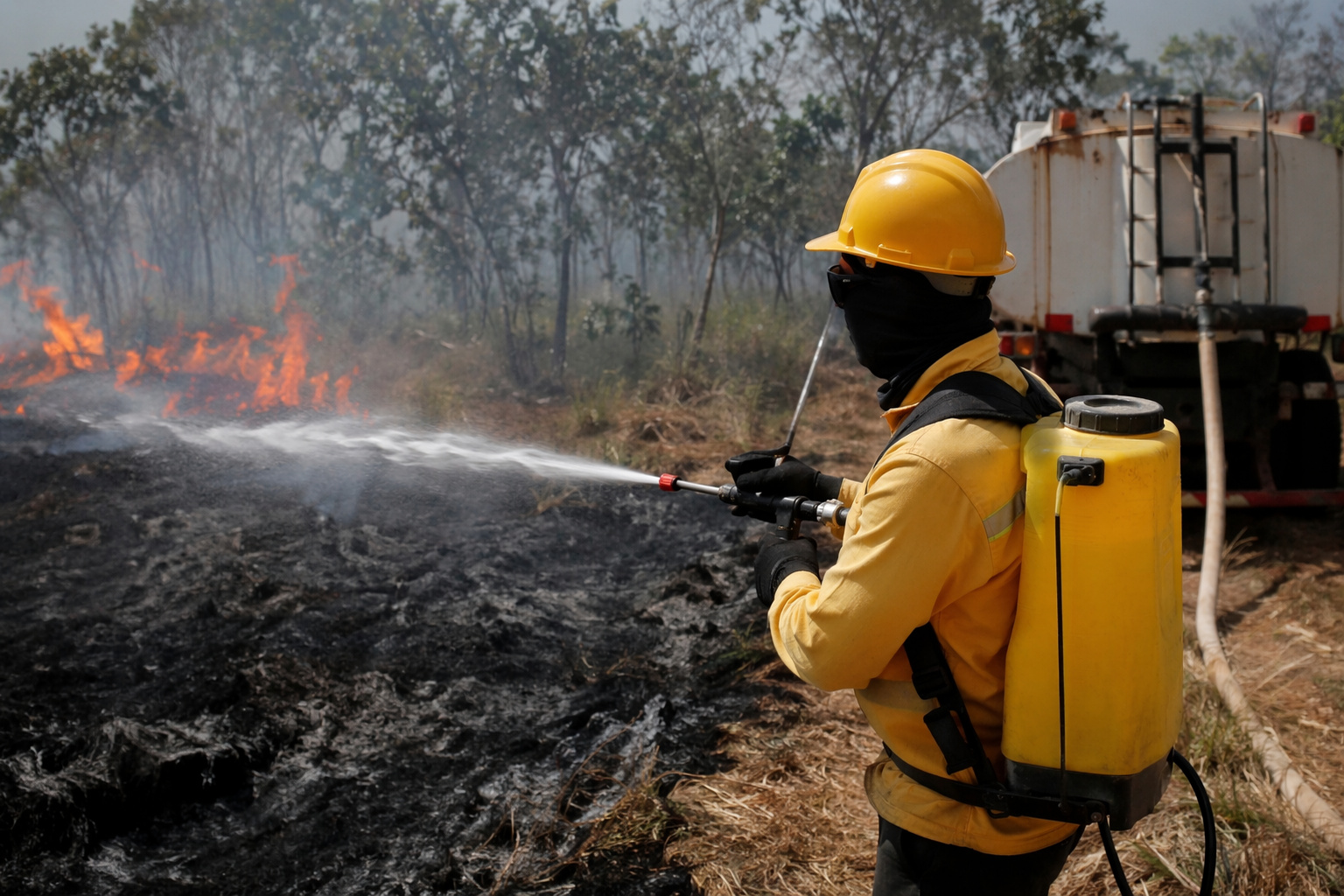
Embrapa’s discovery reveals an unexpected advancement by allowing the production of seedlings from the caatinga using brackish water, opening a new frontier for farmers to face drought more efficiently.
-
6 sources of free fertilizer that you are throwing away every day and can transform your garden without spending anything.
-
With a water crisis on the radar, Sabesp invests in reclaimed water for data centers and transforms sewage treatment into a solution that saves millions of liters and protects public supply.

The product also presents relevant environmental characteristics.
It is biodegradable, non-toxic, and safe, which increases its potential for application in different contexts.
Field tests validate the performance of the solution
The biogel underwent practical tests conducted by rural producers.
Among them, sugarcane producer Vicente Henrique de Albuquerque, in Pernambuco, used the product in his plantations.
The results indicated a reduction in the risk of fires in the crop.
According to the producer, the observed performance met expectations and helped to reduce impacts on agricultural production.
Integrated application facilitates the adoption of the technology
The biogel can be applied with equipment already used in combating fires.
Drones, water trucks, and backpack pumps are among the available options for its use.
This compatibility facilitates the adoption of the technology.
The integration occurs without the need for significant structural changes in existing operations.
Significant reduction in water consumption in large fires
In large fires, such as areas equivalent to a soccer field, conventional combat requires about 50 thousand liters of water.
With the use of biogel, this volume can be reduced to approximately 7 thousand liters.
The savings can reach up to 85% in water consumption.
This result reinforces the efficiency of the solution in scenarios where the rational use of water is essential.
Startup boosts production and expansion of biogel
After the patent, Rodrigues created the startup Arqueatec to bring the product to market.
The company currently has a production capacity of 20 thousand liters per month.
The biogel is sold in 20-liter packages, with an approximate value of R$ 2 thousand.
The startup received support through funding calls from the government of Pernambuco and federal programs to encourage innovation.
International partnerships and projected financial growth
The company also established a partnership with an organization from the United Kingdom focused on financing technologies with environmental impact.
This collaboration expands the reach of the solution in the international scenario.
In 2025, Arqueatec recorded revenue of R$ 150 thousand.
For 2026, the projection indicates significant growth, with expectations of reaching R$ 2 million in revenue.
The role of innovation in combating fires
The biogel emerges as an alternative that reorganizes the way to face fires, by combining operational efficiency and lower water consumption.
The technology reinforces the importance of innovative solutions in the face of the increase in events related to wildfires.
This advancement highlights the potential of national initiatives in the development of environmental technologies.








Seja o primeiro a reagir!