





 Portuguese
  English
  Spanish
  6 min of reading
  0 comments


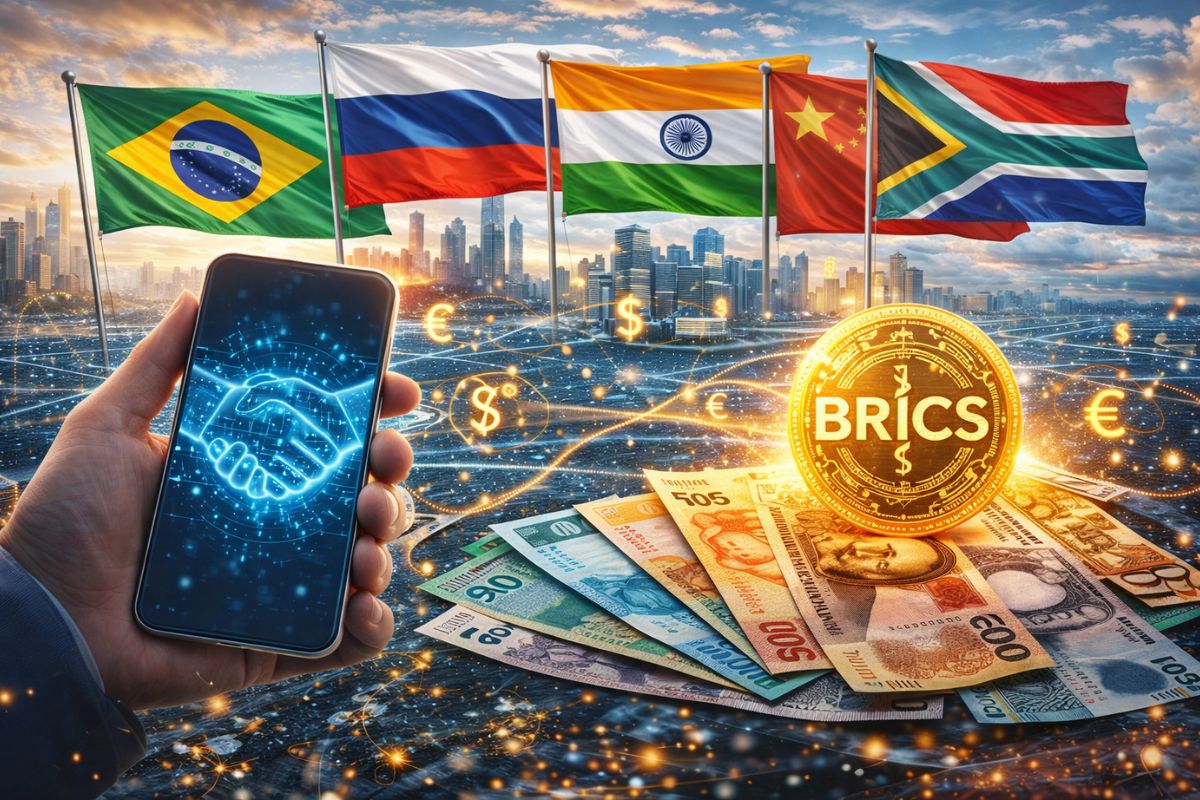
BRICS Pay has already been launched as a digital platform, and pilot tests between Brazil, Russia, and China are scheduled for 2026, while experts project that the complete BRICS payment infrastructure could be operational by 2029–2030, with the potential to increase trade among the bloc’s countries by up to 10% per year and generate an additional 3% growth in the GDP of its members.
The BRICS is taking concrete steps to build a financial infrastructure that does not rely on the dollar or the SWIFT network to function. The BRICS Pay, a blockchain-based digital platform inspired by Brazil’s Pix and designed to connect the payment systems of the bloc’s countries, has already been officially launched and is available in app stores. Pilot tests involving Brazil, China, and Russia are scheduled for 2026, with the goal of having central bank digital currencies like Drex and the digital yuan interconnected through the platform by the end of the year.
But the project goes beyond an app. Experts consulted by TV BRICS and international media estimate that the complete BRICS payment infrastructure could be operational between 2029 and 2030, with the potential to increase trade among the countries by up to 10% per year and add 2% to 3% to the GDP of each member. Trade among the bloc’s countries has already surpassed $1 trillion, and 90% of transactions within the group are conducted in local currencies, a jump from the 65% recorded in 2023.
What is BRICS Pay and how does it work in practice
BRICS Pay is a decentralized digital payment ecosystem developed by the BRICS Business Council to enable fast, secure international transactions without intermediaries.
-
Government suspends over 3 million traffic fines in Brazil and drivers breathe a sigh of relief.

-
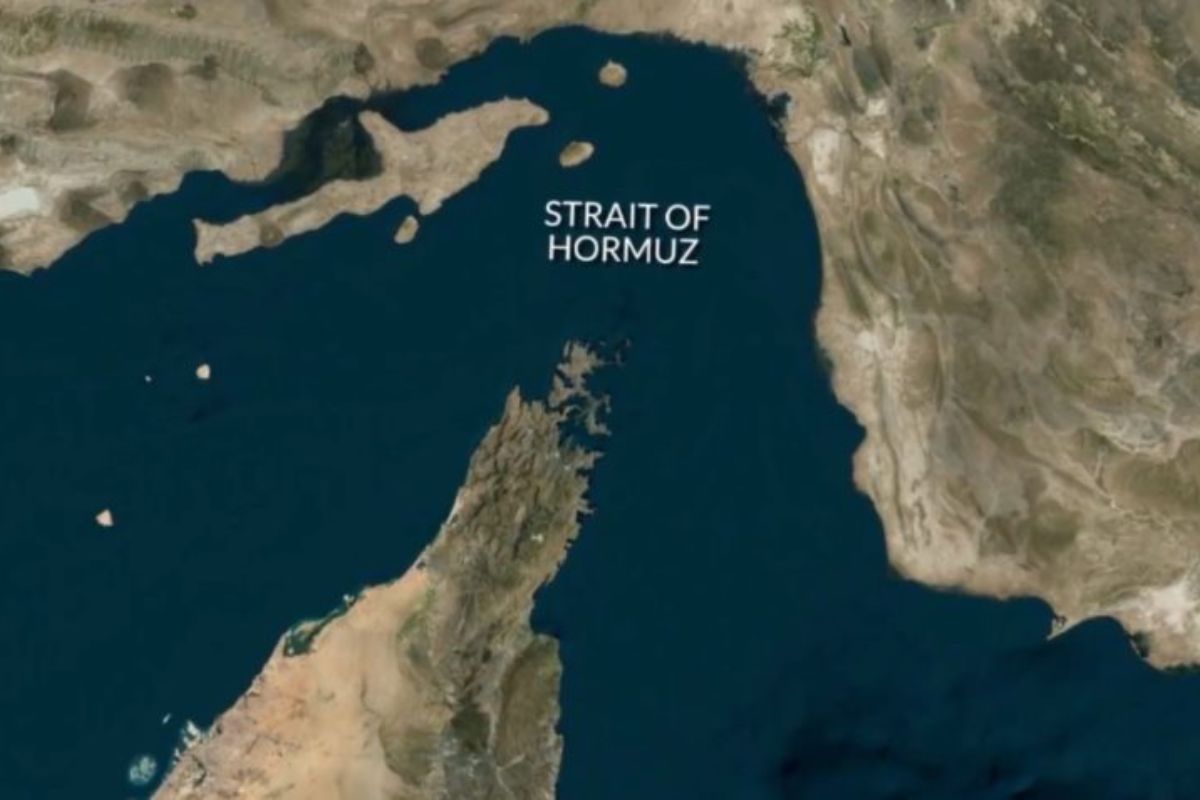
Iran has just approved toll charges for ships in the Strait of Hormuz and has completely prohibited the passage of vessels from the United States and Israel in the world’s most important maritime route for the global energy market.
-
Government cancels R$ 25 million “celebration” for Brasília’s anniversary and allocates funds to health.

-
Winning money seems like a dream, but it can quickly turn into a nightmare when financial success awakens envy, demands, and opportunism from all sides; this was the case with Jack Whittaker, who won $315 million in 2002 and ended up alone, bankrupt, and devastated.


In practice, it works like this: a Brazilian company can pay an Indian supplier in rupees using its account in reais, while the settlement occurs within the digital infrastructure of the system without conversion to dollars, without currency exchange, and without the two to three days that a transfer via SWIFT usually takes.
The technology behind the system uses blockchain and distributed ledger technology (DLT), which means that transactions are verified simultaneously at various points in the network, without relying on a single control center.
The commercial banks of BRICS countries will be connected through their respective central banks, and digital tokens backed by national currencies will circulate on the network. The system is designed to process up to 20,000 transactions per second, according to information from the bloc’s Business Council.
The implementation timeline already has defined phases. In the first quarter of 2026, BRICS Pay will be launched for foreign tourists, supporting QR Code payments. In the second quarter, integration with the infrastructure of countries such as Turkey, the United Arab Emirates, and Egypt is planned. And in the fourth quarter, the connection with the entire BRICS+ bloc. In 2027, the system is expected to advance to integration with broader commercial networks.
The role of Brazil and Pix in building the BRICS financial system
Brazil occupies a strategic position in this project. The success of Pix, which processed R$ 35.4 trillion in 2025 and became a global reference in instant payments, served as a direct model for the architecture of BRICS Pay.
The Brazilian experience in creating, implementing, and managing a digital platform with massive adoption by the population is seen as a valuable asset for the development of the system, positioning the country as a key player in building the bloc’s new financial infrastructure.
President Lula has been one of the main advocates of the proposal. As early as 2023, he publicly questioned why the dollar should be the reference currency for international trade and advocated for alternatives.
In 2024, he recalibrated the discourse: the goal is not to replace national currencies, but to create a payment infrastructure that gives BRICS autonomy without relying on the Western financial system.
The proposal was a central theme at the Kazan summit in 2024 and at the Rio de Janeiro meeting in 2025. Since 2023, the New Development Bank (NDB), chaired by Dilma Rousseff and headquartered in Shanghai, has been coordinating payment innovations among the bloc’s countries.
The BRICS unit of account: single currency, digital currency, or basket of commodities?
One of the most debated issues within the bloc is whether the BRICS payment system should include its own unit of account—something that would serve as a reference for value in transactions. Experts discuss at least three models: a digital system based on the integration of central bank digital currencies (CBDCs), a currency backed by a basket of commodities like gold and oil, or a unit of account similar to the IMF’s Special Drawing Rights.
Mikhail Khachaturian, a professor at the Financial University of the Government of Russia, proposes that the rate of this unit be calculated based on a basket of national currencies from BRICS+, formed from cross rates against the bloc’s more stable currencies like the yuan, the ruble, and the real, or against gold.
Anatoli Otirba, a professor at the Academy of Geopolitical Issues, advocates for a more radical model: a supranational monetary unit that would not be issued by a single center but by a decentralized system of issuers—economic entities from different countries brought together in an International Association of Issuers.
In this model, issuance would be proportional to the volume of assets given as collateral, evaluated and recognized by the majority of members.
Vladimir Putin, for his part, has adopted a cautious tone. In December 2025, when asked about the prospect of a single BRICS currency, the president of Russia emphasized that one should not act hastily to “avoid making serious mistakes”.
Indeed, the countries of the bloc are spread across different continents, with very distinct inflation levels and economic structures. Harmonizing all of this is a technical and political challenge that will require years of negotiation.
What the New Development Bank and BRICS can deliver by 2030
The New Development Bank (NDB), the BRICS bank, is pointed out by experts as the institution that could play the role of a clearing center and, eventually, of an issuer of a digital currency for the bloc.
By 2026, the volume of loans approved by the NDB has already surpassed $42.9 billion, and the bank has been expanding operations in national currencies, aiming for at least 30% of transactions to be conducted outside of the dollar.
The consensus among experts is that concrete results may emerge in the next three to five years. Khachaturian estimates that the regulation of standards for international payments within BRICS could take up to three years, which means that around 2029–2030, the unified payment platform is likely to be fully operational.
In this scenario, experts estimate that the system could generate an annual increase of 8% to 10% in trade among BRICS+ countries and an additional growth of 2% to 3% in the GDP of participants.
As a transitional measure, BRICS countries may adopt different intermediate formats: a unit of account exclusive for foreign trade, digital instruments for payments between central banks, or simply the expansion of the use of existing national digital currencies.
The fact is that the structure is being built now, and the bloc, which represents 46% of the world’s GDP in purchasing power parity, is positioning itself to have its own voice in the international financial system.
BRICS wants to rewrite the rules of global money and has already started
The BRICS payment system is no longer just an idea under discussion; it is a project in execution, with a timeline, technology, and real investments.
There are still enormous obstacles: regulatory differences, geopolitical rivalries among members such as China and India, and the structural strength of the dollar, which accounts for 84% of global transactions. But the movement is concrete, and if consolidated, it could reshape how international trade operates for nearly half of the planet’s economy.
For Brazil, the opportunity is twofold: in addition to exporting Pix technology to the world via BRICS Pay, the country positions itself as a facilitator of a new financial order that could reduce transaction costs, protect against sanctions, and provide more predictability to Brazilian foreign trade.
BRICS is betting that financial autonomy is the next step towards political autonomy, and 2030 is the date that experts have marked on the calendar.
With information from the portal TV Brics.
Do you believe that the BRICS payment system will actually work by 2030, or are the political and economic obstacles too great? And as a Brazilian, would you use an “international Pix” for purchases in other countries of the bloc? Leave your opinion in the comments.






Seja o primeiro a reagir!