





 Portuguese
  English
  Spanish
  5 min of reading
  0 comments


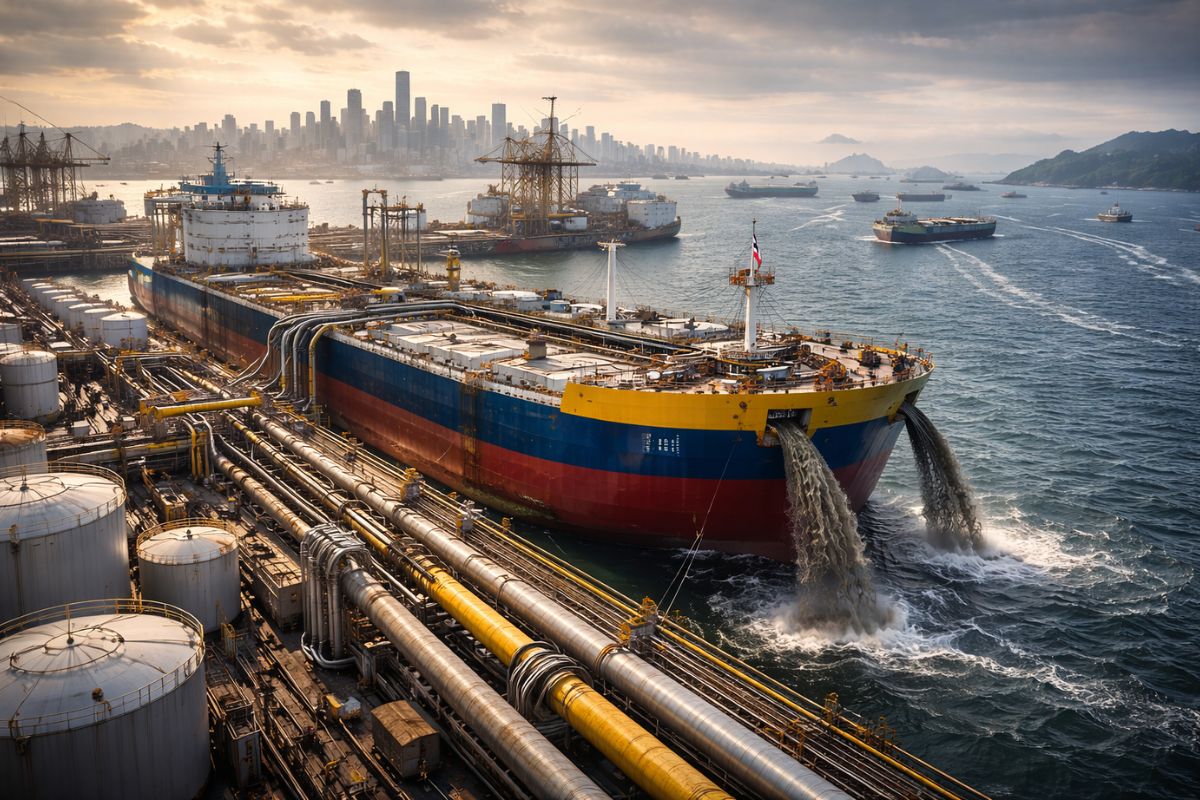
India, a BRICS power and the third largest oil importer in the world, is expected to receive up to 12.51 million barrels from Venezuela in April, the largest volume in six years, after the closure of the Strait of Hormuz due to the war cut the route that supplied half of the country.
The closure of the Strait of Hormuz due to the war in the Middle East has created a supply crisis that is reshaping global oil routes. India, a BRICS power that relies on external sources to meet 85% of its daily oil consumption, is expected to receive the largest shipment of crude oil from Venezuela since February 2020 in April. According to data from consulting firm Kpler cited by Bloomberg, the estimate points to the arrival of up to 12.51 million barrels in the country, marking the return of Venezuelan imports after an interval of about 11 months.
The first ship of this cycle, the tanker Ottoman Sincerity, has already docked at the port of Sikka on the western coast of India, after departing from Aruba on March 3. The Middle East region typically accounts for about half of Indian refiners’ oil imports, and the closure of the Strait of Hormuz has forced the BRICS power to urgently seek alternative suppliers. Venezuela, which has the largest proven oil reserves in the world, has emerged as one of the immediate solutions to the supply deficit that threatens the Indian economy.
Why the BRICS power is buying oil from Venezuela now

The answer is directly linked to the war in the Middle East. The partial closure of the Strait of Hormuz by Iran interrupted a route through which about 25% of global maritime oil transport passed, according to the International Energy Agency.
-
Digital marketing agency unexpectedly shuts down and defaults on over R$ 1 million to about 60 workers who are now filing police reports and seeking justice to receive overdue salaries.

-
The federal government will provide discounts of up to 90% on the debts of millions of Brazilians with the return of a social program that will prevent new indebtedness in 2026.

-
In addition to the war with Iran, a strong El Niño could tighten inflation in Brazil in 2026: higher energy costs, risks to food, and warnings about red flags put the government on high alert already.
-
Those with debt in their name will be on alert in 2026: Central Bank reveals indebtedness of 49.7% of income and increasing pressure from high inflation and interest rates.

For India, which imported half of its oil from Gulf countries that depend on this passage, the interruption created a deficit that needs to be covered by alternative sources.
The contracts that originated the Venezuelan shipments were likely signed before the conflict began, according to industry analysts, but the continuity and expansion of these purchases reflect a strategic need for the BRICS power to diversify its oil sources.
India is the third largest importer of crude oil in the world and cannot afford to rely on a single region to meet 85% of its consumption. Venezuela, with production capacity and willingness to sell, fills part of this gap.
The role of Reliance Industries and the American license to buy Venezuelan oil
India’s largest private refiner has already taken action. Reliance Industries conducted its first shipment directly from the Venezuelan state-owned PDVSA, using the ship Helios, flagged in the Bahamas, classified as a very large crude carrier (VLCC).
The operation marks a milestone in the commercial relationship between the BRICS power and Venezuela, which until recently faced barriers to export freely.
In February, Reliance obtained a license from the U.S. government to acquire oil directly from Venezuela. Since January, Washington has defined the destination of hydrocarbon sales from Caracas, meaning that any purchase requires American authorization.
The granting of the license indicates that the U.S. recognizes the need for India to diversify its sources amid the crisis in the Middle East. For the BRICS power, the license opens a door that was closed by sanctions and allows access to a supplier geographically distant from the conflicts affecting the Gulf.
India has also increased purchases of Russian oil by 90%


Venezuela is not the only alternative that the BRICS power has found. Indian purchases of oil from Russia grew by 90% in March compared to February, according to data compiled by the sector.
The move was driven both by the disruption in Middle Eastern supply and by an exemption granted by the United States for purchases of Russian shipments already loaded.
The combination of Venezuelan and Russian oil allows the BRICS power to reduce dependence on the most unstable region on the planet at the moment and ensure supply for its refineries, which operate on tight margins and cannot remain idle.
India refines oil not only for domestic consumption but also exports derivatives to other markets, making continuous supply an economic issue that extends beyond the country’s borders.
What the Venezuelan shipment reveals about the new global oil map
The fact that a BRICS power is receiving the largest volume of Venezuelan oil in six years is not a common commercial event. It is a sign that the war in the Middle East is causing a reorganization of supply routes that may become permanent.
Countries that depended on the Gulf are being forced to seek alternatives in Latin America, Africa, and Russia, creating new trade relations that are likely to consolidate even after the conflict ends.
For Venezuela, this moment represents an opportunity to regain markets lost during years of sanctions and production decline. PDVSA, the Venezuelan state-owned company, sees Indian demand as a way to increase revenues at a time of high oil prices.
For India, diversifying suppliers is a strategic lesson that the war has brutally taught: no BRICS power can afford to depend on a single region for such a vital resource as oil.
What comes next for India and the global oil market
The trend is that Indian imports of Venezuelan and Russian oil will continue to grow while the Strait of Hormuz remains compromised.
The BRICS power has already shown a willingness to quickly seek alternatives and has the refining infrastructure necessary to process different types of crude oil, including heavy Venezuelan and Russian oil.
The global oil scenario is being reshaped in real-time by the war in the Middle East. Routes that existed for decades have been interrupted, new suppliers have gained relevance, and countries like India have had to make supply decisions that will have long-term consequences.
The shipment of 12.51 million Venezuelan barrels arriving at the port of Sikka is more than a logistical operation. It is a portrait of a world where geopolitics decides who supplies whom and by which route oil will flow.
What do you think about India buying oil from Venezuela and Russia in record volumes? Do you believe these new routes will remain after the war ends? Leave your comments. The oil crisis affects the price of everything, from fuel to food, and deserves attention from those who want to understand what is happening in the world.








Seja o primeiro a reagir!