






 Portuguese
  Spanish


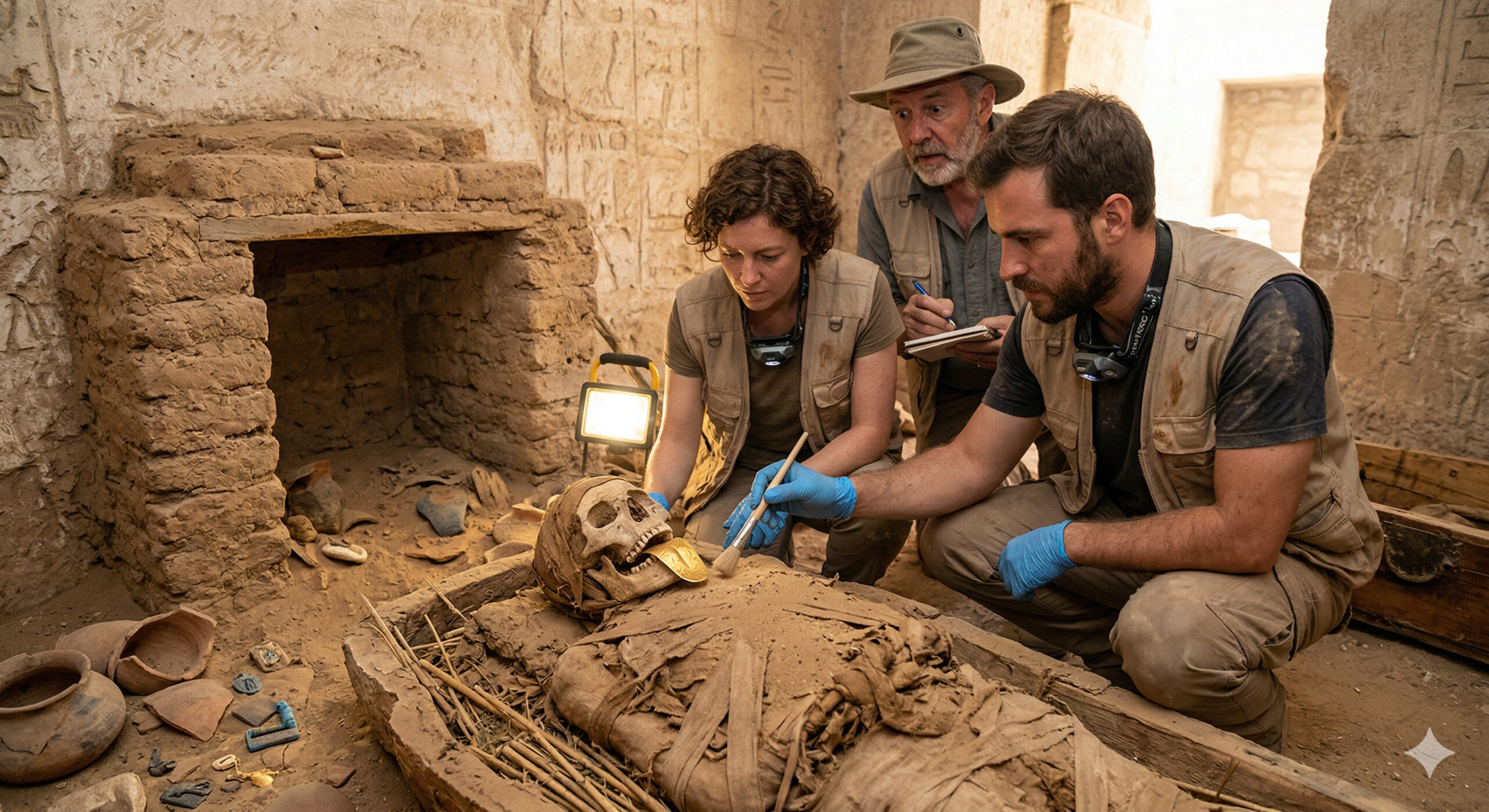


Mummies with golden tongues are found in Egypt at a rare archaeological site, revealing an uncommon funerary practice.
In 2021, archaeologists working at the site of Taposiris Magna, under the coordination of the Egyptian Ministry of Tourism and Antiquities, announced the discovery of mummies that featured an unusual element: gold plates placed where the tongue would be. The discovery was widely reported by international outlets such as National Geographic and Smithsonian Magazine.
The most striking fact is that these mummies, buried over 2,000 years ago, preserved gold leaves placed directly in the mouths of the individuals, symbolically replacing the tongue. This type of practice is considered rare and does not frequently appear in Egyptian archaeological excavations. The discovery reinforces the complexity of the funerary rituals practiced in Egypt during the Greco-Roman period.
The archaeological site of Taposiris Magna has a history of relevant finds
The location where the mummies were found, Taposiris Magna, is an important archaeological site located west of Alexandria. The region was founded during the Ptolemaic period and shows strong Greco-Roman cultural influence.
-
Crab Trapped in Plastic Bottle for 62 Days Near Okinawa Highlights Little-Known Impact of Marine Pollution on Small Animals

-
Esperanza’s Bamboo Barrier in Oaxaca Redirects River and Reduces Erosion by 85% in Five Years

-
Family Builds Homemade Wind Turbine to Power Off-Grid Home, Video Reaches 555,000 Views on Ngô Thị Huyền’s Channel
-
Indian Brand Creates Sneakers from Recycled PET Bottles and Discarded Tires, Repurposing Over 1 Million Bottles and Raising $4 Million for Expansion




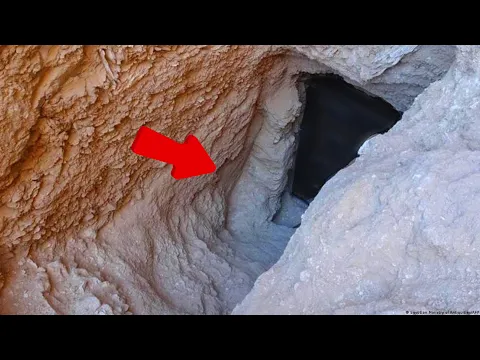

Excavations in the area have already revealed temples, tombs, and funerary structures associated with local elites. The presence of mummies with differentiated elements reinforces the site’s importance as a center for complex funerary practices.
The discovery of the golden tongues occurred within a necropolis, where multiple individuals were buried under different preservation conditions. This context suggests that the practice may have been restricted to certain groups or specific periods.
Gold plates were thin and shaped to fit in the mouth
Unlike the idea of solid objects, the golden tongues found were made of thin sheets of metal, carefully shaped to fit the oral cavity.
These plates were positioned inside the mouth before the mummification process was completed. In some cases, they were found still intact, preserved over millennia.

The use of gold, a material highly resistant to corrosion, contributed to the preservation of these structures over time.
This type of application demonstrates a high level of detail in the funerary procedures of the time.
Practice is considered rare within Egyptian archaeology
Although the use of gold in Egyptian funerary rituals is well documented, the presence of golden tongues is considered uncommon.
Most mummies feature other types of adornments, such as funerary masks, amulets, and body ornaments. The symbolic replacement of the tongue with gold appears in a limited number of cases.
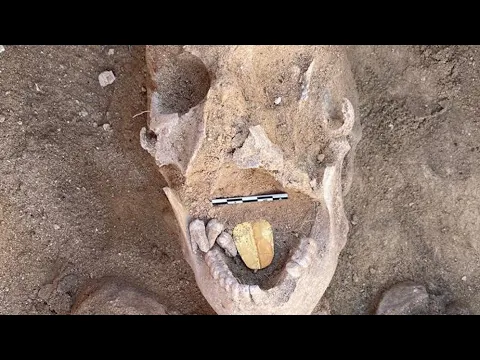
This rarity increases the archaeological value of the discovery and broadens the understanding of cultural variations within ancient Egypt.
Researchers indicate that this type of practice may be associated with external influences or specific beliefs from certain periods.
The Greco-Roman period influenced funerary practices in Egypt
The mummies with golden tongues date back to the Greco-Roman period, a phase when Egypt was under the influence of foreign cultures, especially after the conquest of Alexander the Great.
During this period, traditional Egyptian practices began to mix with Greek and Roman cultural elements, creating hybrid rituals.
The presence of unusual elements, such as the golden tongues, may reflect this cultural fusion and the adaptation of funerary beliefs.
This historical context is essential for understanding the diversity of practices found in excavations.
Preservation state allows for detailed analyses
The environmental conditions of Egypt, characterized by a dry and stable climate, favor the preservation of organic and inorganic materials.

In the case of the mummies found in Taposiris Magna, the combination of mummification techniques and the environment contributed to the preservation of the bodies and associated objects.
This allowed researchers to analyze not only the presence of gold but also details of the bone structure, tissues, and positioning of the funerary elements.
This information is fundamental for reconstructing practices and customs of the time.
Discovery expands knowledge about ancient funerary rituals
Each new excavation in Egypt contributes to expanding the understanding of the complexity of funerary rituals practiced over millennia.
The presence of golden tongues adds a new element to the known set of practices, indicating that there were regional and temporal variations.
These discoveries show that the rituals were not uniform but adapted to specific cultural contexts. The ongoing study of these finds allows for a deeper understanding of ancient Egyptian society.
The importance of gold in Egyptian culture goes beyond material value
Gold has always held a central position in Egyptian culture, being associated with immortality and eternity. Its resistance to corrosion and lasting shine made it a symbol of permanence.
In the funerary context, the use of gold was often linked to preservation and the continuity of existence after death.
The application of the material in different parts of the body indicates the importance attributed to specific elements within funerary beliefs. In the case of the golden tongues, the choice of material reinforces the symbolic nature of the practice.

The identification of mummies with golden tongues in Taposiris Magna represents a significant advancement in Egyptian archaeology, revealing a rare and poorly documented practice.
More than just a curious find, the discovery broadens the understanding of the diversity of funerary rituals and the cultural complexity of Egypt during the Greco-Roman period.
With each new excavation, evidence like this continues to redefine knowledge about one of the most studied civilizations in history, showing that there is still much to be discovered beneath the sands of Egypt.


