





 Portuguese
  English
  Spanish
  5 min of reading
  0 comments


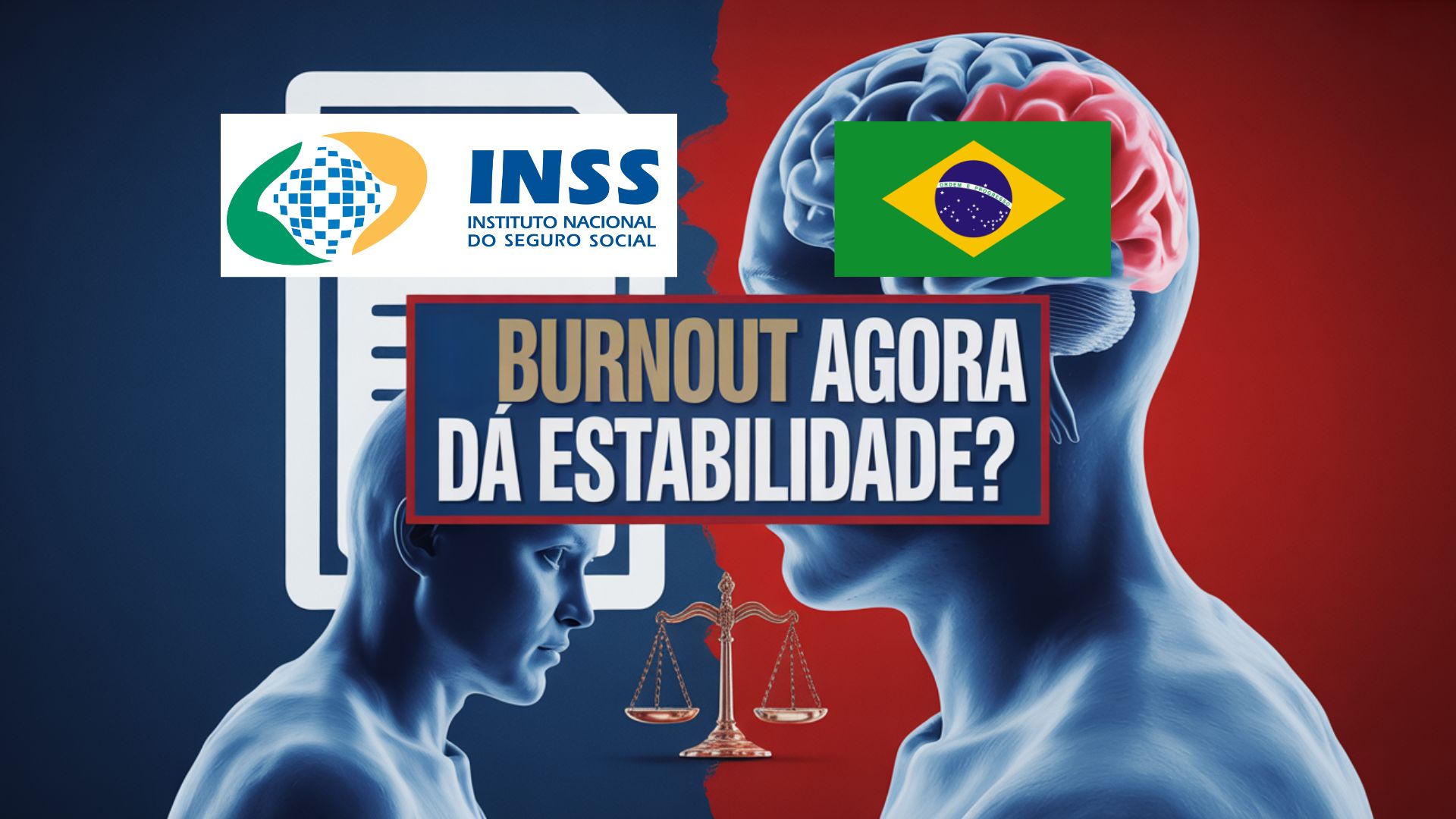
Brazilian Companies Need to Adapt Health and Safety Programs to Include Psychosocial Risks in the PGR, While TST Decisions Consolidate Provisional Job Stability for Workers with Burnout, Even Without Leaving the INSS.
Since April and May of this year, decisions from the Superior Labor Court and regulations from the Ministry of Labor have redesigned the protection against work-related mental illness in the country.
In the jurisprudence, Tema 125 of the TST established a thesis of mandatory observance that grants provisional job stability for 12 months when a link is proven between occupational disease — such as burnout — and the activity performed, without requiring a leave of absence longer than 15 days or the granting of accident-related sick pay (B-91).
In the regulatory field, NR-1 has begun to include psychosocial risks in Occupational Risk Management (GRO), but the government has postponed the commencement of the new chapter 1.5 to May 26, 2026, which, as of September 2025, keeps companies in a preparatory phase.
-
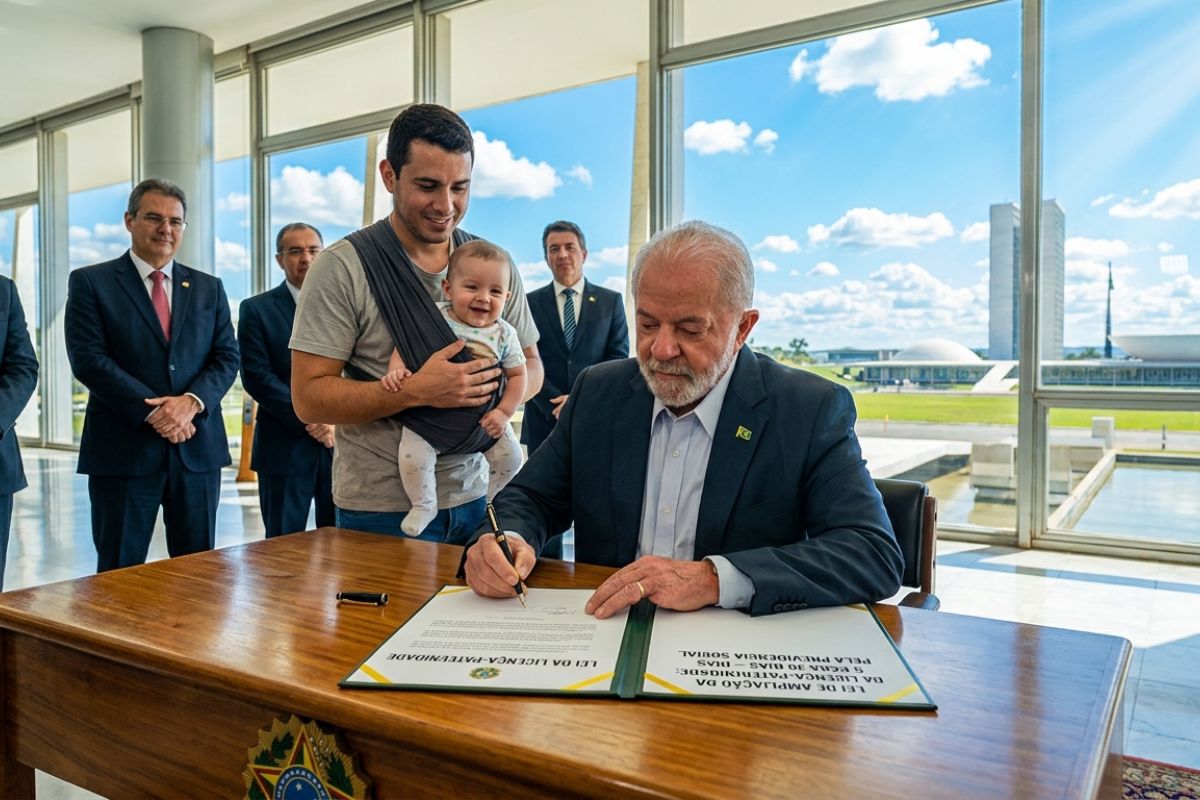
Government enacts new law: paternity leave increases from 5 to 20 days with gradual increases until 2029, and Social Security pays the paternity salary; companies no longer bear the absence cost, estimated at R$ 5.4 billion.
-
End of the 1-hour lunch break in the CLT? Current labor law maintains the break, allows for negotiated reductions, and defines rules for working hours and home office in Brazil.

-
Employee Fired After Accumulating 114 Days of Medical Leave in One Year, Labor Court Upholds Company’s Decision

-
Employee Fired While Treating Depression Wins in Court and Vale Is Required to Rehire Him Following Decision Based on the CLT and INSS Benefits


Changes in Health and Safety Legislation
Portaria MTE No. 1,419, dated August 27, 2024, reformulated chapter 1.5 of NR-1 and, for the first time, required that management include psychosocial factors related to work.
The text integrates these elements into the PGR and makes it clear that the GRO must cover, in addition to physical, chemical, biological, and accident agents, the risks arising from ergonomic and psychosocial factors.
However, due to a subsequent decision from the Ministry of Labor itself (Portaria MTE No. 765, dated May 15, 2025), the entry into force of these requirements was postponed to May 26, 2026.
In other words, the obligation is certain, but its mandatory compliance only begins on that date.
Psychosocial Risks in the PGR
The updated chapter 1.5 establishes that companies must formalize, within the PGR, the identification of hazards, evaluation, and control of psychosocial risks.
This involves mapping sources of emotional and organizational demands that could lead to health problems, documenting the measures taken, and integrating the monitoring into the risk inventory.
Although the enforcement is postponed, the text of NR-1 already indicates the necessity to consider such factors in the management scope, which favors the anticipation of internal adjustments in 2025.
Burnout: Recognition by the WHO and the Labor Court
In the health context, the World Health Organization included burnout in ICD-11 as an occupational phenomenon linked to the work context, distinct from a standalone clinical disorder.
The classification describes the condition as a result of chronic work-related stress that has not been successfully managed, with direct impacts on performance and well-being.
This international framework has been a reference parameter in Brazil for public policies and occupational health practices.
Legally, the TST consolidated, in April 2025, Tema 125 in a repetitive procedure.
The thesis established by the Full Court states that, for the job stability guaranteed by Article 118 of Law 8,213/1991, it is not necessary to have a leave of absence for more than 15 days or to receive the B-91, provided that, after the end of the contract, the causal or concomitant link between the occupational disease and the work performed is recognized.
In practice, stability becomes a consequence of proving the link, rather than of a specific social security procedure.
Concrete Case About Stability and Burnout
On April 22, 2025, the SDI-1 of the TST upheld the annulment of the dismissal of a pharmaceutical manager diagnosed with burnout.
The Court confirmed the reinstatement and set compensation for moral damages, highlighting that the company did not provide a plausible justification to disregard a medical certificate for 90 days.
Although the process addresses a specific case, it exemplifies how jurisprudence has begun to apply the guarantee of stability in situations of work-related illness.
Why Is Stability Considered “Automatic”?
The term has gained popularity because, after Tema 125, stability no longer depends on formal requirements like the granting of an accident benefit.
The focus shifts to the proof of causal link, which can be established through medical reports, expert opinions, documents, and evidence from the organizational environment.
As a result, dismissed employees can seek reinstatement.
If returning is not feasible, they seek substitute compensation for the stable period, as well as any moral damages and reimbursement for medical expenses when proven.
The central point is that the absence of B-91 has ceased to be an obstacle to the judicial recognition of the guarantee.
Preparation of Companies Until 2026
Even though the express obligation of psychosocial risks in NR-1 will take effect only on May 26, 2026, organizations with CLT employees have already been adjusting processes.
In line with good international practices, health and safety teams have adopted validated tools for organizational diagnosis, employee assistance programs, harassment prevention protocols, and training on goal management and overload.
The technical recommendation is to update the PGR and risk inventory in advance, defining action plans, responsible parties, and deadlines for mitigation.
These steps do not replace future legal compliance but reduce liabilities and facilitate the transition to full enforcement.


Supervision and Penalties Provided
With the extension of the enforcement period, no formal “educational period” based on chapter 1.5 has been established. Supervision based on the new wording begins with the actual entry into force.
As of May 26, 2026, violations related to compliance with NR-1 will be subject to the system of NR-28, which gradates fines according to the item violated, the company’s size, and the severity, in addition to providing for embargoes and interdicts when applicable.
Amounts are variable and follow official tables. There is no single cap applicable to all cases.
How Workers Can Protect Themselves
In situations of suspected burnout, the guidance is to seek medical evaluation and keep records of documents that demonstrate overload, unachievable goals, or harassment, such as corporate messages, schedules, and reports.
Documentation in internal instances, such as the CIPA or ethics channel, helps build a probative foundation.
In the event of dismissal, the labor action should observe legal deadlines and, above all, present the judge with clinical and organizational elements that support the causal link.
The WHO classification and the binding thesis of the TST currently form a robust framework for analyzing these disputes.
With the obligation of NR-1 approaching and job stability due to occupational disease settled in the TST, what will be your organization’s next move: structuring a comprehensive diagnosis of psychosocial risks or waiting for a legal process to reveal the gaps?









-

-

-

7 pessoas reagiram a isso.