





 Portuguese
  English
  Spanish
 4 min of reading
  1 comment


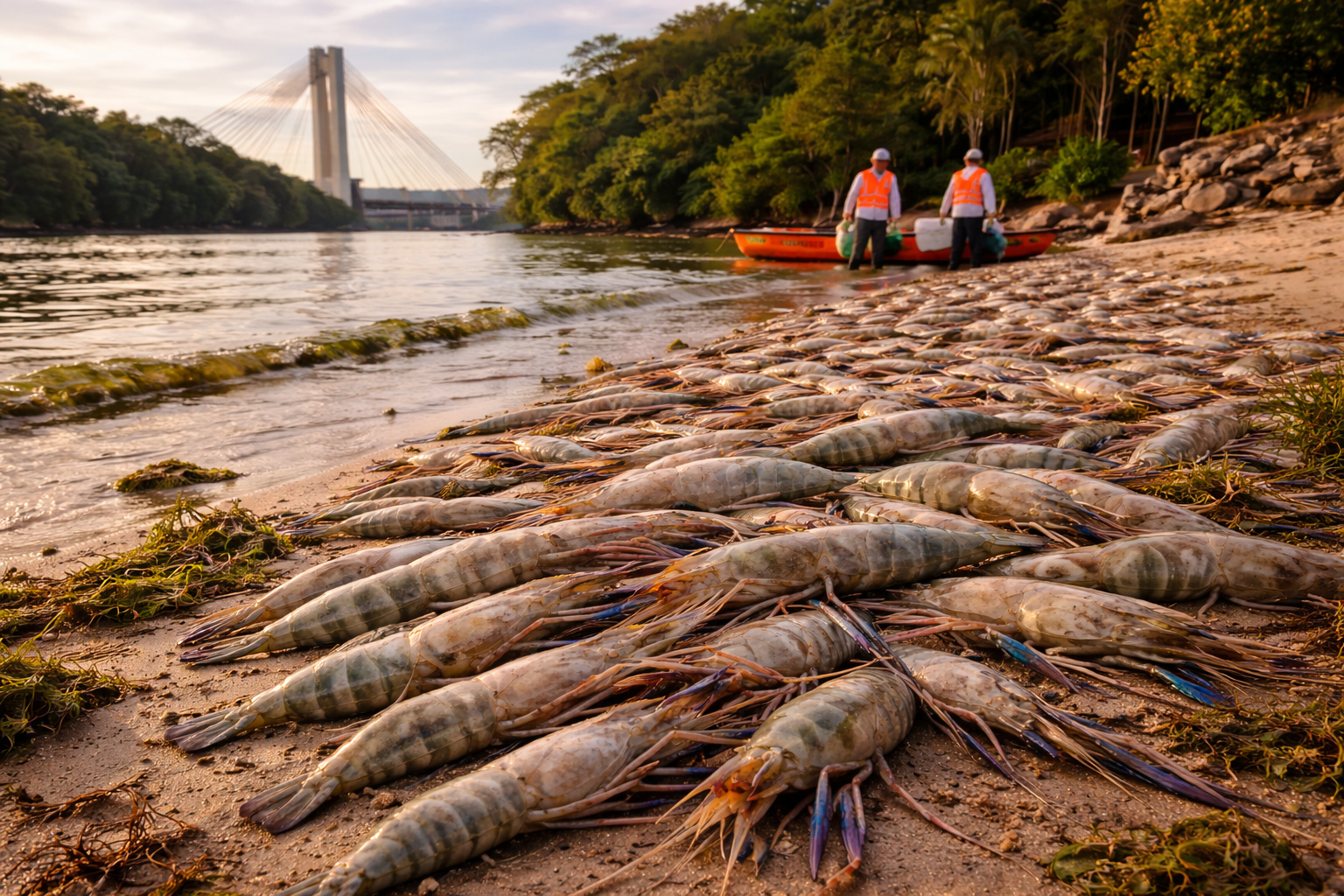


Unprecedented Death Of Prawns Mobilizes Environmental Agencies, Triggers Detailed Technical Investigation, And Reinforces The Ecological Fragility Of The Tietê River
An environmental occurrence of great impact drew attention in the interior of São Paulo in the first days of June 2026. Thousands of freshwater shrimp were found dead in the Tietê River, in the municipality of Igaraçu do Tietê. In light of this, environmental authorities, specialists, and residents began to monitor the case with growing concern.
The episode peaked in the late afternoon of Monday, June 2, when the first reports of accumulation emerged at a sandbank along the river. Even after this initial moment, new specimens continued to die throughout Tuesday, June 3, and Wednesday, June 4, which expanded the environmental dimension of the event.
Given the scenario, the Environmental Company of the State of São Paulo (Cetesb) sent technical teams to the site. Water and shrimp samples were collected, which are currently undergoing laboratory analysis. The goal is to identify the exact causes of the mass die-off.
-
A gigantic dam project in the Himalayas could solve one crisis but silently create another for millions of people.

-
Nikola Tesla said that intelligent people tend to have fewer friends, and now science partially confirms this: a study with over 15,000 people showed that for the more intelligent, socializing too much can even reduce life satisfaction.

-
A superyacht worth US$ 17 million is delivered in impeccable condition, sets out to sail, and hits a bridge in the Bahamas just two hours later.

-
Residents of Australia woke up to a sky completely red like blood before the arrival of Cyclone Narelle, which hit the coast with winds of 250 km/h, tearing off roofs and lifting iron dust in a scene they described as apocalyptic.


Technical Investigation Determines Causes of the Phenomenon
According to municipal oversight, the shrimp began to concentrate around 5 PM on Monday. Initially, the dead animals were confined to the sandbank. As time went on, they began to accumulate along the banks of the Tietê River as well.
According to Juarez Sbeghen, who is responsible for environmental oversight in Igaraçu do Tietê, there was already a history of fish die-offs in the region, but never of freshwater shrimp, which made the episode unusual. Therefore, municipal and Cetesb technicians initiated a joint investigation.
Only at the sandbank, two trucks of shrimp mixed with sand were collected. Afterwards, all material was sent to the Barra Bonita landfill, following technical guidance from Cetesb and current environmental protocols.
Environmental Analysis Points To Possible Associated Factors
In parallel, the Macrophytes Group, formed by representatives of civil society, boat operators, and environmental specialists, also initiated an independent analysis. According to the group, it was notable that only the shrimp were affected, with no visible impact on other aquatic species.
According to the Macrophytes Group, the die-off may be associated with organic pollution, decreased dissolved oxygen, eutrophication processes, chemical discharges, or abrupt environmental variations. These factors, according to the group, highlight the fragility of the Tietê River ecosystem and reinforce the need for strict control of pollution sources.
Meanwhile, Cetesb reported that it conducted a technical inspection on the afternoon of Tuesday, June 3, as soon as the complaint reached the agency. As a preventive measure, the environmental agency advised that the public should not fish or bathe in the area until laboratory results are released.
Proximity to Dam Enters The Debate
The sandbank of Igaraçu do Tietê is close to the dam of the Barra Bonita Hydroelectric Plant. However, Auren Energia stated that there is no relationship between the preventive maintenance of the lock and the shrimp die-off.
Even without operational connection, the company informed Cetesb of the situation and made itself available to assist with ongoing environmental investigations.
Affected Species Reinforces The Relevance Of The Episode
The freshwater shrimp of the genus Macrobrachium, known as pitu, has characteristics similar to those of marine shrimp. The species is native to lacustrine regions of the southeastern United States, but occurs naturally as far south as Brazil. In addition, it is common in flowing rivers, such as the Tietê River itself.
Given this, the exclusive die-off of this species, concentrated in a specific stretch of the river, raises relevant technical questions about water quality, local environmental balance, and the need for continuous monitoring of the Tietê.
With the investigation ongoing, the case remains under analysis by environmental agencies. Do you believe that enhancing oversight or permanent water quality monitoring should be the main priority to prevent new incidents like this on the Tietê River?









Uma espécie que pode ser consumida, e gerar lucro, morrendo por causa da poluição.
“This is Brazil!”, como dizia o jornalista Paulo Francis.