





 Portuguese
  English
  Spanish
  5 min of reading
  1 comment


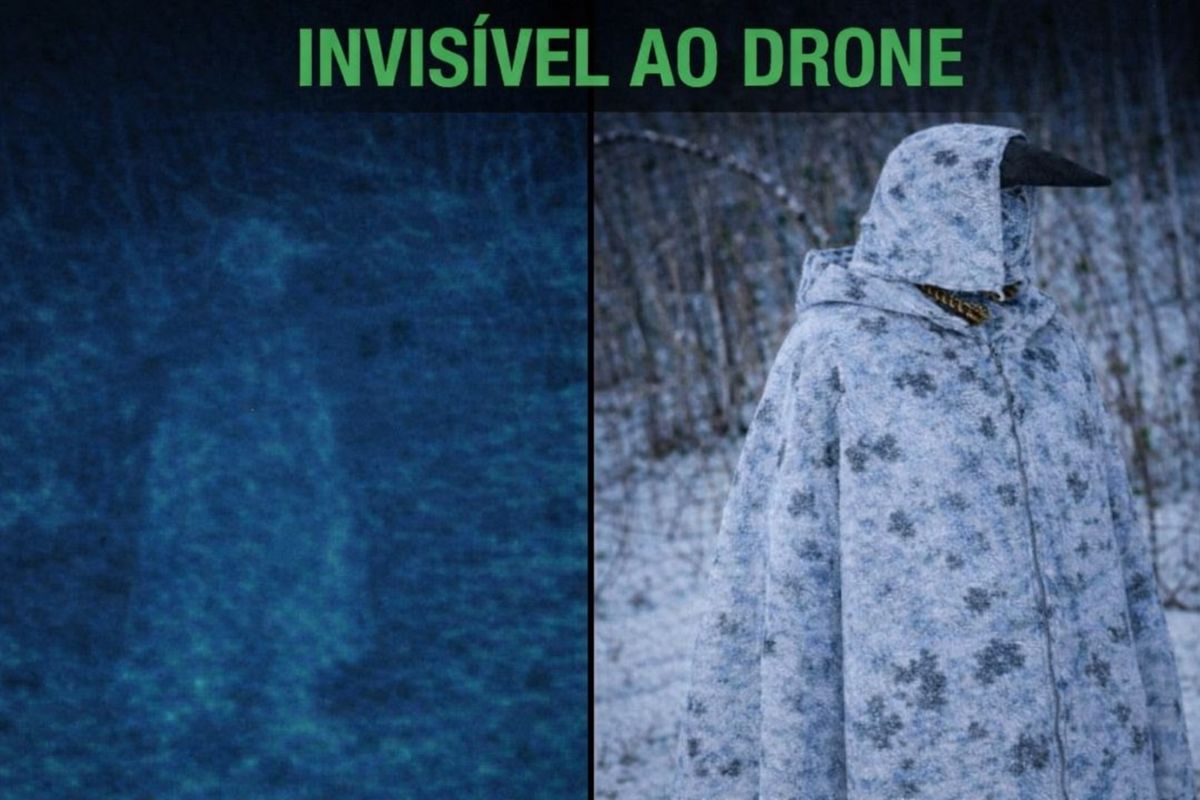


The New Russian Camouflage Tries to Hide Soldiers in the Snow of Ukraine, but the Bulky Winter Camouflage Highlights Troops for FPV Drones and Thermal Cameras.
The new Russian camouflage “Penguin” was created to hide soldiers in the snow, but in practice, it has done the opposite. According to Ukrainian troops, at least two Russian soldiers wearing the suit were neutralized by drones, showing that the equipment, instead of protecting, ends up highlighting those wearing this novelty on the battlefield.
In real combat tests, the Russian winter camouflage appears as a bulky suit, white with black dots and a beak-shaped hood that resembles a penguin’s head. The idea is to break the human silhouette in snowy fields, but in a scenario dominated by FPV drones, thermal cameras, and motion sensors, this “invisibility” only works on paper.
What Is the Russian “Penguin” Camouflage

According to Ukrainian reports, the Russian “Penguin” camouflage is being tested by soldiers in real conditions at the border with Ukraine. Images released by the 120th Territorial Defense Brigade show the suit in action:
-
Brazil accelerates the evolution of the MANSUP missile, designing an air-surface version with a range exceeding 200 km, advanced guidance, and precision strike capability against land and naval targets, paving the way for a new generation of national armaments with global potential.
-
South Korea signs a $922 million deal with Norway, bringing Chunmoo launchers capable of firing guided missiles up to 290 km with an accuracy of 15 meters to Europe and turning the system into a key component of the new global race for precision artillery.
-
Brazil advances with decisive tests until June, the 6×6 Guarani armored vehicle with engineering equipment enters the most important phase and can enhance the operational capability of the Army.
-
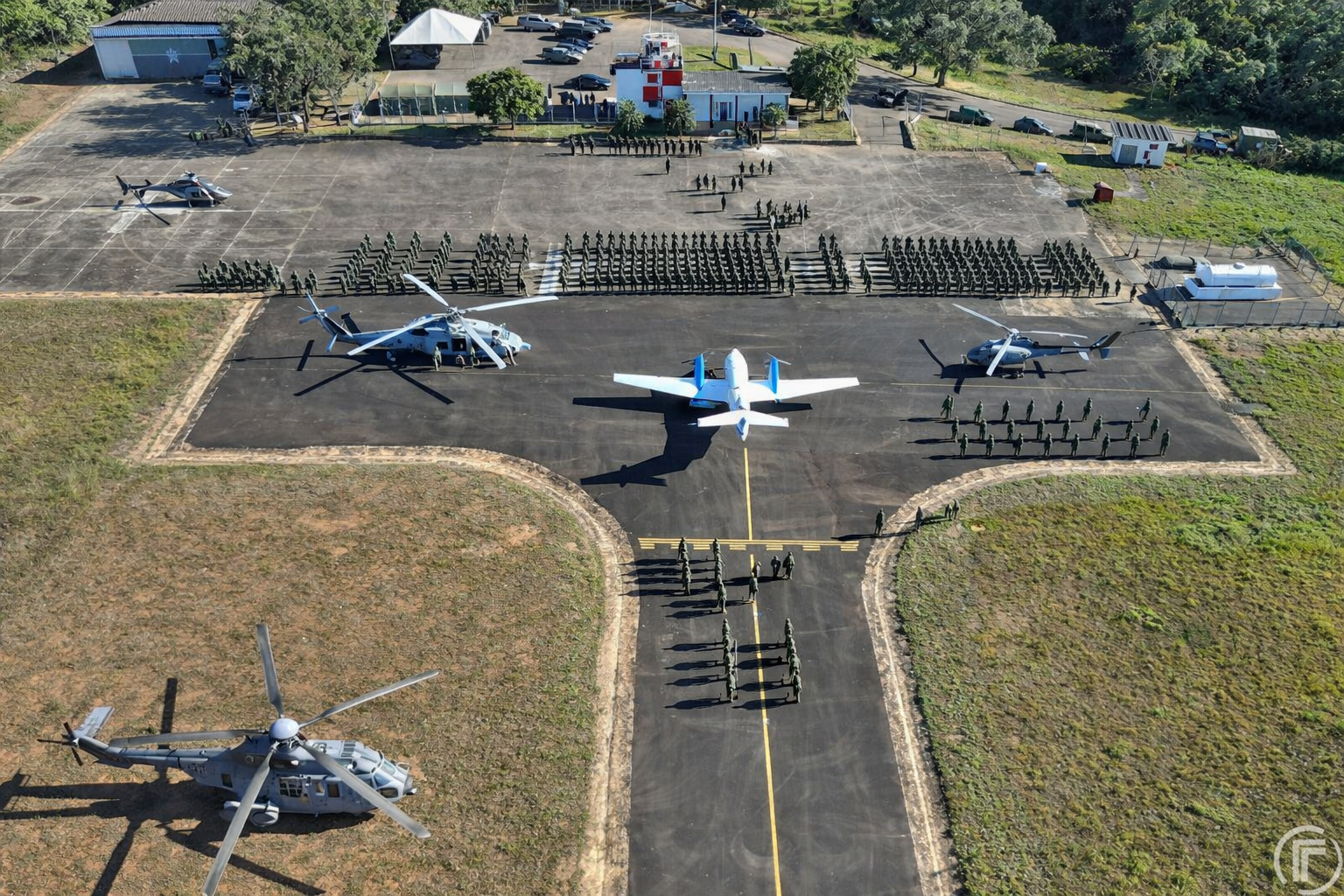
Furnas Airport is handed over to the Navy and becomes a strategic base with complete military operations, attack drones, and international mobilization at Furnas Lake.

It is a very bulky winter jumpsuit, predominantly white, with black dots scattered throughout the fabric and a pointed hood that creates a strange silhouette, resembling a bird’s beak.
The concept is the same as other camouflage suits: to break the human silhouette and dissolve the body into the landscape, especially in snow mounds and open terrain.
In this sense, it resembles the famous ghillie suits used by snipers, only adapted for snowy environments.
The intent is clear: to reduce visual detection by the naked eye, making it difficult for the enemy to identify a human shape from a distance and allowing the soldier to move “hidden in plain sight” when the background is white.
A Concept Designed for the Human Eye, Not for Modern Warfare
The problem is that the Russian camouflage was designed to deceive primarily the human eye. In theory, if the white pattern with black spots matches the texture of the snow and the shadows of the terrain, the soldier disappears into the landscape for those observing from afar with binoculars or the naked eye.
However, today’s battlefields, such as those in Ukraine, have changed significantly since the Cold War. Ukrainian forces hunt targets with FPV drones, thermal cameras, and systems that detect movement, not just color contrast.
These sensors do not “see beauty in patterns,” they see heat, shape, movement, and the signature of a body in motion.
In this reality, Russian camouflage that only works against human sight becomes quickly outdated.
Even if the suit confuses the silhouette from a distance, as soon as a thermal camera or a first-person view drone comes into play, the effect disappears.
The volume of the body is still there, the heat source is still there, and worse, the way of walking gives away that there is someone inside the jumpsuit.
Bulky Suit, Clumsy Walk, and Exaggerated Movements
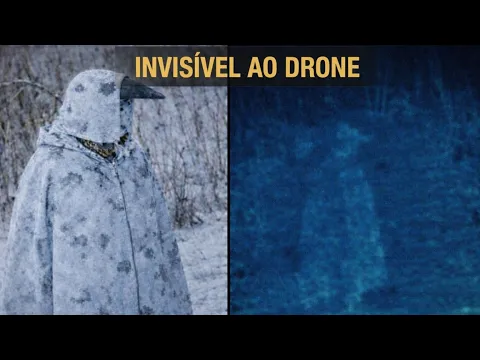

Another critical point of the Russian “Penguin” camouflage is the extremely bulky design. The jumpsuit looks puffy, as if the soldier were inside a snow costume. This may break the straight silhouette of the torso and legs, but it comes at a high price: mobility.
Reports describe that those wearing the suit need to adopt a shorter, heavier, and clumsier gait, almost “chubby”, to be able to move.
In open terrain, this means slower steps, slower direction changes, and larger movements than necessary to simply stand or change position.
In practice, this creates three problems at once:
- The soldier becomes slower to react
- Gestures become exaggerated and easy to identify
- The movement pattern becomes predictable and easy to track from a distance
In other words, the Russian camouflage tries to hide the body, but reveals the movement, which is exactly what drones and observers look for in open fields. Instead of confusing, the different jumpsuit ends up drawing attention.
When Camouflage Highlights More Than It Hides
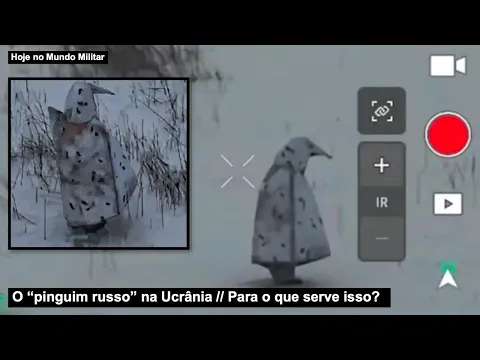
In an ideal scenario, a snow suit should blend in so well with the background that any change in position would be discreet.
In the case of the Russian “Penguin” camouflage, the opposite happens: the strange volume, the dot pattern, and the beak-shaped hood create a curious figure, easy to notice when something moves across a white field.
According to Ukrainian reports, this has already had a direct consequence. Two Russian soldiers wearing the “Penguin” suit were neutralized by drones, reinforcing the perception that the uniform is not fulfilling its basic function of protecting those who wear it.
Instead of reducing risk, the Russian camouflage ends up functioning almost like a visual marker. In the sky, an FPV drone operator sees a bulky white shape moving oddly amidst the snow.
This facilitates identification and attack, especially when the enemy is already looking for any anomaly in the terrain.
Field Tests and Soldiers as Guinea Pigs
Another striking aspect is the way the Russian camouflage is being tested. From reports, the “Penguin” suit was taken directly to the front lines without a long period of testing and refinement in controlled environments.
In practice, this means using real soldiers in real combat as part of the equipment’s “pilot.” Recruits end up becoming guinea pigs for experimental systems, taking on extra risks to validate a concept that has yet to prove effective against drones or modern sensors.
This is not the first recent attempt at experimental uniforms observed in the war. Ukrainian sources have already mentioned Russian troops using a type of individual capsule, something like a portable shelter or protective suit, which has also proven ineffective against drones.
In the end, the current war has quickly exposed what works only on paper and what truly protects in the field.
What the Failure of the Russian Camouflage Says About the War with Drones
The case of the Russian “Penguin” camouflage shows how the battlefield has changed. It is no longer enough to think of camouflage as a pretty or exotic pattern that deceives the human eye in photos or promotional videos.
Today, any equipment needs to be designed from the start to survive under FPV drones, thermal cameras, and constant surveillance from the sky.
A heavy, bulky, and awkward suit may seem innovative, but if it makes the user slower, predictable, and easy to detect by heat or movement, it fails precisely at what matters most: keeping the soldier alive longer.
In the end, this experience with the “Penguin” seems more of a warning than an advancement. It shows that the Russian camouflage needs to keep pace with sensors and detection technology, or each new uniform will just be another costly target in a battlefield crowded with drones.
Do you think using experimental suits like this Russian camouflage in combat is worth the risk to test new ideas, or does it expose soldiers too much for a result that already seemed predictable?








Acham mesmo que a Russia vai falhar? Pode ter acontecido é que as capturas eletronicas dos drones estejam avançadas mas do que as anteriores, haja vista que a NATO aumentou seu poder de fogo na Ucrania…