





 Portuguese
  English
  Spanish
  4 min of reading
  0 comments


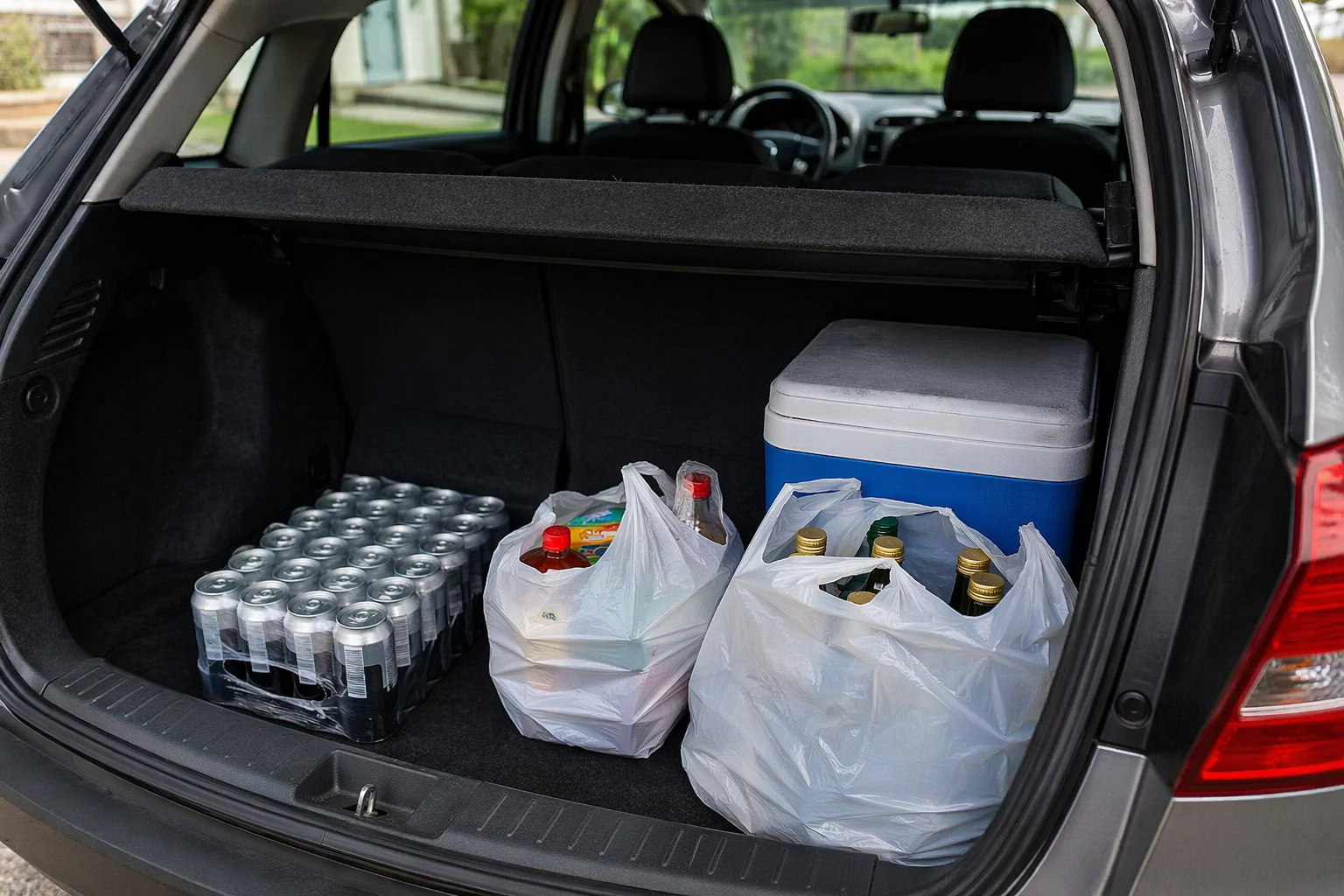
Brazilian traffic legislation prioritizes driver sobriety and defines clear criteria to differentiate regular transport from consumption while driving
The transport of alcoholic beverages inside the car is allowed in Brazil, as established by the Brazilian Traffic Code, in effect since 1997, which clarifies common doubts among drivers.
Still, the enforcement does not focus on the drink itself, but on the driver’s behavior while driving, which directs the entire analysis made by the agents.
Factors such as the smell of alcohol, the presence of an open container near the driver, and signs of psychomotor alteration become determining in approaches, according to practices applied since the Dry Law of 2008, according to Denatran.
This scenario demonstrates that the legislation seeks to clearly differentiate the regular transport of beverages from consumption while driving, ensuring greater road safety.
CTB rules make it clear that the problem is not transporting, but driving under the influence of alcohol
Brazilian traffic legislation does not prohibit the transport of alcoholic beverages inside the vehicle, which keeps this practice within legality.
However, Article 165 of the CTB classifies driving under the influence of alcohol as a serious infraction, resulting in severe penalties for the driver.
Article 165-A provides punishment for those who refuse to take the breathalyzer test, applying the same administrative consequences.
Thus, enforcement directs its attention to the sobriety of the driver, not to the presence of the beverage in the car.
Therefore, the mere existence of a beverage inside the vehicle only becomes relevant when there are indications of consumption during driving.
Open containers increase the rigor of enforcement during approaches
Although there is no specific prohibition regarding open containers inside the car, this situation often raises suspicion during enforcement.
When there is an open bottle or can near the driver, the interpretation may indicate ongoing consumption while driving.
As a consequence, the agent tends to adopt a stricter approach to verify the driver’s condition.
In this context, the driver may be invited to take the breathalyzer test and have signs of alteration recorded in an infraction report.
When the open container is with the passenger and there are no signs on the driver, the analysis usually occurs with greater caution.
-
Countries may be required to pay up to R$150,000 for emotional abandonment: new law changes rules and expands parental responsibility in Brazil.

-
New vaccination and mandatory testing rules in Brazil raise alarms, redefine public health regulations, and spark debate on sanitary control and individual rights.

-
The noise ban in Germany will no longer be at 10 PM starting in June with a new rule valid during the 2026 World Cup.

-
New vaccination rules and mandatory exams in Brazil raise alarms, redefine public health regulations, and spark debate on sanitary control and individual rights.

Penalties include high fines, suspension, and even detention
Since the tightening of the Dry Law in 2012, penalties have been expanded to increase the rigor of enforcement and reduce risks on the road.
When there is evidence of consumption above the administrative limit, the infraction is considered serious and generates significant consequences.
In this scenario, the driver may face a fine multiplied by ten and a suspension of their driver’s license for 12 months.
Additionally, there may be confiscation of the license and retention of the vehicle, as provided by law.
In more severe cases, such as higher alcohol concentration or involvement in accidents, there may be classification under Article 306 of the CTB, with the possibility of detention.
Simple precautions help avoid doubts and problems during enforcement
Some practices help demonstrate that the beverage is only being transported, reducing doubts during police approaches.
Keeping the beverages sealed is one of the most effective measures to dispel suspicions of consumption.
Additionally, storing the containers in the trunk helps avoid misinterpretations by the agents.
Avoiding open containers near the driver is also essential to prevent doubts during enforcement.
Thus, the driver reinforces that there is no alcohol consumption while driving.
In practice, separating driving and consumption is the main requirement of the law
Transporting alcoholic beverages in the car is allowed, as long as the driver is completely sober while driving.
Proper storage of the beverages reduces questioning and facilitates analysis during an approach.
According to Contran, the priority of the legislation is to preserve lives and ensure safety on the roads.
Thus, completely separating the act of driving from alcohol consumption is the main guidance from the authorities.
This conduct keeps the driver within legality, reduces accident risks, and avoids severe penalties.
The transport of alcoholic beverages within a road safety context
The Brazilian legislation follows a clear logic by allowing the transport of beverages but strictly restricting any form of driving under the influence of alcohol.
This balance reinforces the importance of understanding how the law is applied in practice and which factors are analyzed during enforcement.
Thus, the driver can avoid misinterpretations and keep their driving within the established legal limits.
Therefore, transport ceases to be a risk and becomes just a common activity, as long as it is done responsibly.
The driver’s behavior as a decisive factor in enforcement
Traffic authorities, agents, and specialists emphasize that the main element analyzed in an approach is the driver’s behavior.
The absence of signs of consumption is the factor that ensures that the transport of beverages does not generate penalties.
Meanwhile, the presence of indications can turn a common situation into a serious infraction.
This understanding reinforces the need for constant attention from drivers.
Do you believe that drivers really understand that it is not the drink in the car, but the behavior while driving that defines the infraction?








Seja o primeiro a reagir!