





 Portuguese
  English
  Spanish
  7 min of reading
  0 comments


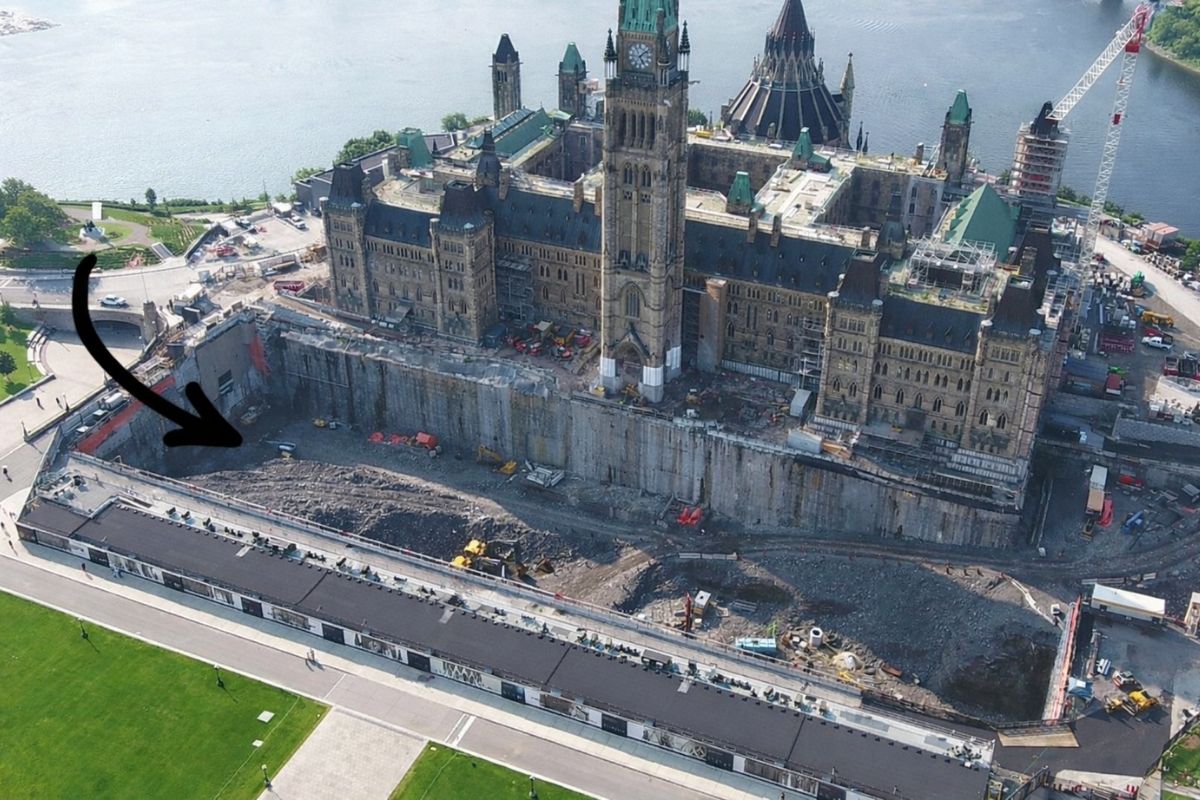
In The Heart Of Ottawa, Canada’s Parliament Opens A Giant Hole Under The Centre Block On Parliament Hill To Reinforce The Peace Tower, Install An Underground Welcome Center, And Modernize The Entire Complex.
Canada opens a giant hole in the heart of Ottawa not by accident, but as part of a meticulously planned operation to save its most important political building, strengthen earthquake protection, and create a modern underground center to welcome visitors and officials. At first glance, the scene looks disastrous, with explosions, trucks, and an enormous void in front of the clock tower. In practice, it is the opposite: it is a project designed to keep standing the ultimate symbol of Canadian democracy for decades to come.
While half of the lawn in front of Parliament turns into an immense construction site, engineers, restorers, and heritage specialists work together to transform a century-old building into a structure ready for the 21st century. Below ground, new technical floors, a Welcome Center, and a sophisticated seismic protection system are being created.
On the surface, historical stones, stained glass, and sculptures are being dismantled, cleaned, and repositioned, in a choreography that mixes rock blasting, cleaning lasers, and delicate artistic work.
-
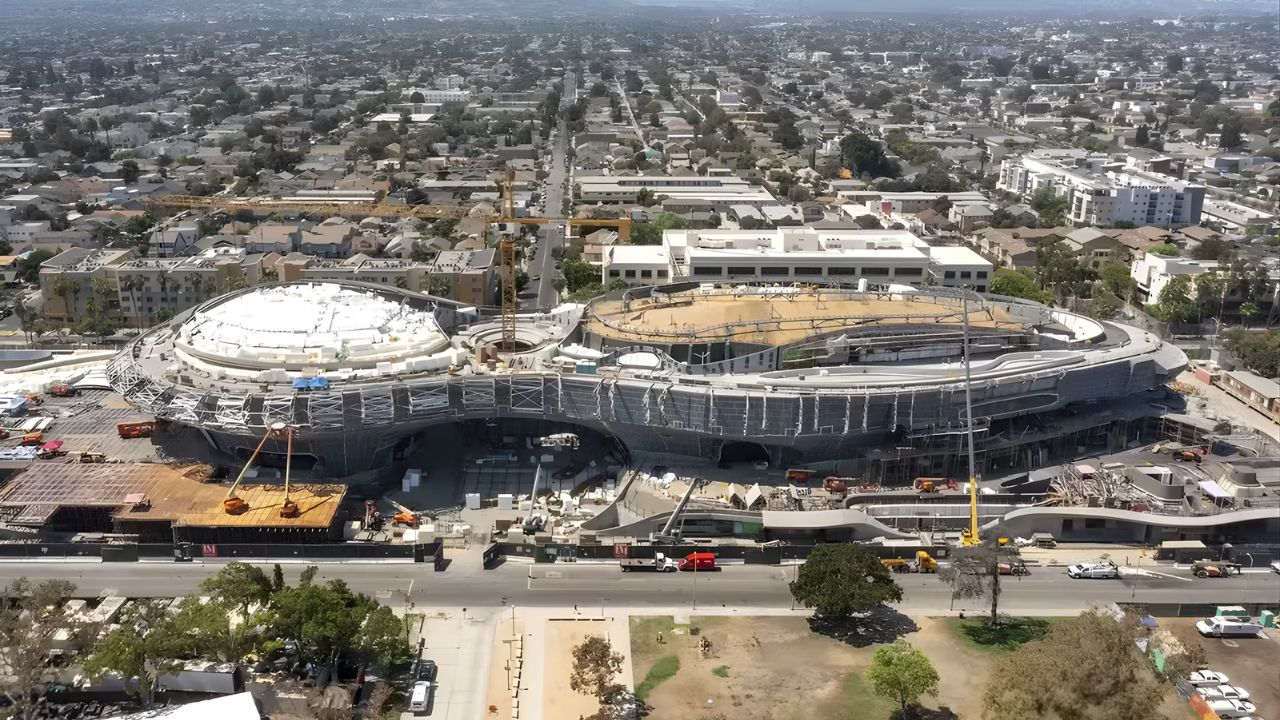
Created by George Lucas with over $1 billion, a futuristic museum in the shape of a spaceship with 1,500 curved panels is about to open in Los Angeles and will house one of the largest private collections of narrative art in the world.
-
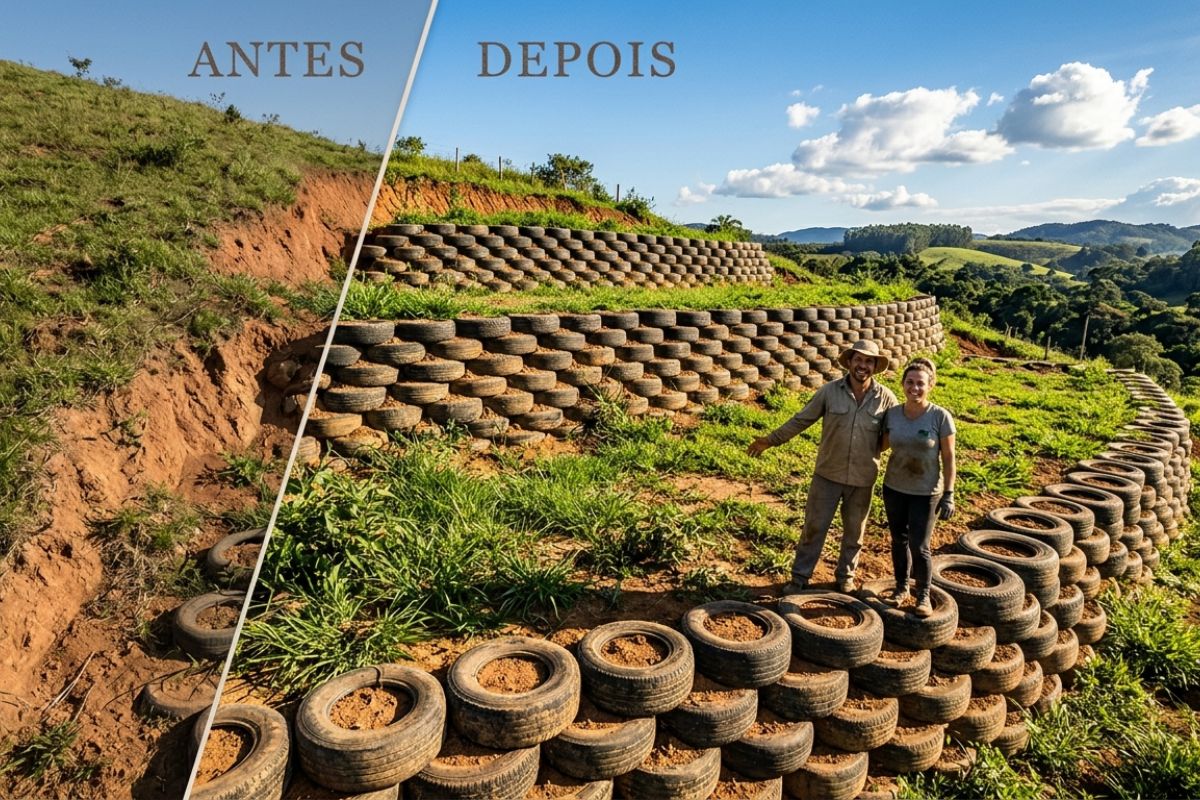
Couple shows how they built a retaining wall on their property using 400 old tires: sloped land turned into plateaus, tires are aligned, filled, and compacted with layers of soil, with grass helping in support and at almost zero cost.
-
Engineer explains drainage during the rainy season: the difference between surface water and deep water, ditches, gutters, and water outlets on the road, as well as drains and drainage mattresses, to prevent erosion, aquaplaning, and flooding at the construction site today.

-
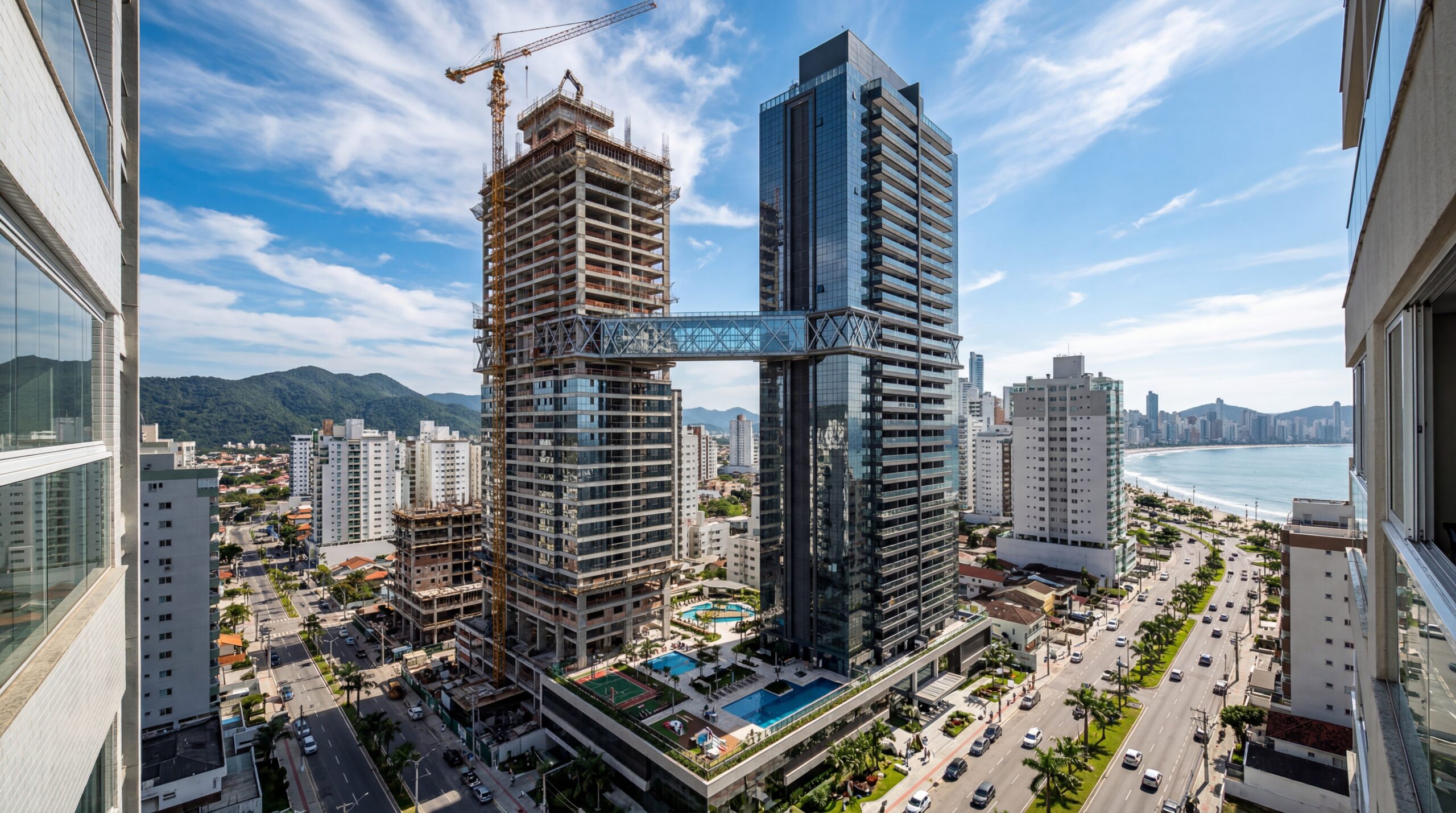
With 55 floors, 177 meters in height, a 15-meter walkway between the twin towers, ventilated facade, and 6,300 m² of leisure space, Ápice Towers already has one tower completed and another nearly at the top.

Why Canada Opens A Giant Hole In Front Of The Parliament

The scene began in July 2020, when teams started the first blasts right in front of Parliament, in Ottawa.
The green lawn that has hosted tourists, ceremonies, and protests for decades has been partially replaced by a huge pit about 23 meters deep, excavated over three years with the help of explosives and tens of thousands of truck trips to remove the material.
None of this is random. The aim is to create space for a subterranean Welcome Center, which will extend across the front of the building and then advance beneath the Parliament itself, which until today had no structural basements.
At the same time, the work paves the way to reinforce the foundations and install a seismic isolation system that allows the building to withstand earthquakes that were not even considered when it was built in the 1920s.
In summary, when Canada opens a giant hole in front of its Parliament, it is not destroying a national icon. It is making room for it to safely exist with technology and new functions for at least another century.
From Fire To Reconstruction: How The Parliament Became A National Symbol
To understand why so much energy is being invested in this building, it is necessary to go back to the 19th century. Ottawa was chosen as the capital precisely because it is located between English-speaking and French-speaking regions, close to the border between Ontario and Quebec and surrounded by forests, which offered strategic protection in times of potential conflicts.
It was there, on elevated land overlooking the Ottawa River, that three main blocks of the parliamentary complex were built, with the Centre Block in the middle, housing the House of Commons, the Senate, libraries, offices, and ceremonial spaces.
The original construction began in 1859, but in 1916 a devastating fire destroyed almost everything, leaving only the Parliamentary Library standing.
The response was swift. In 1927, the new Centre Block was inaugurated, in a neo-Gothic style, full of gargoyles, carved friezes, and a monumental central tower, the Peace Tower, created as a memorial to the fallen of World War I.
Since then, the building has witnessed the evolution of the country, bearing witness to debates, crises, and decisions that defined Canadian history over the last century.
An Icon At Risk: Structural Issues, Water, And Lack Of Seismic Protection

On the outside, the Centre Block remains imposing. Inside and below, recent inspections have revealed a different picture. Recent inspections identified eroded concrete, water infiltrations in several places, structural steel oxidizing and degrading.
In a building constructed with more than twenty types of stone, any crack, displacement, or rust can multiply over time.
Moreover, the building was not designed to face a risk that is now taken much more seriously: earthquakes. Canada experiences lower magnitude seismic tremors with some frequency, and there have been events above magnitude 7 in the past.
A significant tremor near Ottawa could be devastating for a rigid, heavy structure without energy dissipation systems like the Centre Block.
The set of problems also includes physical security and crowd flow. Millions of visitors pass through there every year, but access is limited, reception space is restricted, and security needs to be strengthened in today’s world where government sites have become more sensitive targets.
It was in light of this combination of risks that the country decided to face one of the largest restoration and modernization projects in its history, accepting the inevitable image: Canada opens a giant hole as the first step to save what is on top.
How Canada Opens A Giant Hole And Supports The Parliament At The Same Time
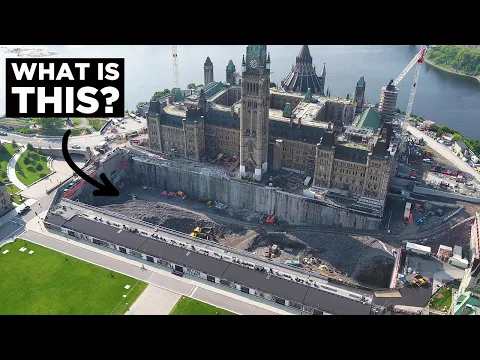

Excavating a deep well in front of Parliament would already be a challenge. Excavating beneath the building, creating new floors without letting it collapse or crack, is another story. Therefore, the planning includes a complex sequence of support, reinforcement, and reconstruction of the foundations.
First, the structure is transferred to temporary supports, as if the building is carefully placed on “crutches” while the ground below is opened.
About 800 piles are driven into the ground and connected by metal elements, forming columns and a new structural grid. Between these columns, teams continue the excavation in depth, preparing the space where the new basements will emerge from below.
Only then do the seismic isolators come into play, large devices that will function as dampers between the building and the new foundation.
The logic is clear: during an earthquake, the ground may move, but the isolators absorb part of that energy, allowing the upper structure to sway less and with much less internal stress.
This is a technology already used in telescopes, sensitive industrial installations, and even power plants, but here applied in a pioneering way in a historic building of this scale.
Meticulous Restoration: Stone By Stone, Stained Glass By Stained Glass
While Canada opens a giant hole on the outside, the work inside and on the building’s surface is equally intense.
About 365,000 facade stones are being treated, cleaned, and, when necessary, repaired or repositioned. Instead of brushes and abrasive products, high-energy lasers are used, capable of vaporizing dirt deposits without damaging the original material.
Inside, the Centre Block has been practically reduced to its structure. Historical rooms, galleries, and corridors have been emptied so that more than 20,000 heritage elements could be restored: sculptures, ornaments, panels, and especially around 250 stained glass windows that receive careful treatment.
Specialized teams traverse the building from east to west, examining each piece, correcting damage from decades of exposure to harsh weather.
Even the Peace Tower, with its four smaller towers on top, required precision surgery. Technicians needed to install large straps connecting the structures to the flagpole, stabilizing everything while awaiting final repairs.
In parallel, sensors have been distributed throughout the building to record vibrations during blasting, drilling, and concrete pouring, ensuring that the rehabilitation does not become the problem it was meant to solve.
The New Welcome Center Under The Lawn And The Tower
All the underground effort has a clear goal: to change how people arrive and circulate around Parliament.
The new Welcome Center will be located under the space that is currently a huge crater and will later connect directly to the Centre Block and the East and West Blocks, functioning as a kind of unique and secure “entry point.”
Visitors will access the complex via a renewed elevated pathway, pass through a control area, and then enter a large hall with natural lighting, thanks to skylights installed in the ceiling.
The base of the Peace Tower will be part of the design of the space, visible from the Welcome Center, creating a symbolic connection between the modern underground and the historical tower that dominates Ottawa’s skyline.
For those working in Parliament, the new center simplifies movement, enhances security, and integrates areas that were previously more isolated. For the public, it offers a clearer, more accessible, and comfortable experience, with improved flow and more areas dedicated to exhibitions, organized queues, and protected waiting.
A Parliament Ready For Another Century Of Decisions
When the works are completed, Canada will have back a Parliament that looks the same from the outside but has been radically updated inside and below.
The building gains a reinforced “skeleton,” earthquake protection, new technical infrastructures, and an entire basement dedicated to welcoming people, all without sacrificing the original aesthetics and the symbolic value accumulated over a century.
It is rare to see a country willing to literally dig beneath its own center of power to preserve it. By choosing this path, Canada opens a giant hole today to avoid an even bigger hole tomorrow: the loss of its main political symbol due to a lack of maintenance, security, and long-term vision.
With that in mind, do you think other countries should invest in deep reforms, even if costly and time-consuming, to protect their historic government buildings, or should such projects be more limited and discreet?








-

-

2 pessoas reagiram a isso.